
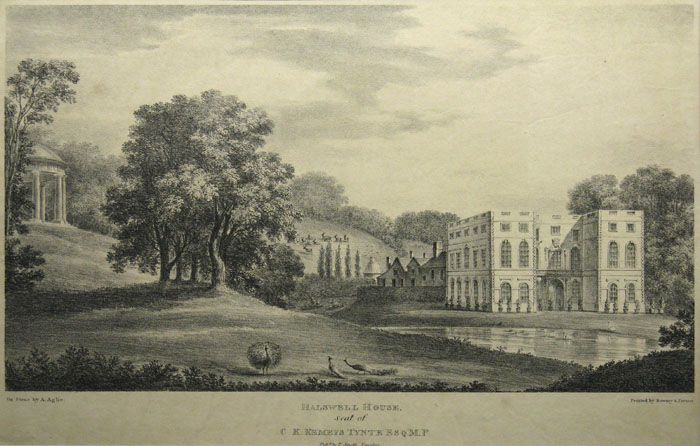
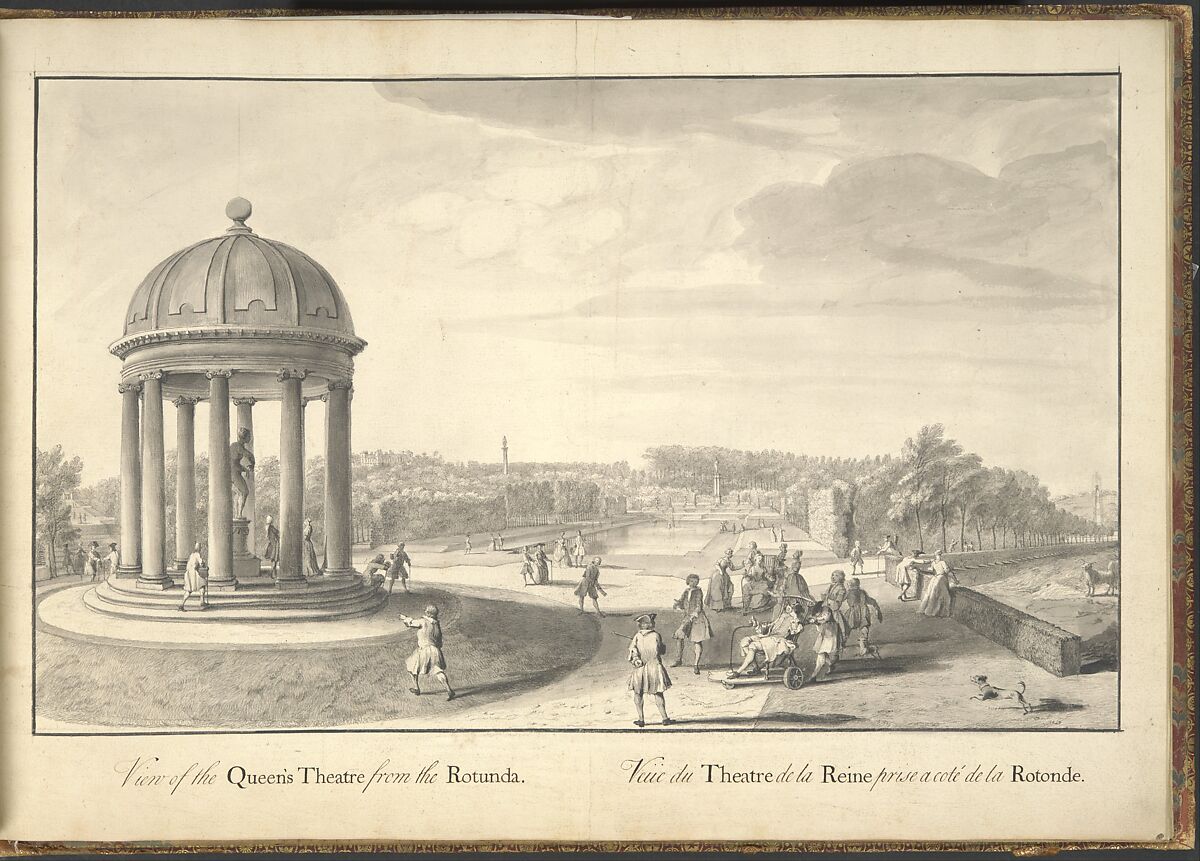
Halswell House and the Rotunda, painted by John Inigo Richards in 1764. Built in 1755 the Rotunda, or ‘Mrs Busby’s temple on the lawn’, was named for Lady Tynte’s sister, and its design has been attributed by Gervase Jackson-Stops to Thomas Wright (1711-1786), whose building designs were used at Halswell. The painting by Richards is fascinating, as walking down the hill from the Rotunda there are three well-dressed figures. We think that what we have here are portraits of Sir Charles Kemeys Tynte, his wife Lady Tynte, and her sister Mrs. Busby.
The Rotunda it was first visually recorded here in the 1764 painting by Richards and he shows us how the building sat atop a sweeping lawn overlooking the lake. The house itself is reflected in the pond that had been recently been created from the terraced and formal gardens of the late-seventeenth century. The historic planting scheme was a frame for the building and allowed the views to be taken in all directions. By 2014 this area had gone to seed, the roofless and decrepit building was hidden from sight and choked with vegetation. Our landscape management plan was initiated and the woodland was brought back to its thinned and gently-managed origins. Descendants of the original daffodils, bluebells, wild orchids, primroses and other flowers, choked to near extinction on the site, are now being split and replanted annually to naturally revive the springtime colour of this woodland floor.
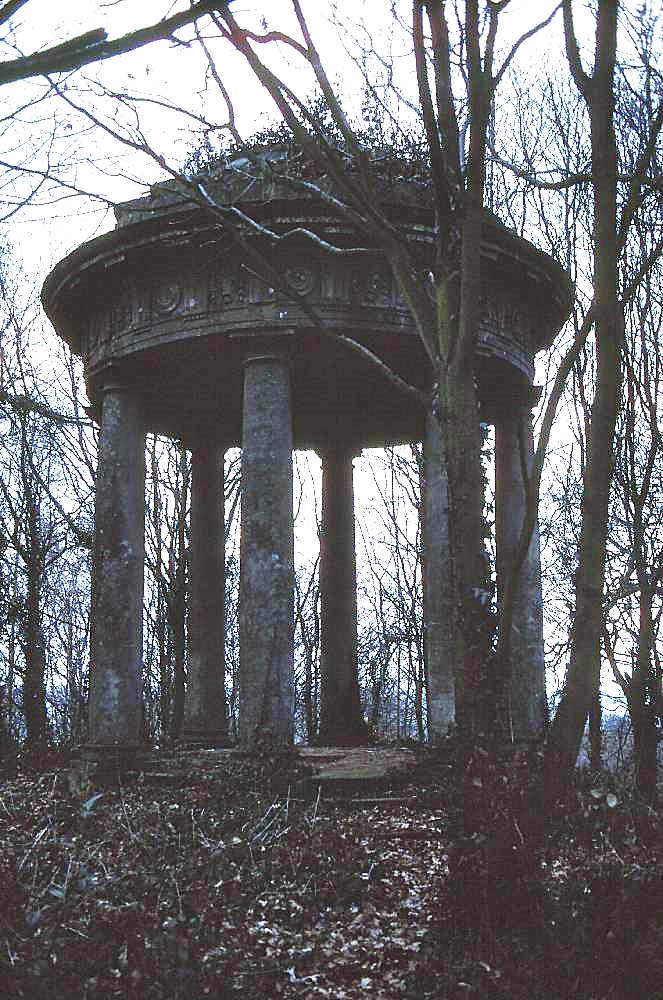
The Rotunda in 1985, forelorn and forgotten, but in a better state than later on, when its roof had completely gone.
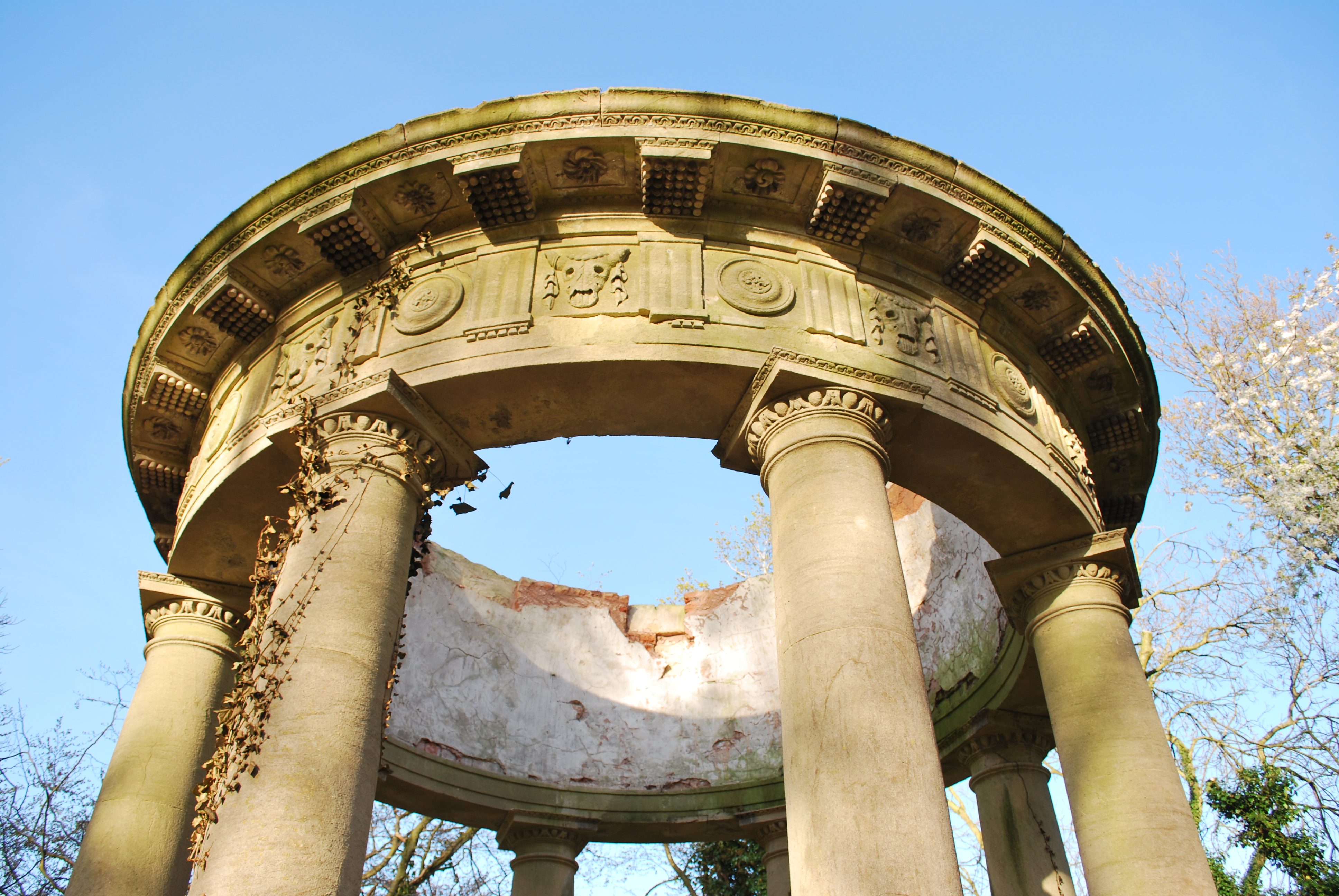

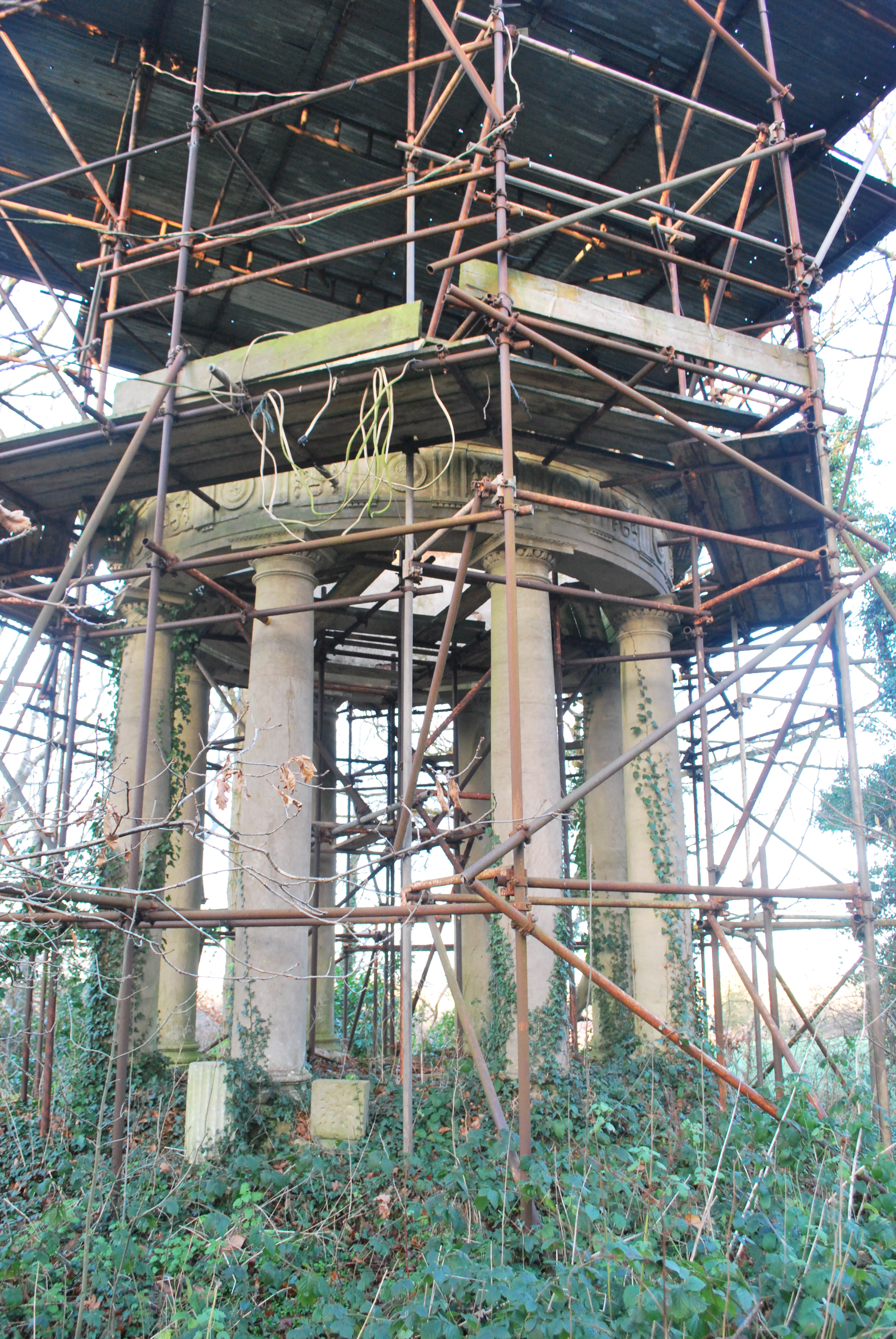
Remnants of scaffolding poles rusted together from a long abandonded attempt to keep the structure upright.

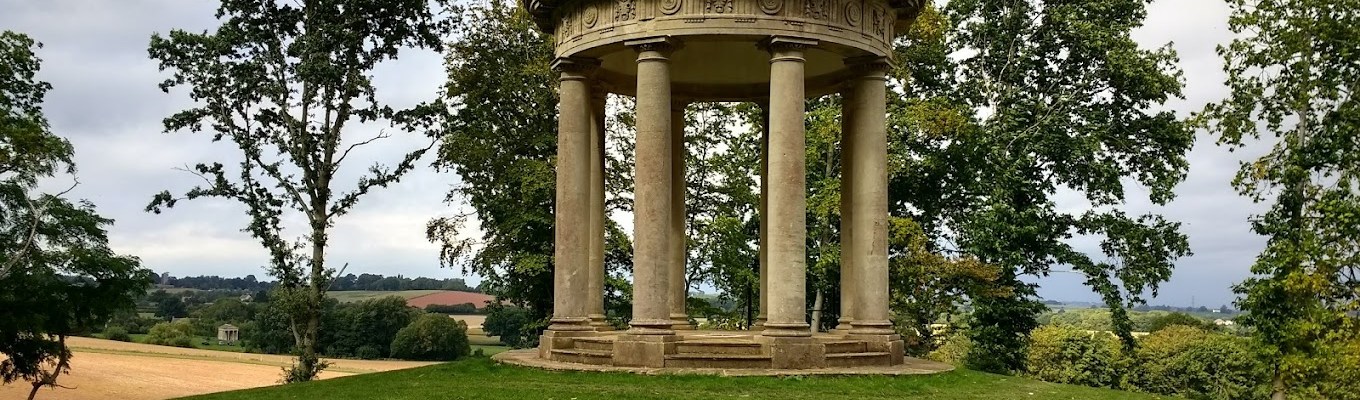
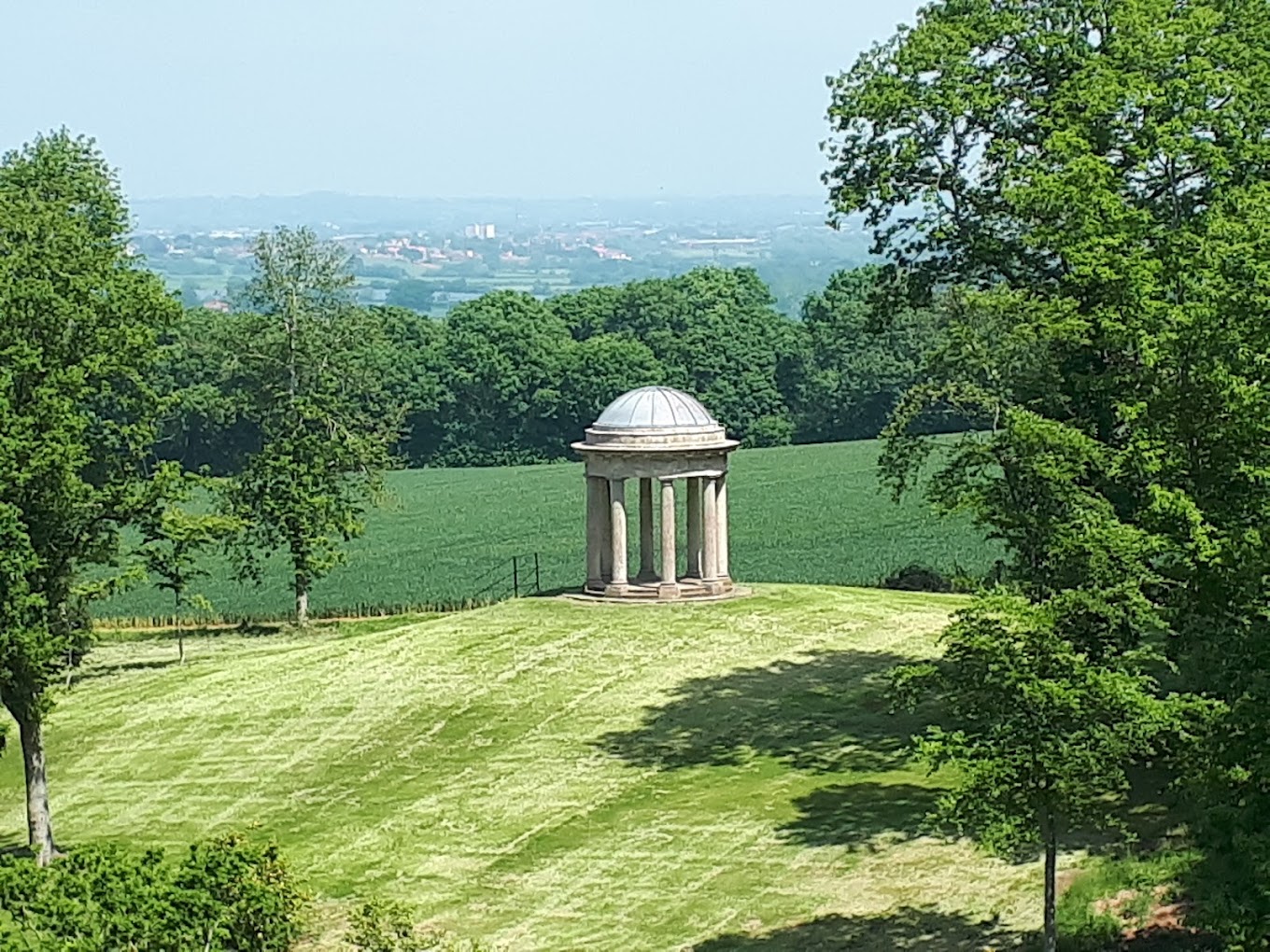
The restored Rotunda and landscape, with Halswell House beyond.
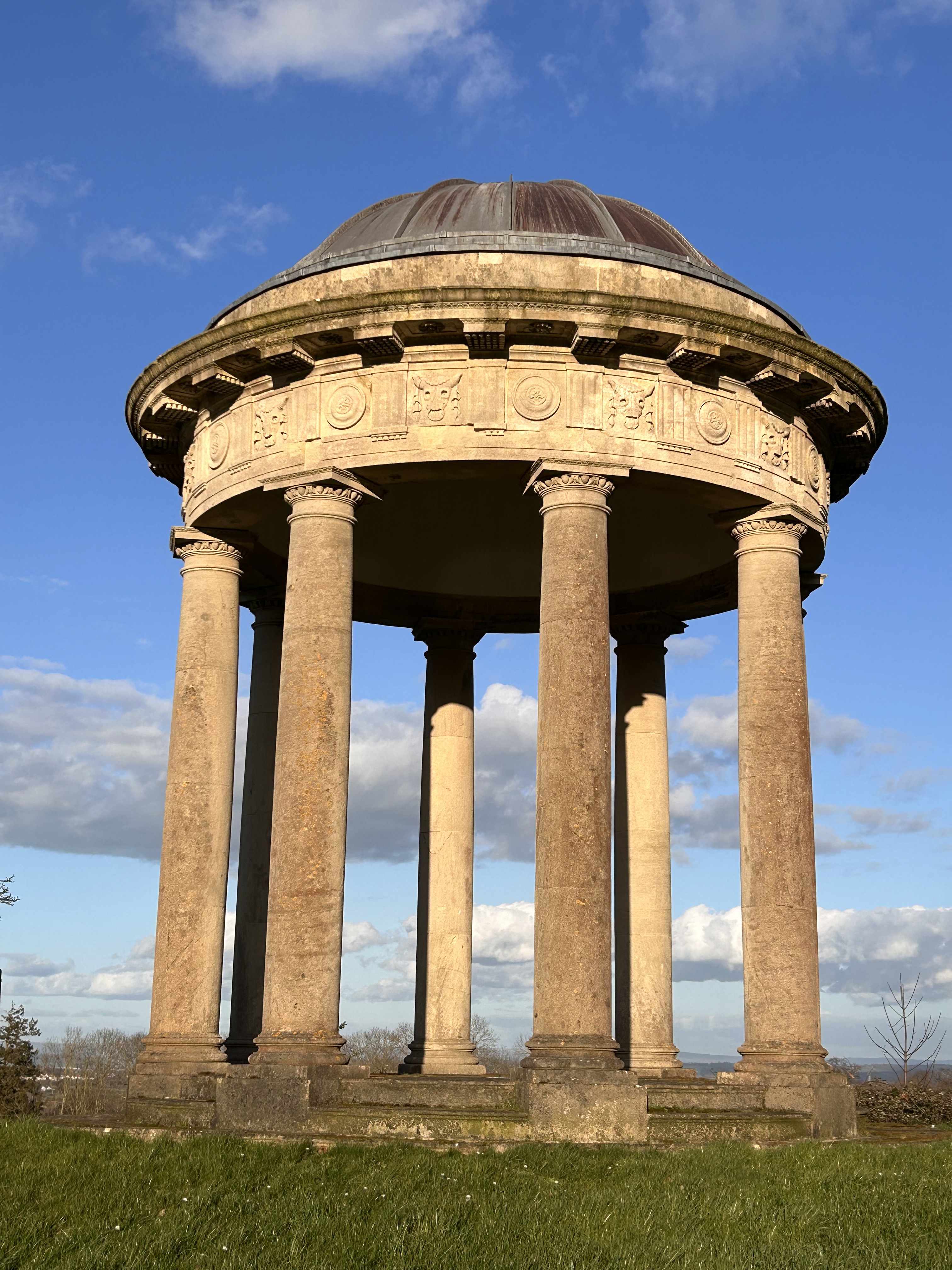
The Rotunda revived.
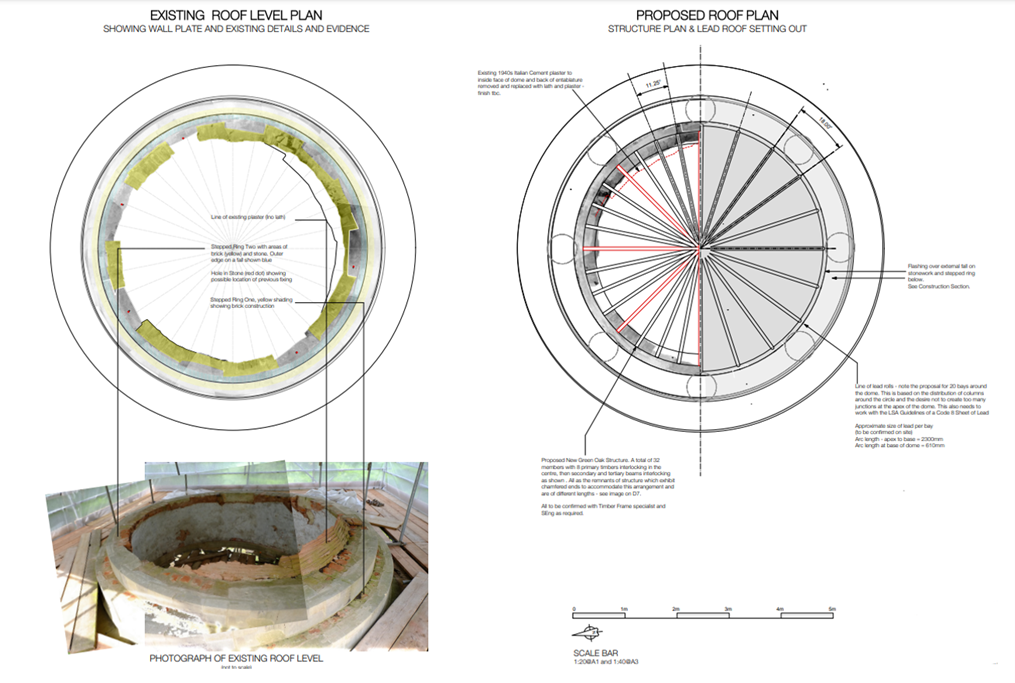
The roofless shell of the Rotunda, ignored in a wilderness of self-seeded trees and weeds from 1950 to 2014, its condition gradually deteriorated until the lead roof was gone and its oak and plaster dome had collapsed. Rebuilding the Rotunda’s dome with green oak allowed for the re-plastering of its interior, in a perfect semi-sphere, and for the lead roof to be constructed above. While much of the stonework needed attention the main structure was thankfully in a good state.
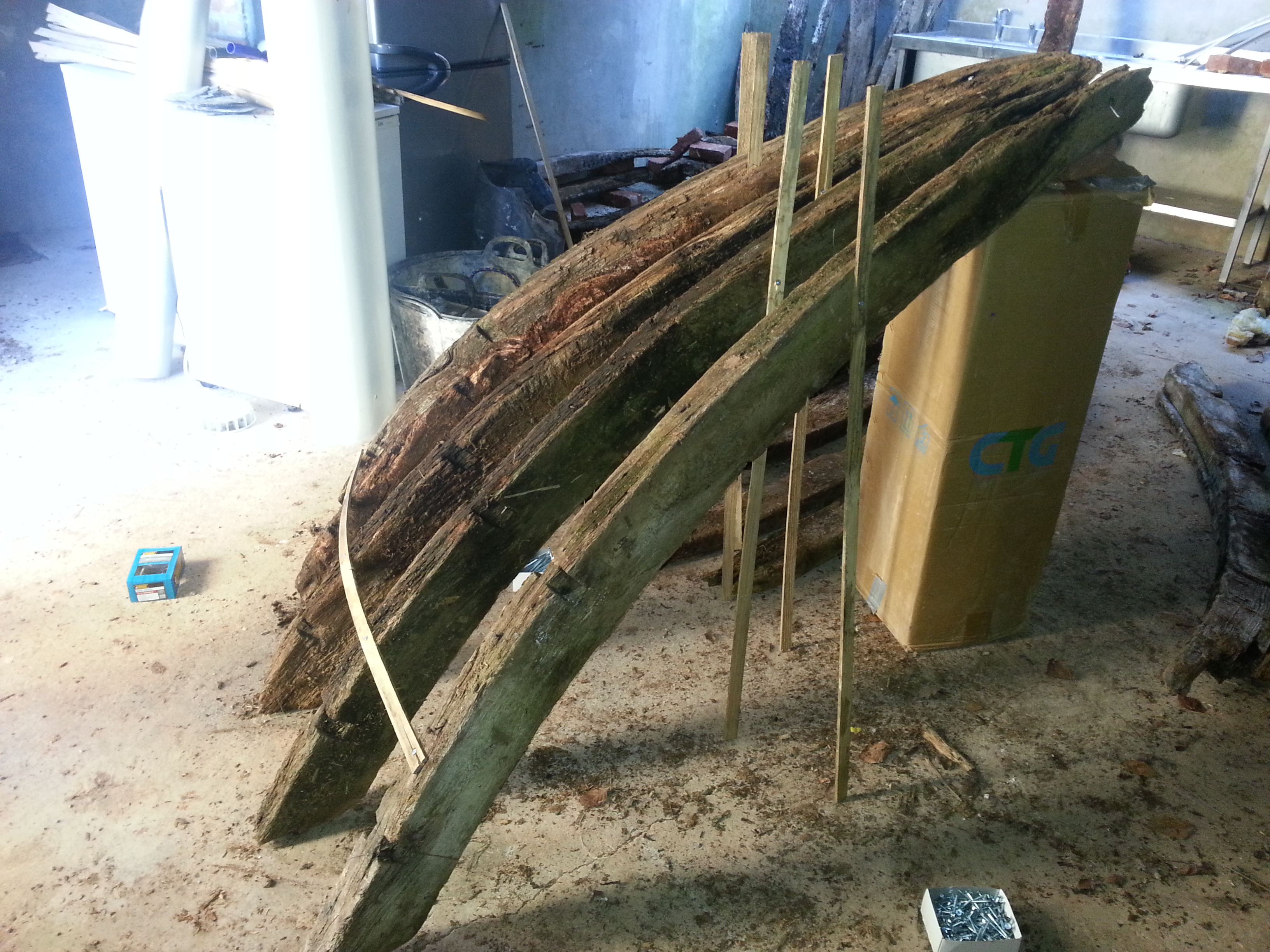
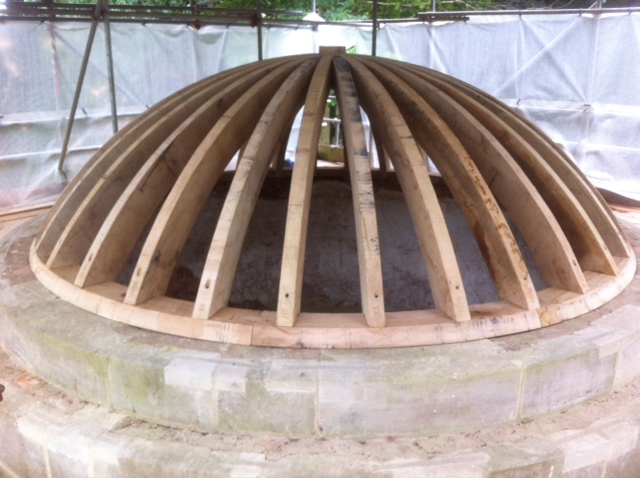
The new green oak dome is created.
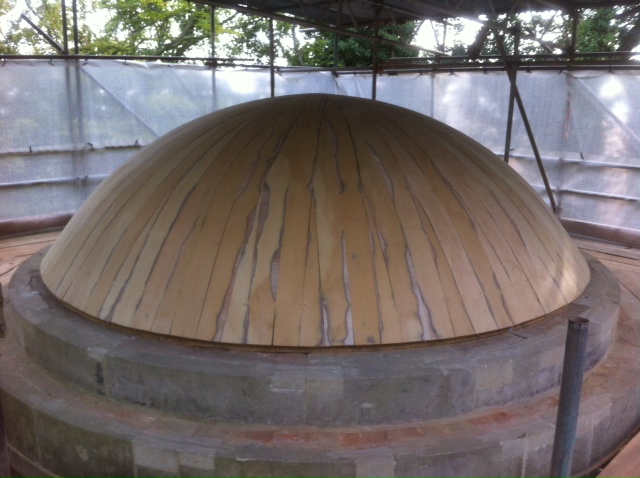
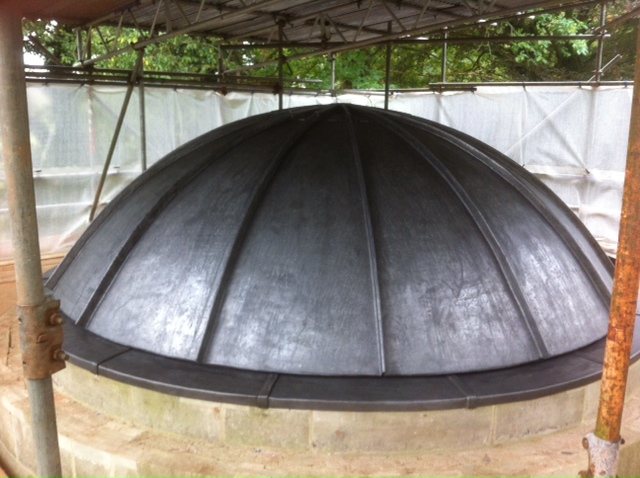
The leadwork is completed.
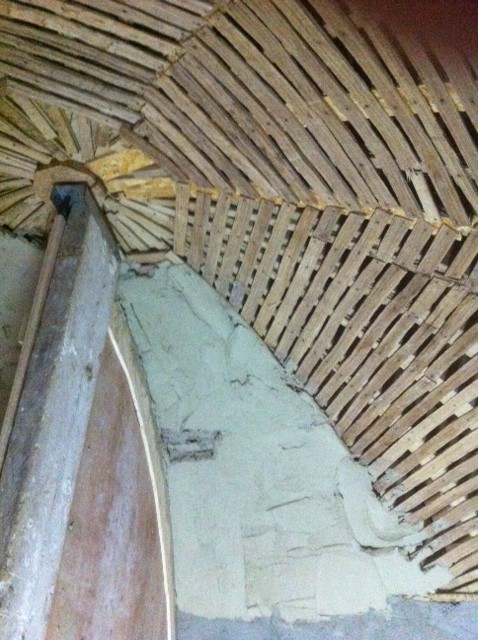
The lath and plaster ceiling being added under the dome.
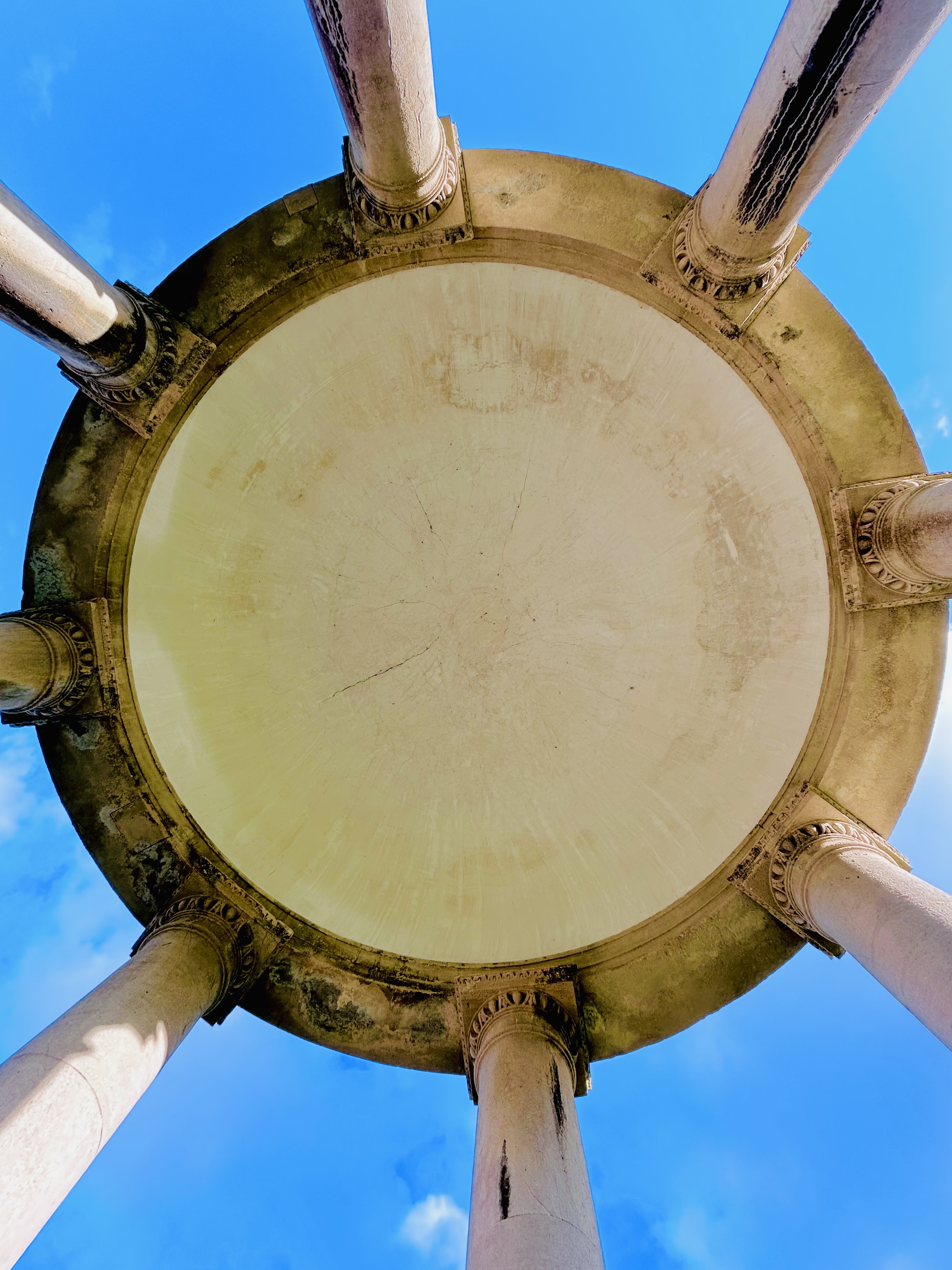
The perfectly semi-spherical lath and plaster dome is completed.
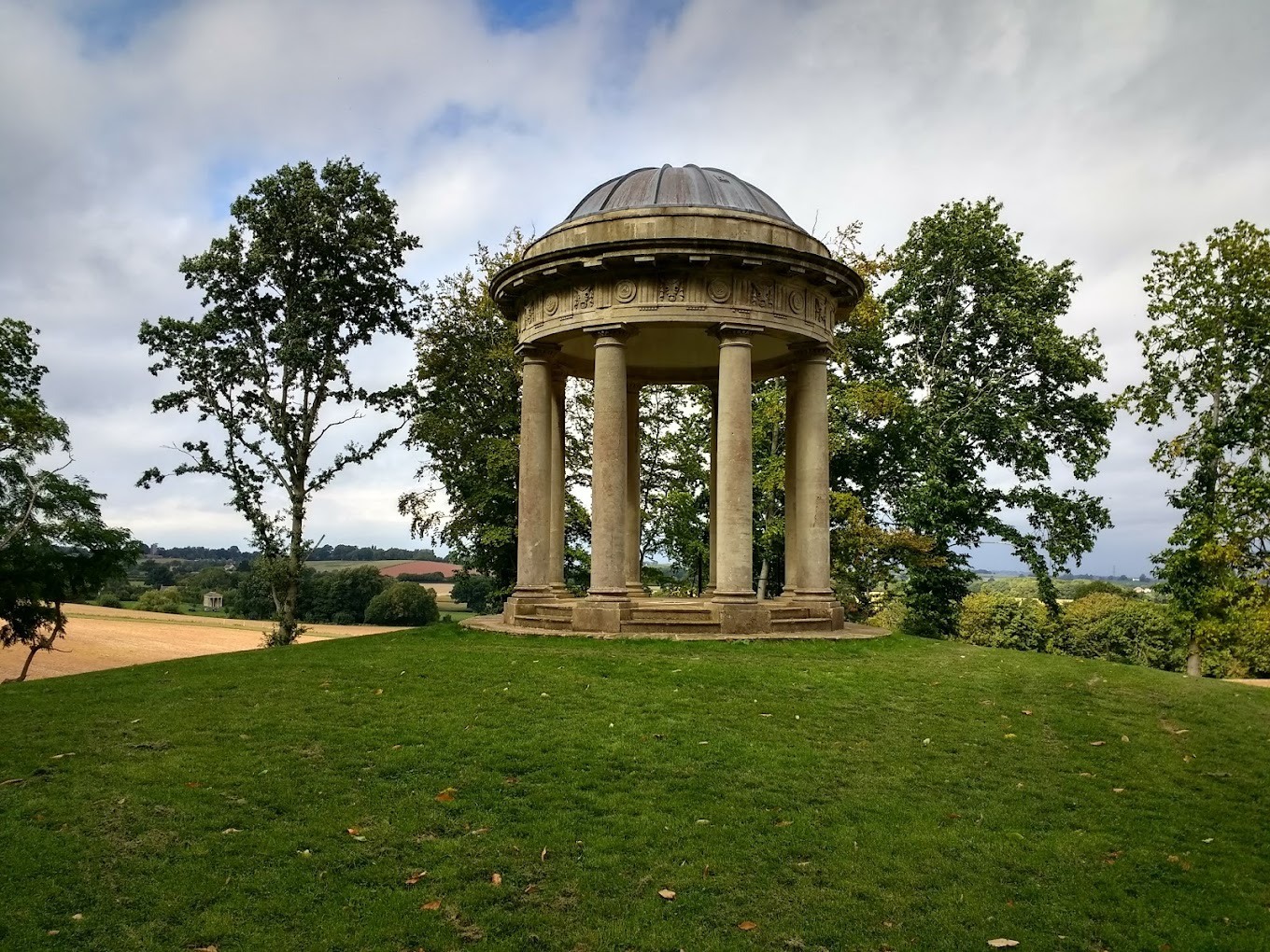
The Rotunda in the foreground, in the distance to its left is the Temple of Harmony in Halswell’s Mill Wood, both follies can ben seen from each other across the rolling parkland.
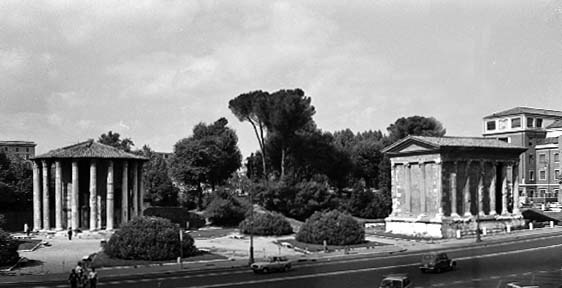
Temple of Hercules Victor, Rome, later 2nd century BC, (left) and the Temple of Portunus, 120-80 BC, (right, of which the Temple of Harmony is a Georgian replica), in the Forum Boarium, Rome. Recalling the relationship between Halswell’s Rotunda and Temple of Harmony.
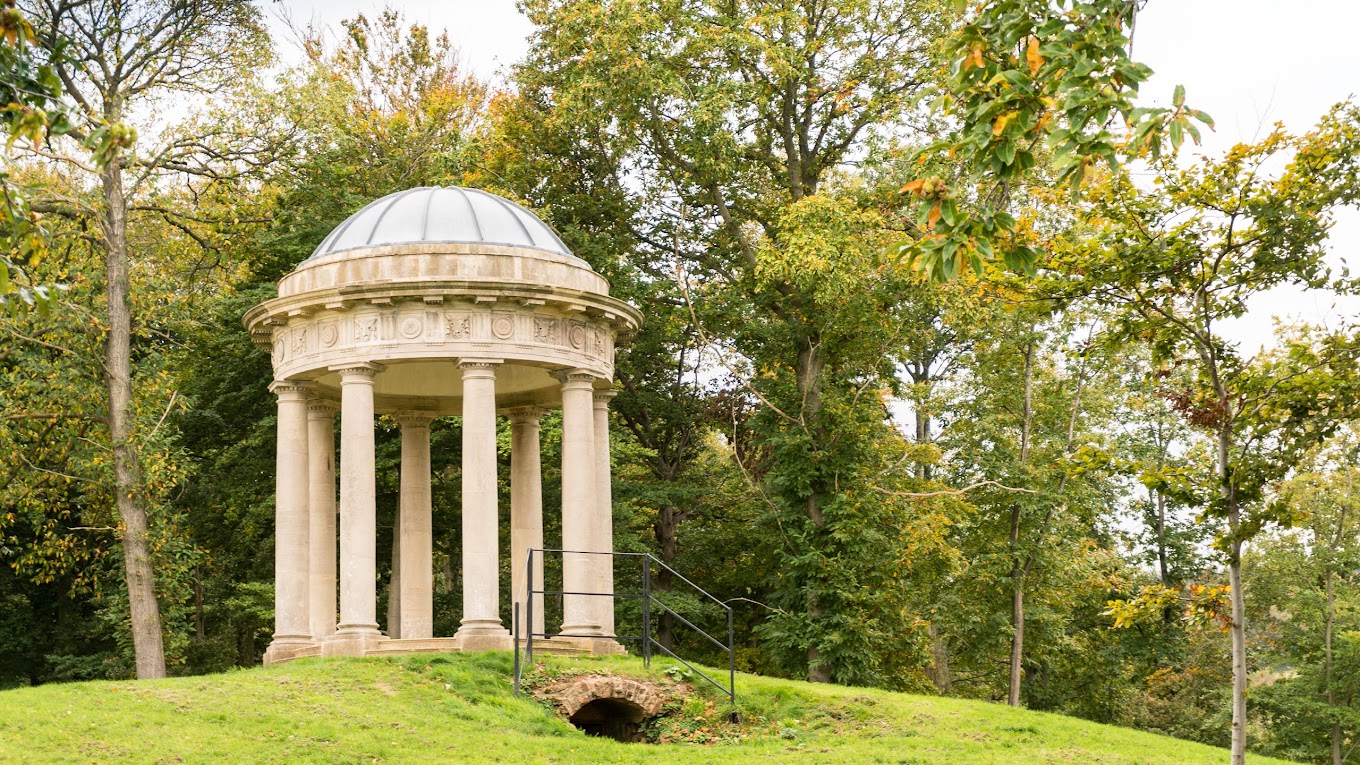
An arched entrance can be seen here leading underneath the Rotunda. Blocked for decades with rubble and earth, cleaning out the area revealed a brick-lined Ice-House, used to store frozen water from the surface of the lake during the winter for use all year round. The Ice-House was also in need of restoration and a usable entrance to be remade. As part of opening up this interesting feature to be seen and appreciated a window has been placed over an opening in the Rotunda floor which allows for a view directly down into its cone-shaped void. The elevation plans below show the exact scale of this subterranean structure, as deep as the Rotunda is tall. Popular in large estates of the time for storing ice from ponds and lakes, ice houses used a deep conical brick cellar structure to keep that ice frozen for use in warmer times.

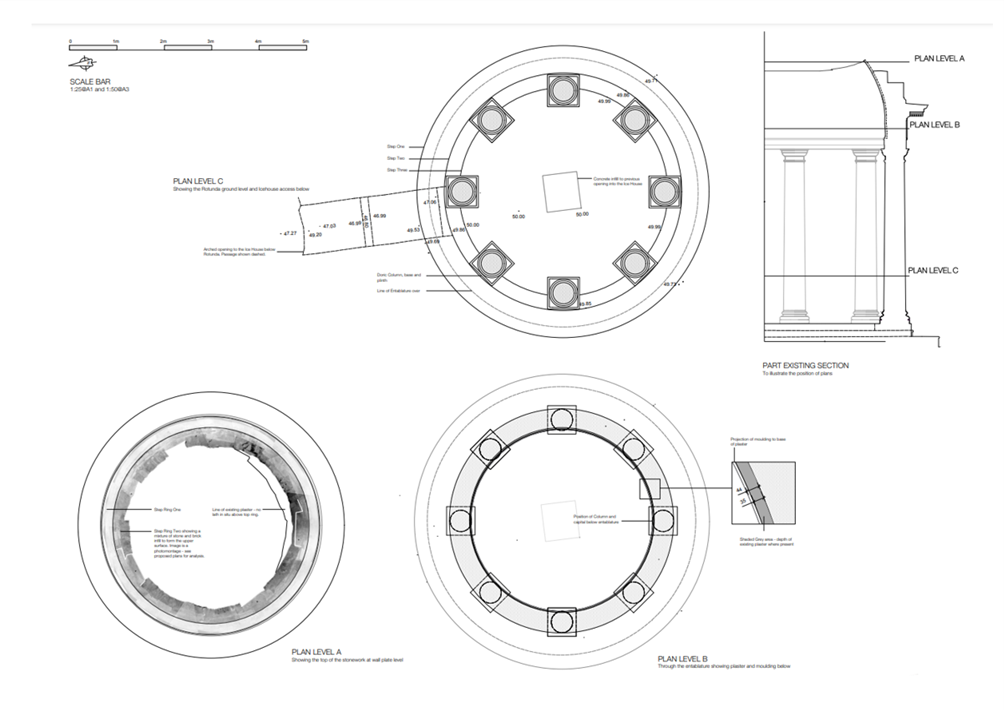
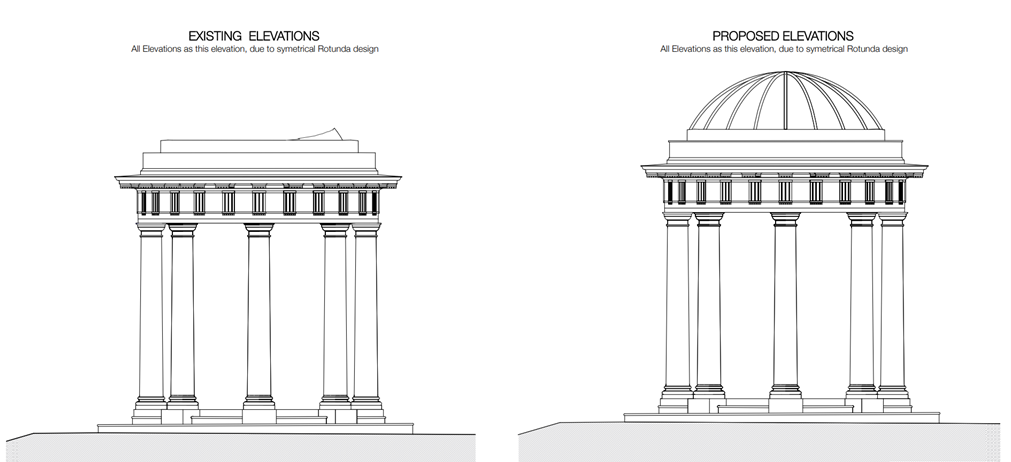
Plans and elevations of the building before its restoration.

The Ice House came with a concrete plug in its ceiling, beneath the flagstones of the Rotunda above, possibly from WWII repair work. This allowed us the opportunity to drill throgh the plug and install a glass panel, which both intriguingly gives a glimpse of something interesting happening beneath ones feet, while also illuminating the Ice House below from the top of its roof.
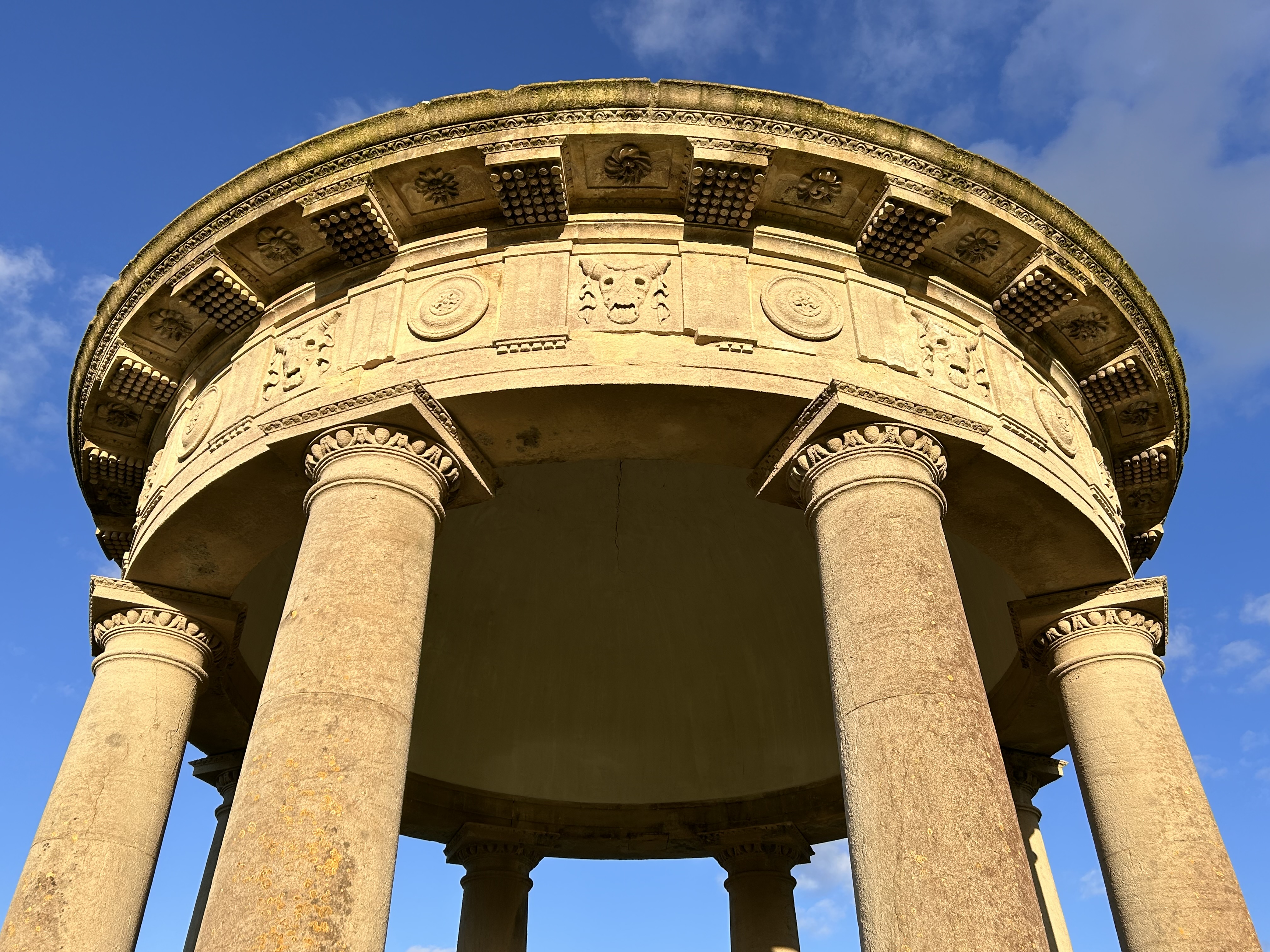
The bucranium frieze on the Rotunda’s entablature. The bovine skulls in the frieze’s metopes recall the ancient practice of sacrificing cattle in early Greek and Roman temples. Each metope panel has either a bucranium or a circular medallion, intersperced with regular triglyphs, which denote the ends of the roof structure when Greek temples were wooden.
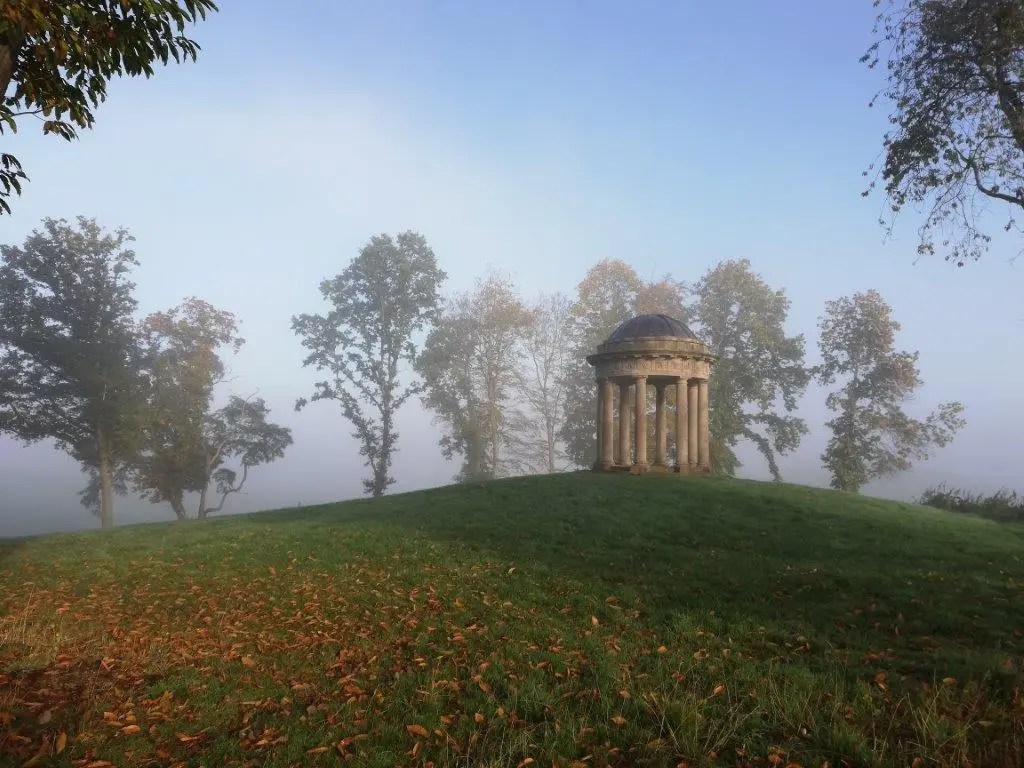
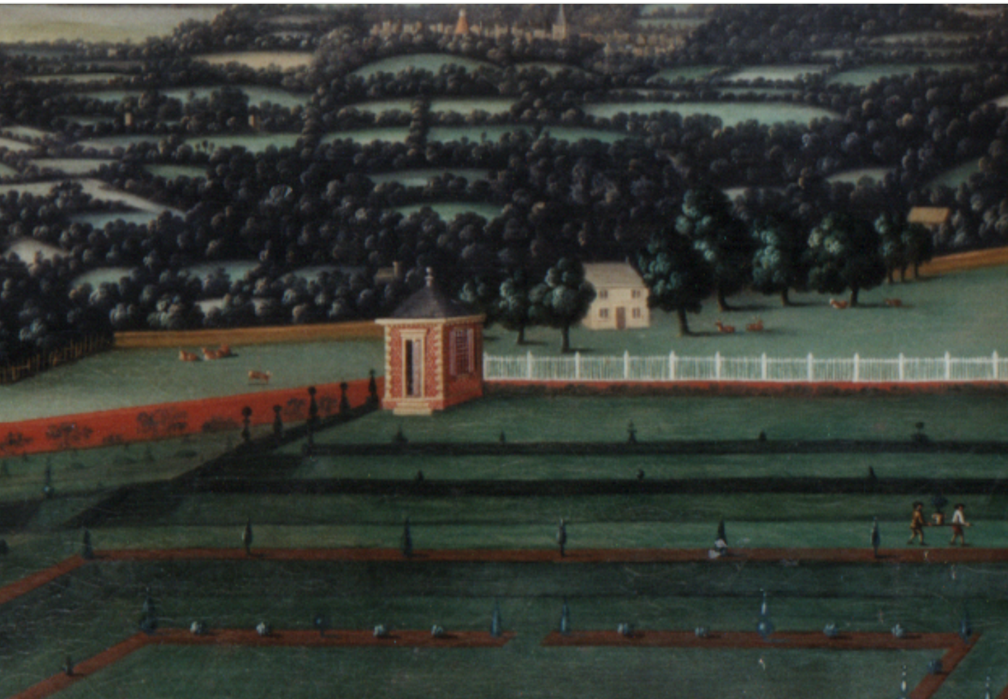
While we were carrying out the restoration we discovered the foundations of an earlier building which used to stand on the exact site of the Rotunda. This was a red brick and hamstone pavilion built as part of the formal gardens which had existed up until Sir Charles inherited the estate and swept most of the earlier garden designs away during the 1740s and 1750s. We know of this building from the painting detail, illustrated above, and through a detail from a later painting, illustrated below, we can see how that earlier building was given a stone portico before Sir Charles removed it entirely and built Mrs. Busby’s Temple in 1755.
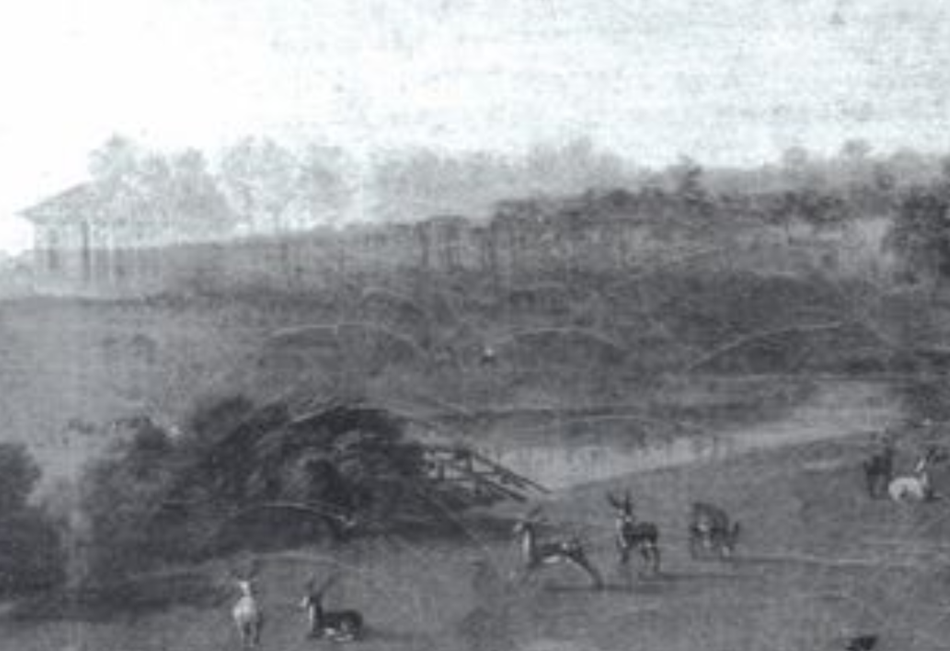
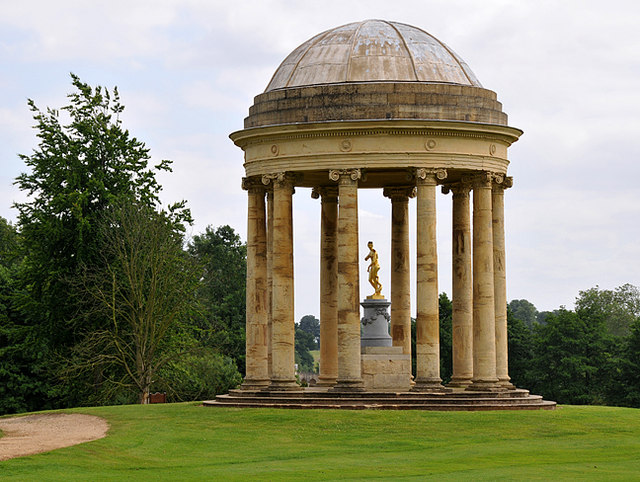
The Rotunda at Stowe House, Buckinghamshire, by Sir John Vanburgh, 1719-21. While Vanburgh is undoubtedly one of England’s most inspired architects his original dome, illustrated below in a contemporary print below, was replaced by the current, lower version by Giovanni Borra in 1763. This new and more pleasing dome is much more like that created at Halswell a few years earlier in 1755.

The timeline of the Rotunda, from its completion in 1755, through its twentieth-century decline and up to its restoration in the twenty-first century.
 Halswell Park
Thank you Roy and team – this is absolutely amazing – such a beautiful building saved before it was too late. The workmanship and research is second to none and I congratulate you all for saving a building so close to my heart. Patricia Chartres and I used to play up there and hide behind the pillars, etc. We also used to explore the ice house underneath with no thought for any danger. Halswell was a great place to grow up in the 60’s and it’s so good to see all the work you are doing there. So pleased you have sorted out the vegetation around the Rotunda which now has a clear view again towards Bridgwater. I used to stand up there and I was able to see the Big Wheel at the September Fair and wished I was there as part of the fun. Once I thought I saw a Flying Saucer!! A magical and special place indeed. Sarah Dean (Formerly Kellam, nee Ansdell)
LikeLike