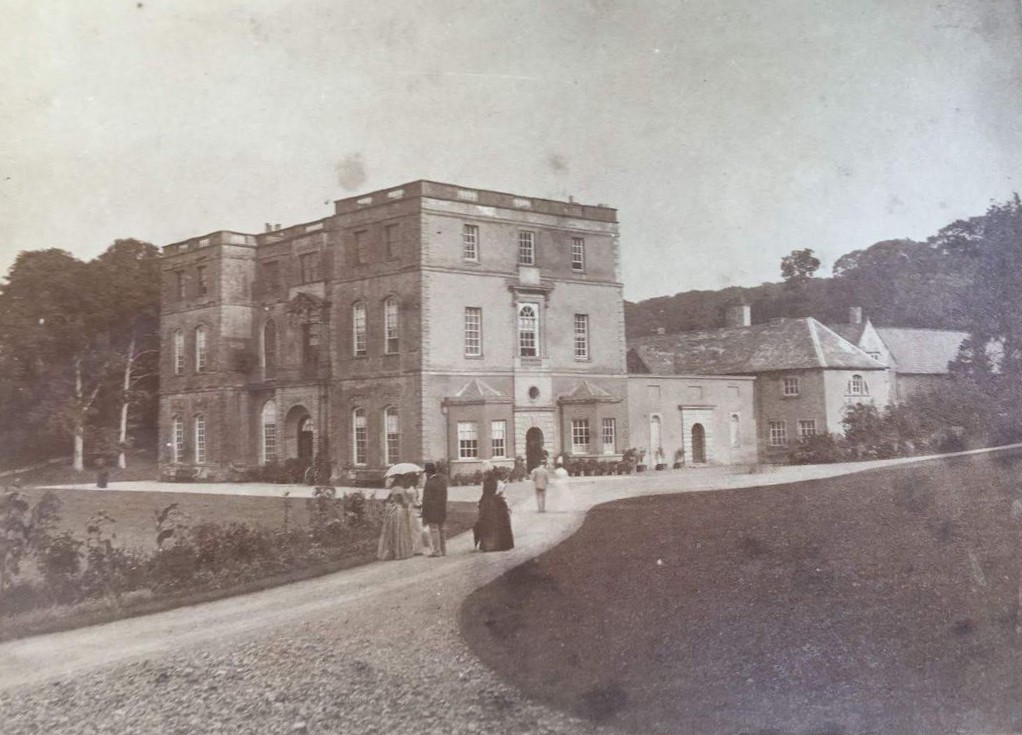
Halswell House in the Edwardian period seems here to have been a tranquil and established pillar of the Somerset countryside community. This summer gathering on the north lawn shows us a house that has stood on this site since Saxon times and, as far as we know, only had good fortune. New parts were added, updated, and it kept up with fashionable architectural and interior developments over the centuries. The west façade was updated in 1753, when its 1680’s baroque carved stone features were removed and a restrained and elegant Palladian façade modelled over the older face. Another, seemingly minor, of those developments was central heating, but it was this that gave the house its first big shock in 1,000 years. In 1923 a boiler in the cellar, directly under the west façade, seems to have caused a massive fire which ripped through that part of the house.
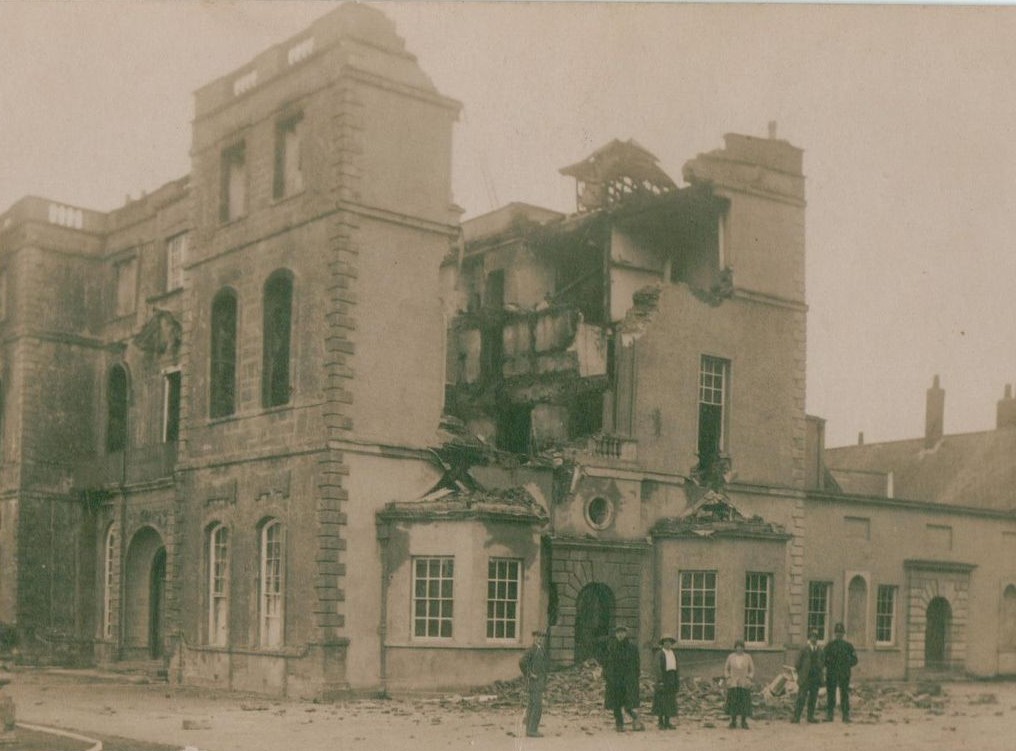
Fire! 1923
The damage caused was real, but it also gave an opportunity, to rebuild exactly as it looked before, but stronger with new materials and techniques. The flammable roof and floors were remade in concrete, which was done to fireproof the building for the future. But unknown at the time, that work probably also saved the house from likely demolition during the darkest years for the English country house, 1950-1985. The potentially porous older roof structure gave way to new water management that created a comparatively maintenance-free, and sealed, roof. New lead downpipes were added from the watertight new roof and this work created a strong and weatherproof block that managed to withstand decades of neglect.
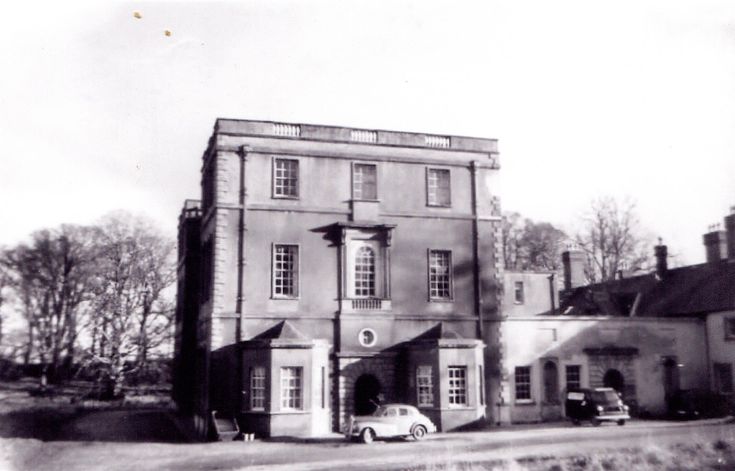
The west façade c. 1962, when the estate had been broken up and the main house, or Mansion House, was used only for storage. The façade you see above is the result of the restoration after the fire 40 years earlier. However not all of the new materials and techniques worked as well as others. Concrete was used to render the west façade. This was put over the older porous materials that made up the wall: mort slate from the earliest times, ham stone dressings from the 1680’s and red brick from the 1753 facelift. Concrete has a very unfortunate effect on old buildings which need to ‘breath’ and let moisture out. The concrete seals it in, between itself, and the wall behind. Ultimately, chunks would fall off, only to be repaired with more concrete, not to mention the insidious retention of moisture inside the building itself. This sorry state was halted recently by the current owner. The concrete was removed to let the building dry out for a long period, and breath again properly.
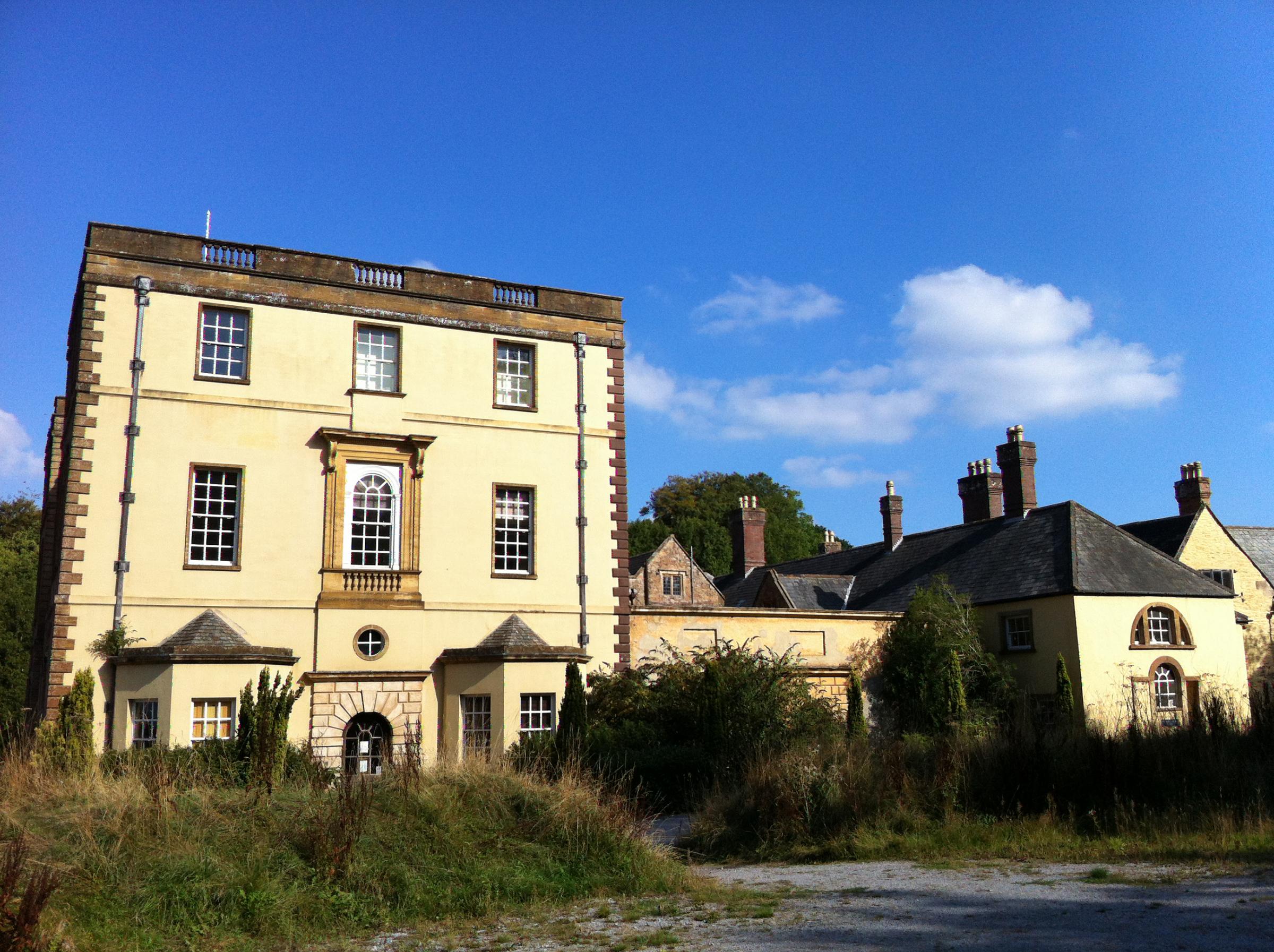
In this image above, Halswell had been empty before the current ownership. While the render looks stable, and very bright yellow, the problems of sealed-in moisture were ongoing and serious. The moisture eventually led to a serious dry rot incident which has been halted and reversed at Halswell, but it was clear that in order to safeguard the building we would have to right some of the 1920’s wrongs.
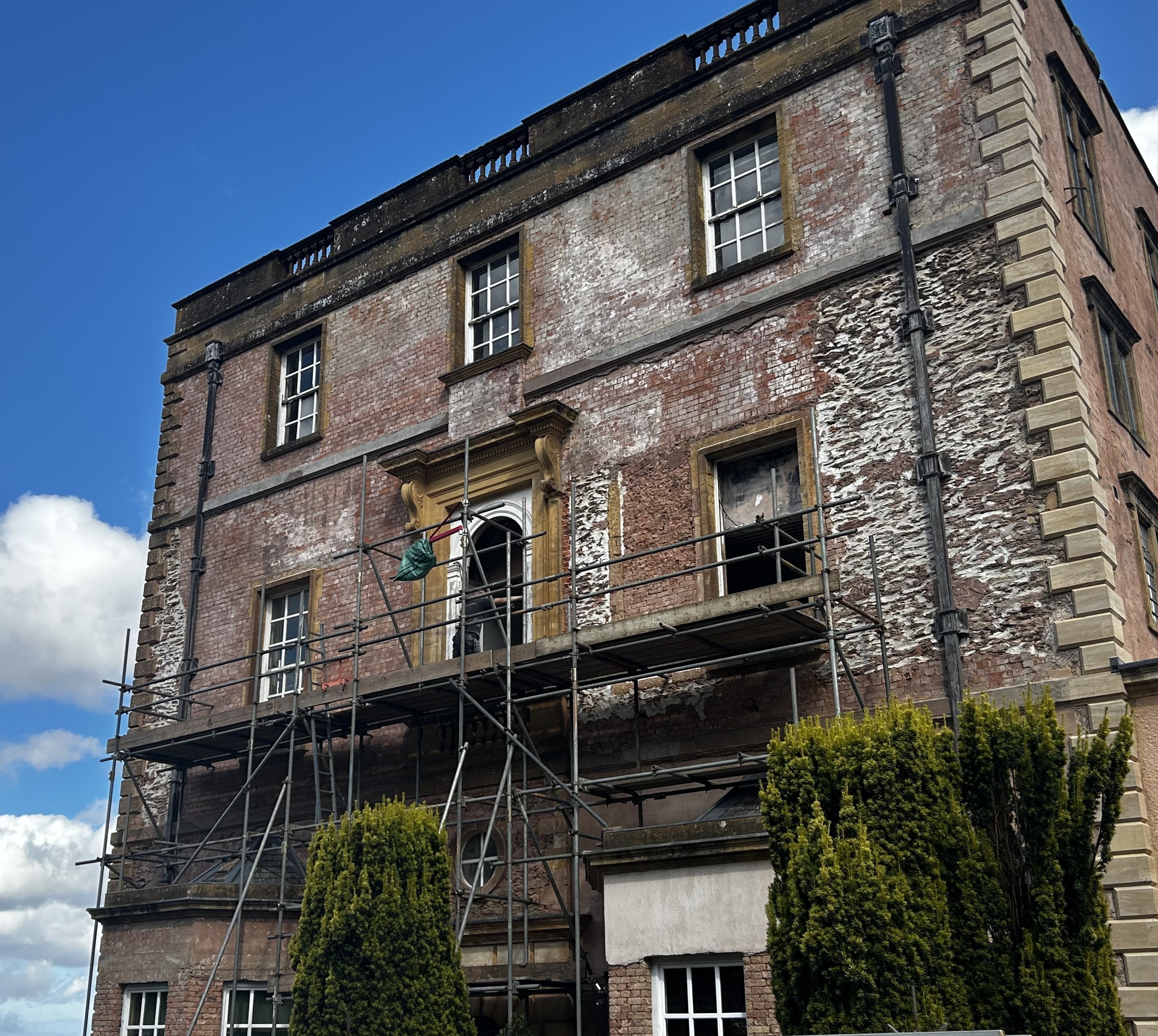
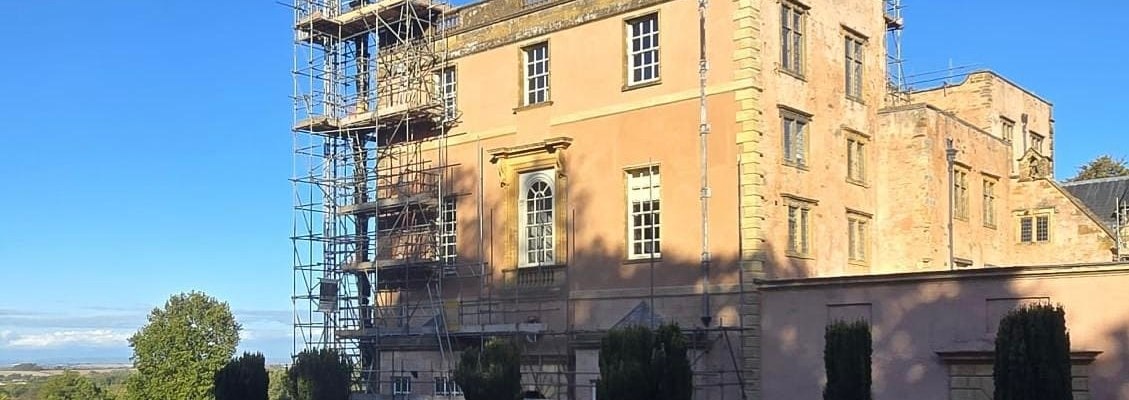
Here the concrete is removed and the patchwork of materials, and so chronological phases of works, that lay beneath was uncovered. In the above image we still retained concrete corner stones, or quoins, to the right edge of the building, very unlike the original ham stone quoins visible to the left of the image. These also needed to be rectified. What the removal of the concrete render did was uncover the mysteries of the history of the house. We had believed that the north wing was built in the 1680’s, probably an older grand wing was demolished to make way for this. However, the building archaeology uncovered gave us tantalising evidence that in fact this range may well be as old as the rest of the Elizabethan wings attached to it. The drawing notes from the archaeologists, illustrated below, meticulously record old mortars, bricks, stones, and likely phases.

We found much older window openings of ham stone, predating our timber sash windows of the 1680’s and 1750’s. We also found that the quoins at the north corner, left in the image, were not structural but had been set into an existing mort slate wall. It was beginning to look as though the west façade was going to unlock the lost history of Halswell House, how, and when, this north range was built.

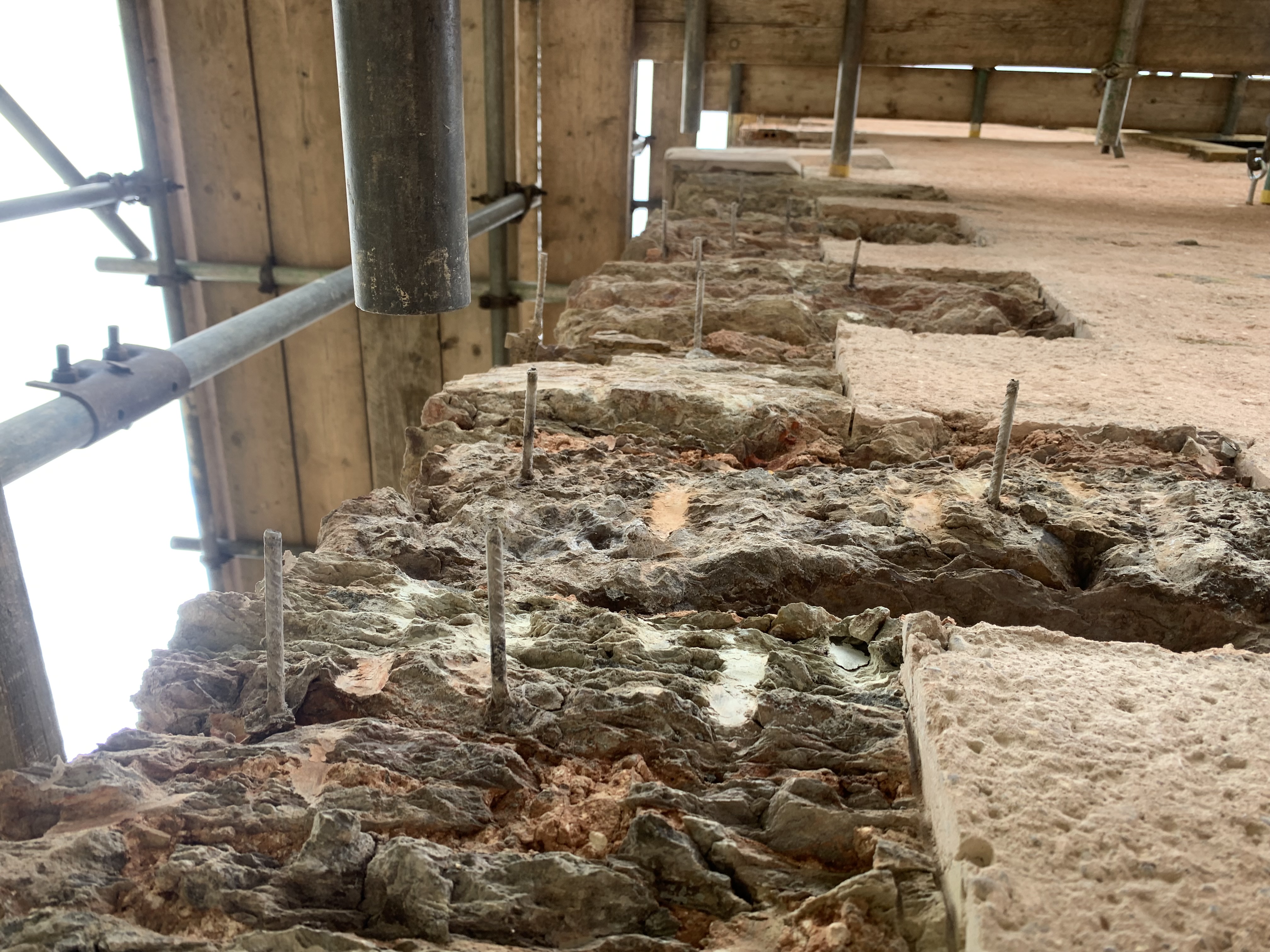
The south-west corner of the house, looking upward, after the removal of the concrete quoin stones which were put onto this area only of the building in the twentieth century. The image shows the old mort slate wall beneath.
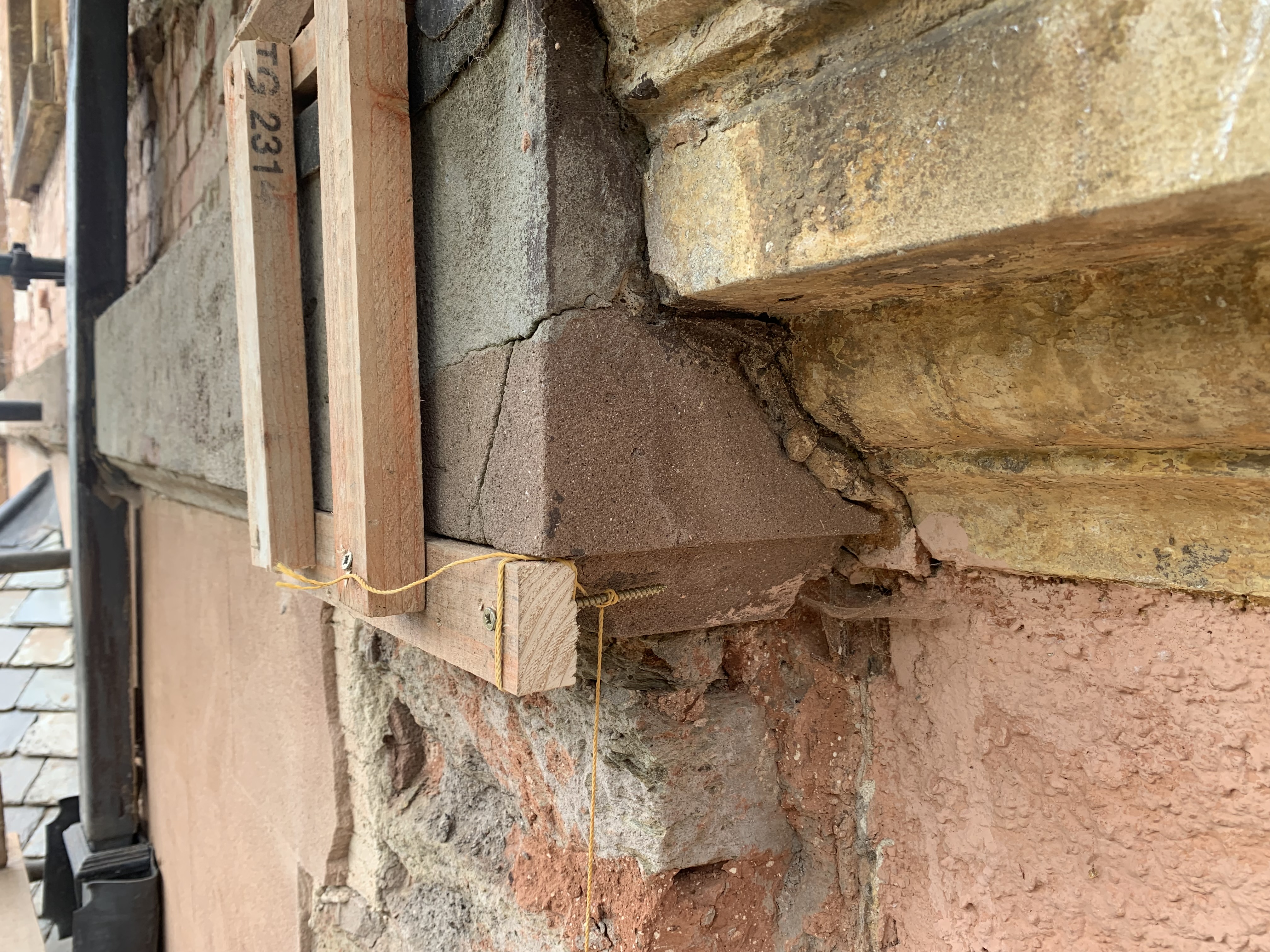
Removing the broken and inappropriate 1920’s and later concrete facings to the west façade. In this image a concrete stringcourse, itself collapsing, is to be be removed and replaced with ham stone, which is the original material used in the 1750’s facelift of that façade.

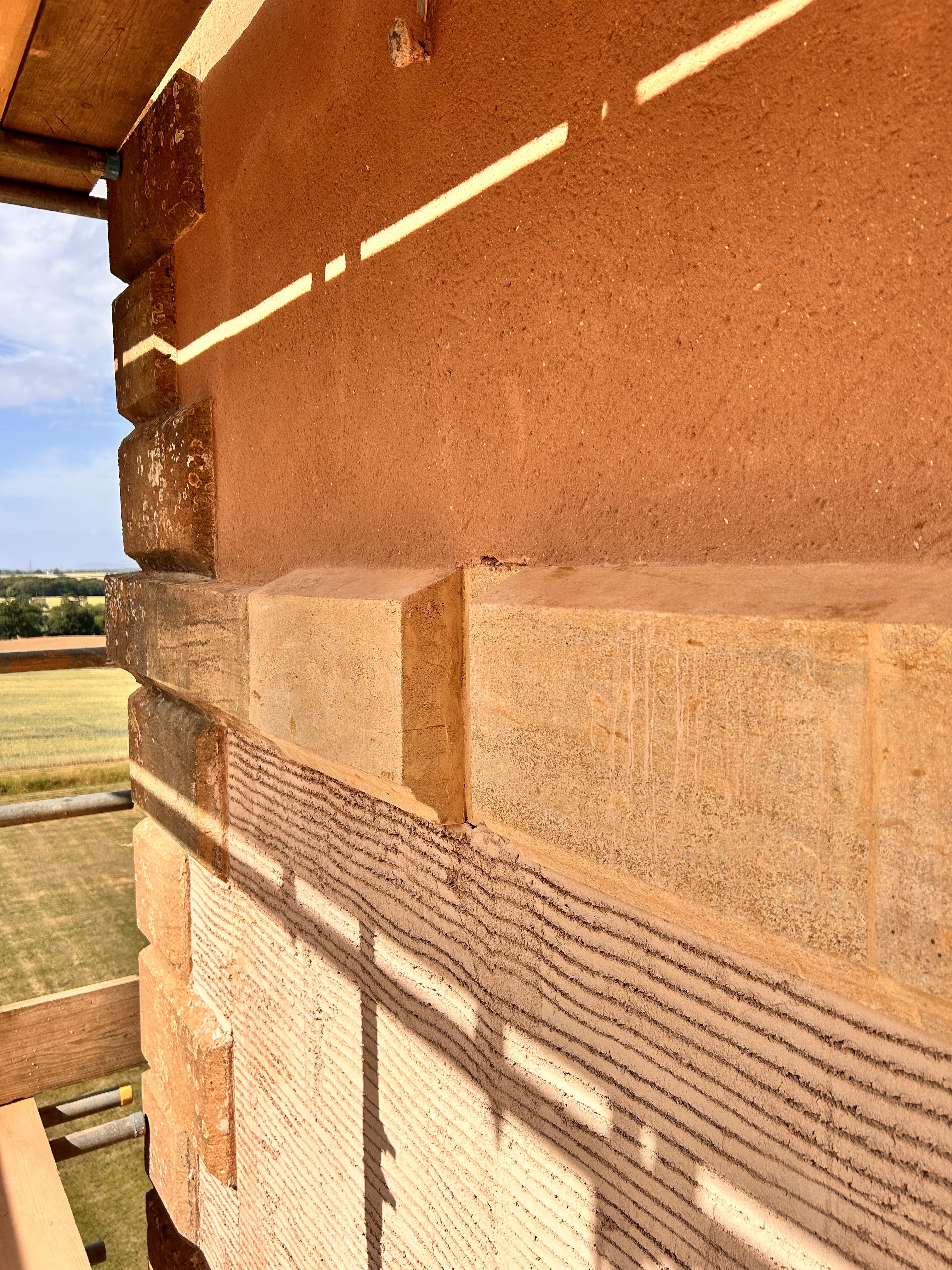
Traditional lime render was needed to correct the problems with modern concrete. This needs to be applied in warm months by skilled traditional craftsmen. Adrian and his team from Twyford Lime expertly mixed and applied the renders, matching the colours of the existing renders elsewhere at Halswell. These colours themselves are based on the red clays in the soil around the estate, traditionally used in its mortars and renders. The finished render is shown here on the top floor, with the render process still in progress to the floor below.
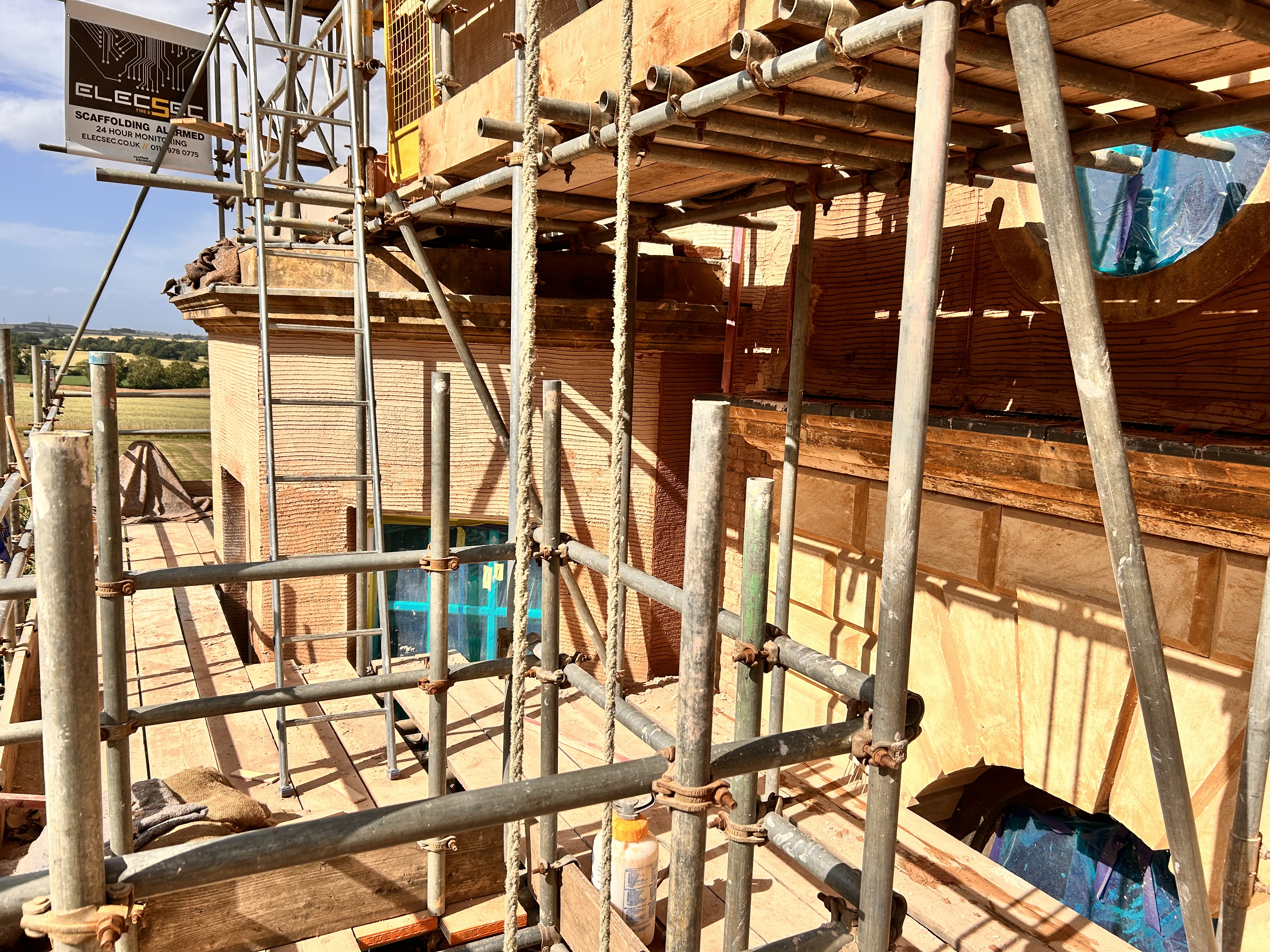

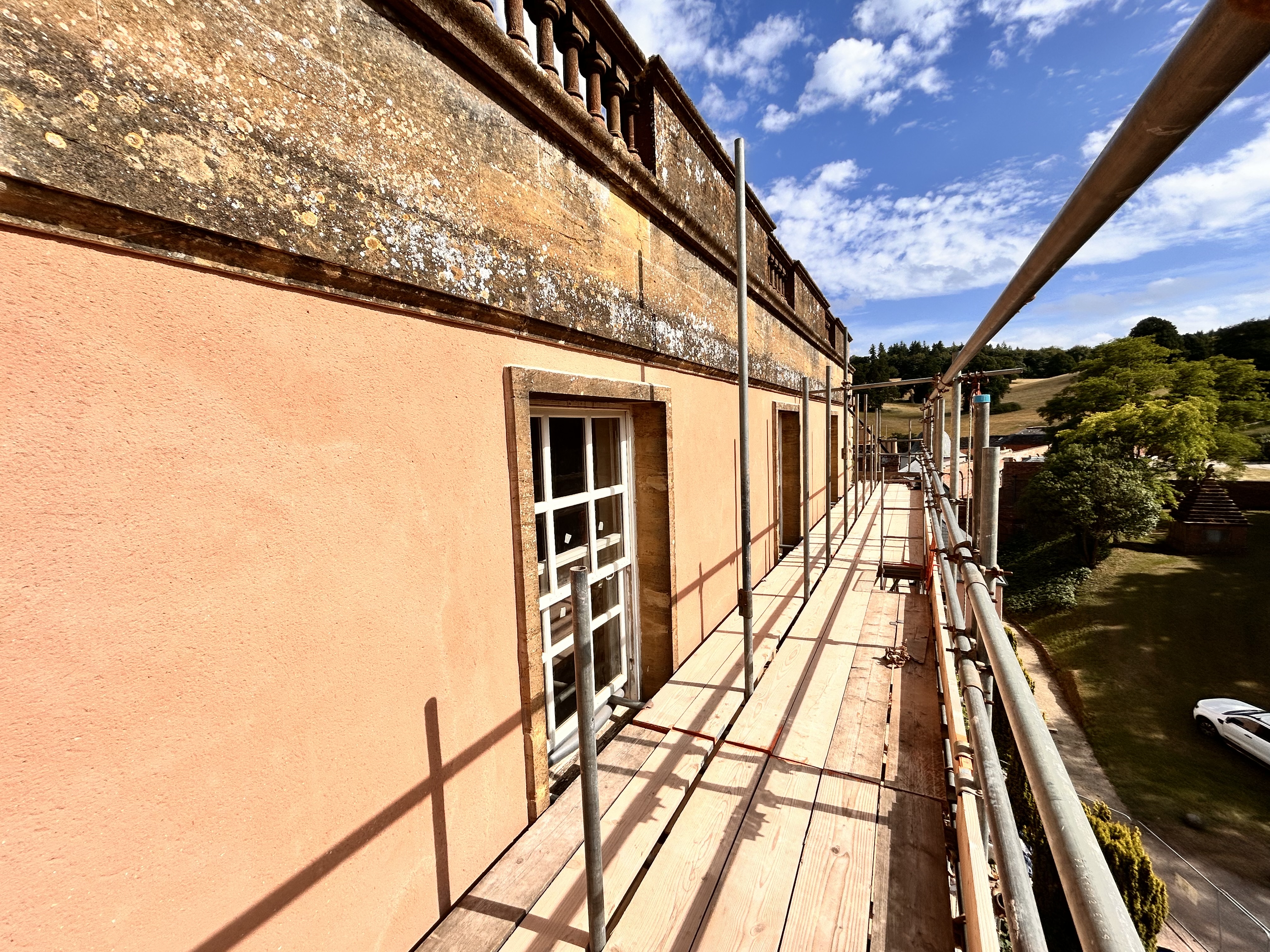
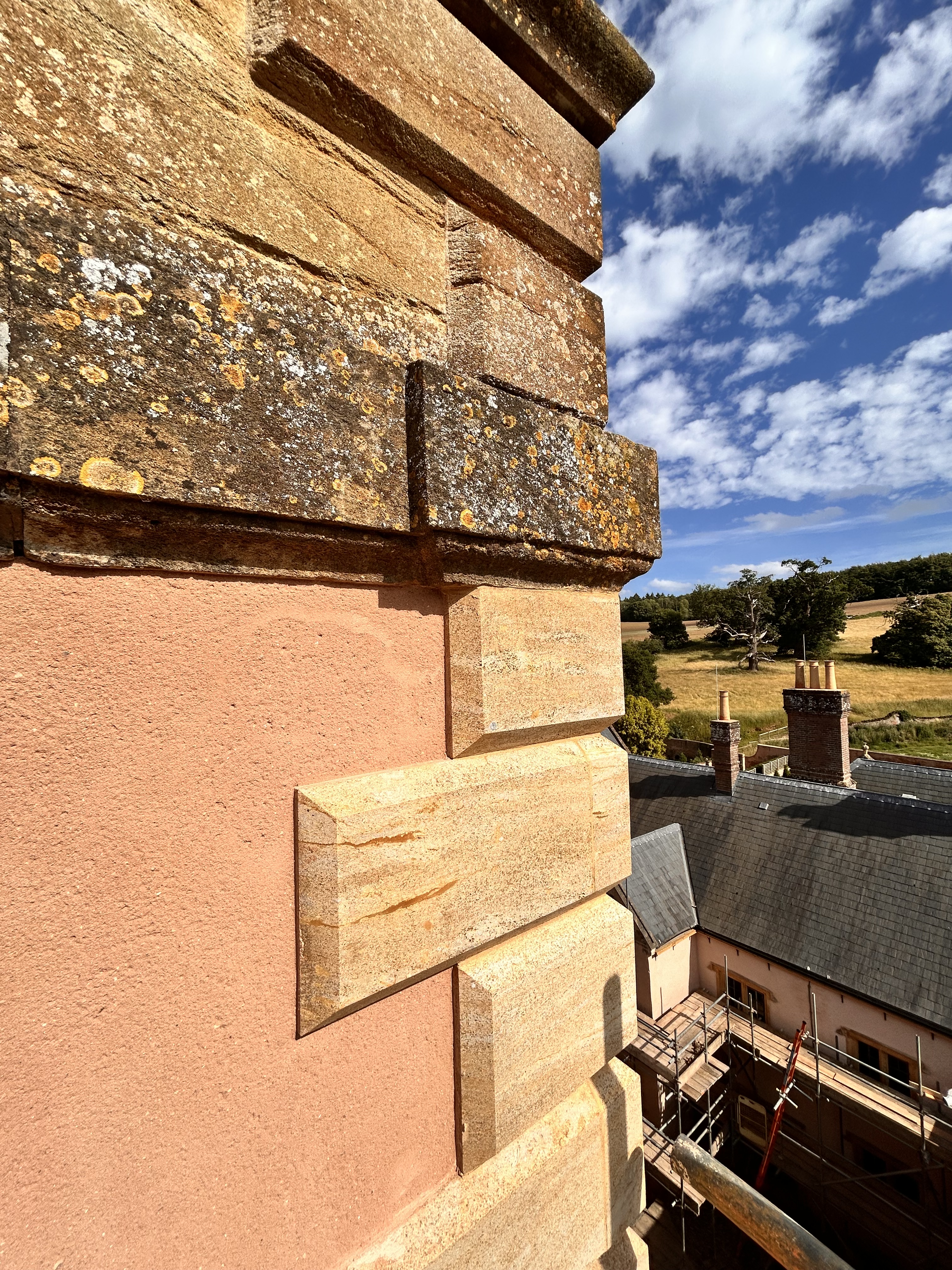
Completed render set against the early ham stone parapet and the new ham stone quoins carved and installed by Orchard Stonemasons.
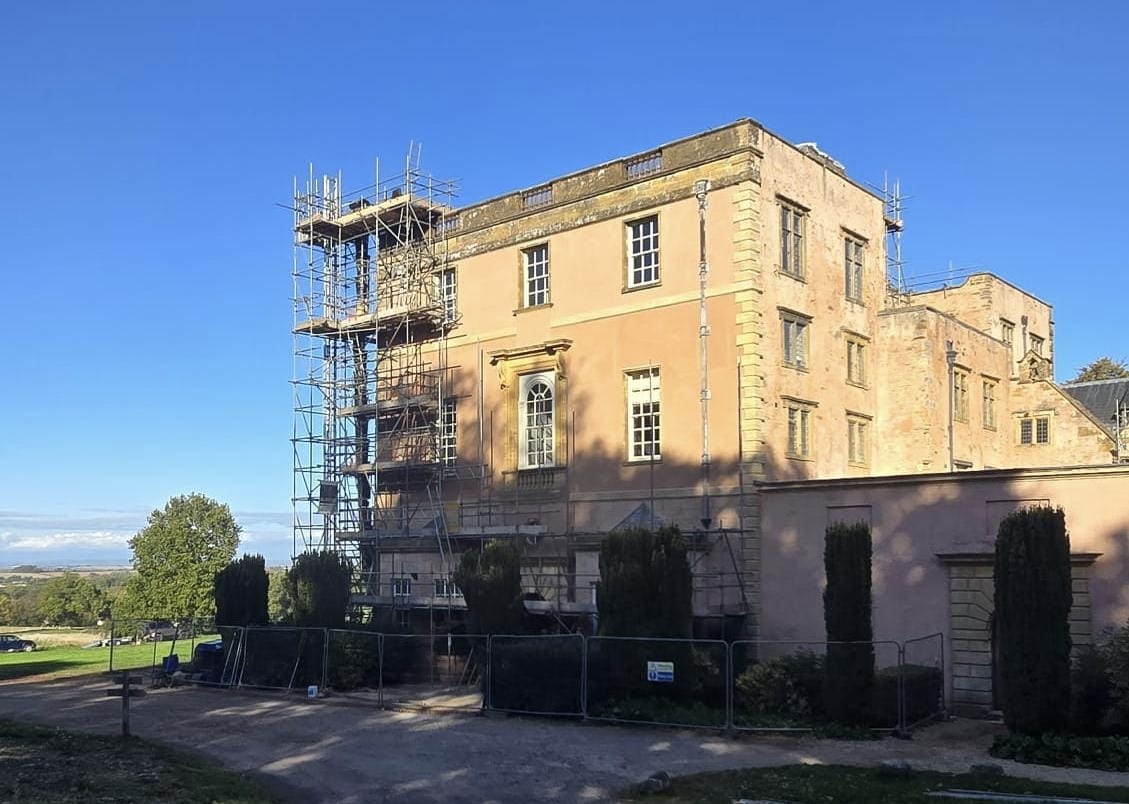
With the scaffold nearly down this traditionally conserved façade is now almost completely visible. Please come and visit us to see the fully revealed façade for yourself!
 Halswell Park