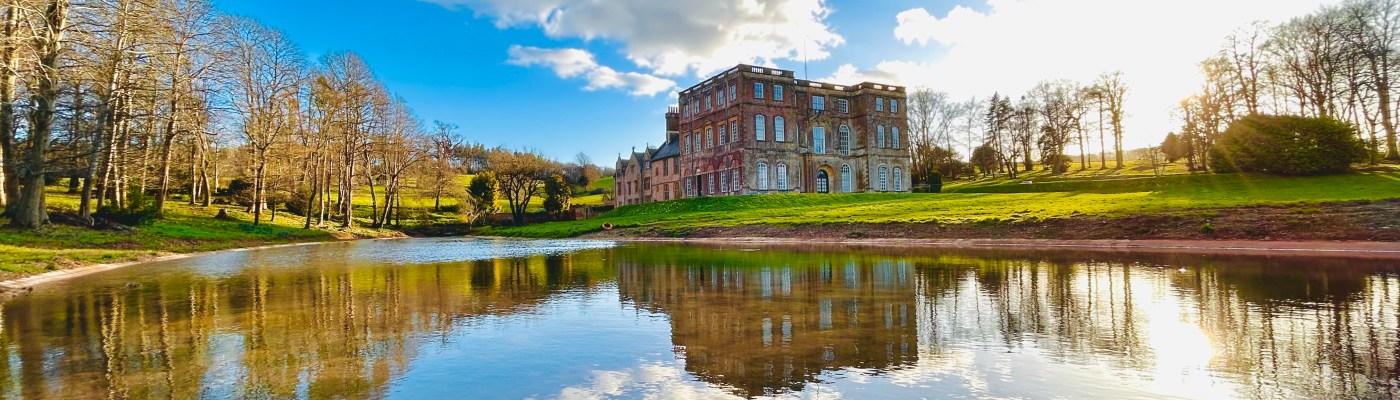
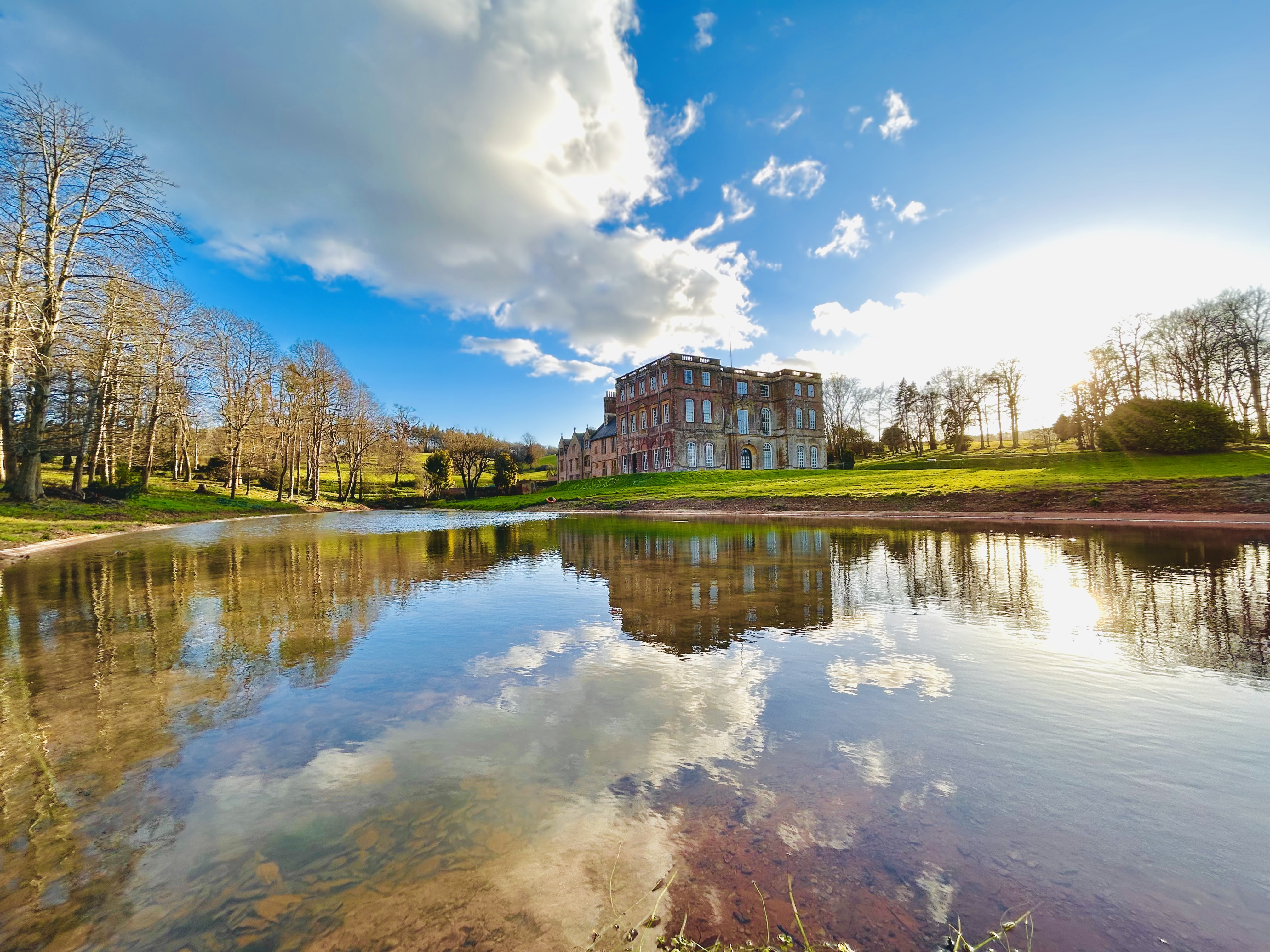

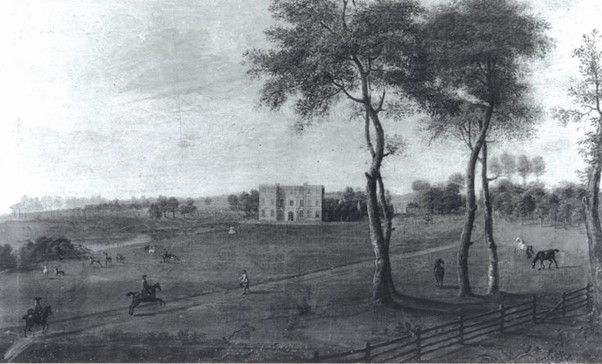
The body of water that sits to the east of the main house is first recorded visually in the above early-eighteenth century painting of the gardens, which was painted from the roof of Halswell House. The large pond that we now have was, at this date, a diverted and managed subterranean waterway which fed only a fountain within the garden. A feat of late-seventeenth century engineering to create water pressure strong enough to power a high fountain. This formal garden of the late-seventeenth century was partly turned into a pond later, the remnants of its brick and stone pathways have been discovered near to the pond by our archaeologist James Brigers.
Soon after Sir Charles Kemeys Tynte (1710-1785) had inherited the estate in the mid-eighteenth century these formal gardens had been swept away so that he could introduce a more up-to-date sweeping landscape in the style of Capability Brown. For gardens like this a large body of water was essential. At Halswell, with its natural spring located within the old circular demesne perimeter, this was not an impossible stretch. In the below 1756 map we can see his first attempt which was two large ponds, one sweeping and long, and below that, probably fed by a cascade of water, he had made a very large circular pond. The little red brick and ham stone turret-sized building, seen here in the early painting, between the red brick wall and the white fence, was removed by Sir Charles. In its place still stands our stone Rotunda building. The terraces and parterres so fashionable in the seventeenth century were all removed and thousands of tons of earth were shifted in order to re-create a more naturalistic landscape, of the type that had presumably existed before the formal seventeenth-century designs were painstakingly laid out by his forebears.
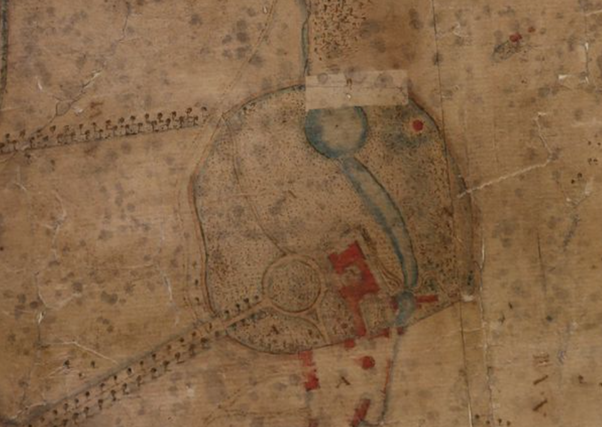
The map of 1756 which shows the long pond, but at that date with a large circular pond to the north, and another small pond to the south. Neither of these extra two ponds seems to have survived Sir Charles’s changes of mind and design over his period of stewardship. The red dot to the right of the circular pond denotes the recently completed (1755) Rotunda, or Mrs. Busby’s Temple as it is also called in honour of his sister-in-law.
This painting from the early 1750’s shows a fresh new layout being created, the eighteenth-century banks of the pond are laid out, with the dam which kept the water back, visible to the left and planted with laurel. At this date the high dam was made walkable by the inclusion of a wooden bridge spanning it from east to west. Neither the large circular pond nor the smaller south pond are visible in this painting. Interestingly the painting has a ghost of the old red brick and stone building shown in the first painting. In the above painting it appears to have the addition of a stone portico – possibly a half-way-house on the road to decide upon removing the building altogether and replace it with something new and more fashionable. It appears the artist was asked to remove this reference to that improved structure and paint over it, presumably because Sir Charles had already decided to replace it with the grand and more fashionable Roman Rotunda.
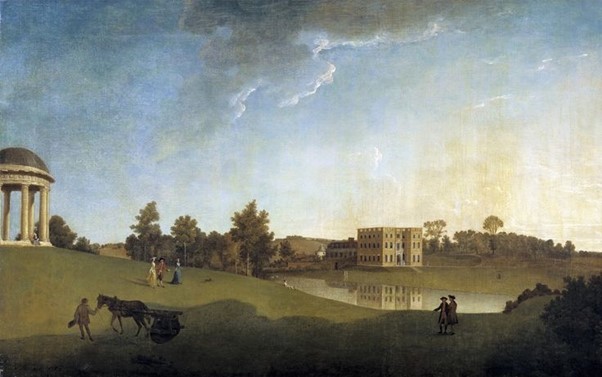
By 1764, the date of this painting, Sir Charles’s pond was completed and the familiar reflection of Halswell House can clearly be seen in the centre of the rolling parkland.
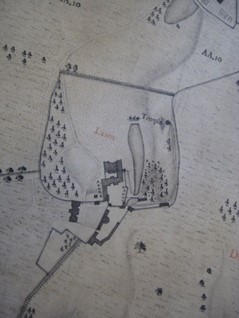
By the date of this map, 1771, the northern circular pond had been removed, though the smaller one to the south still existed. The layout of this main pond was maintained from this date onward. However managing water on this scale is no mean feat and by examining later Ordnance Survey maps we can see that its banks were not always maintained. Silt, leaks, and the problems of general water management to keep the pond in its original shape of hundreds of years meant the form originally laid out was not always kept. During the twentieth century Halswell had a major restoration in the 1920’s and was sold up and pulled apart in 1950. This led to the dereliction of the difficult and expensive to maintain aspects of the Capability Brown-style landscape. In some cases important aspects of the grounds were swept away entirely, while others like this pond had decades of dereliction, with only sporadic attempts to hold onto the grandeur that once was. This situation continued until the current twenty-first century revival of Halswell and its landscape could begin.
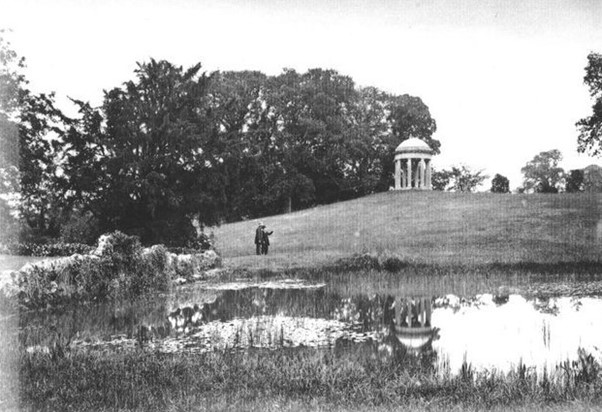
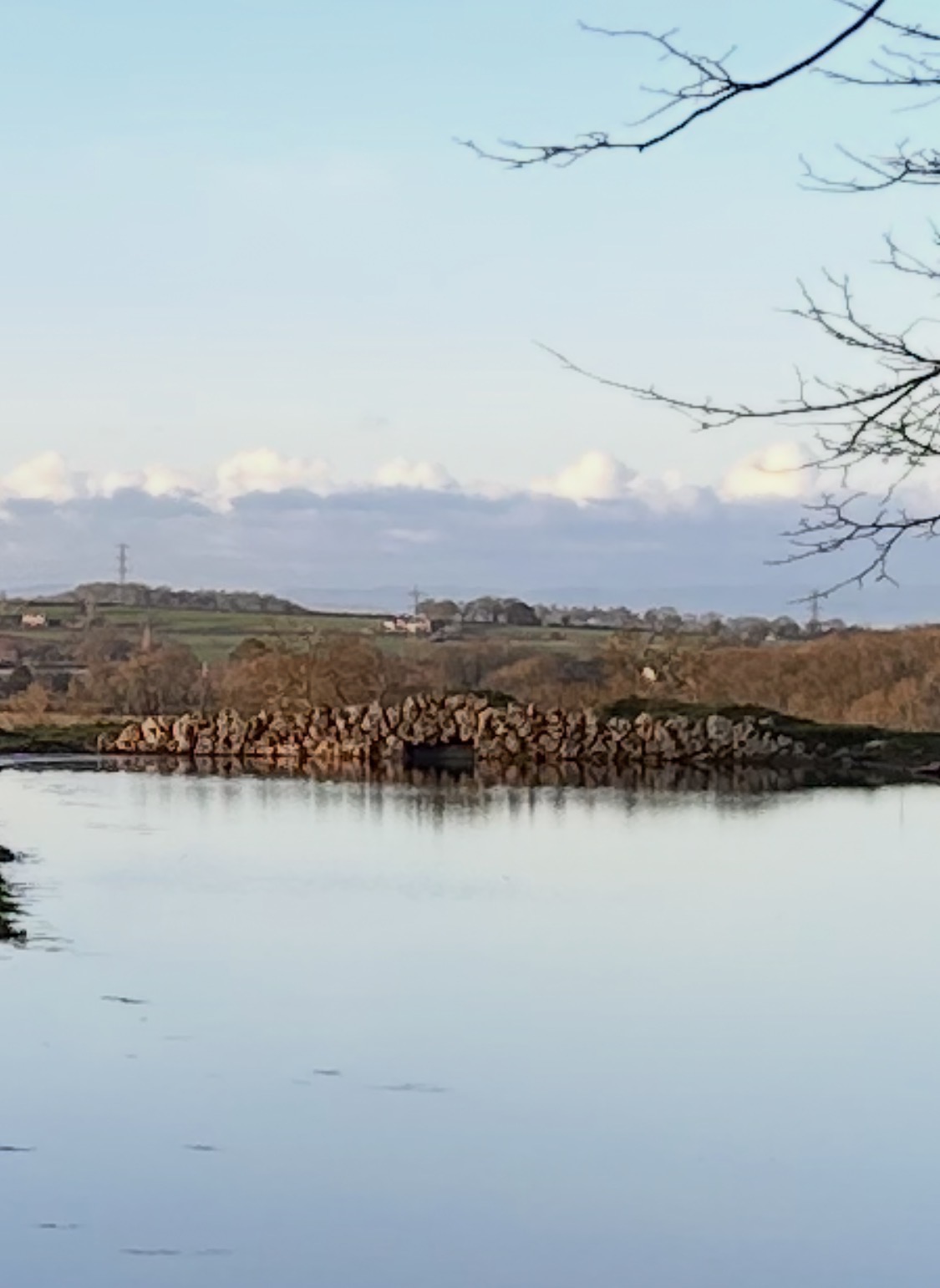
The pond toward the end of the nineteenth century. To the left is the dam with its rockwork’s high-sided ‘bridge’, which had the illusion of taking the water beneath it. The bridge was used as a walkway over the dam, en route up to the Rotunda on the hill in the background.
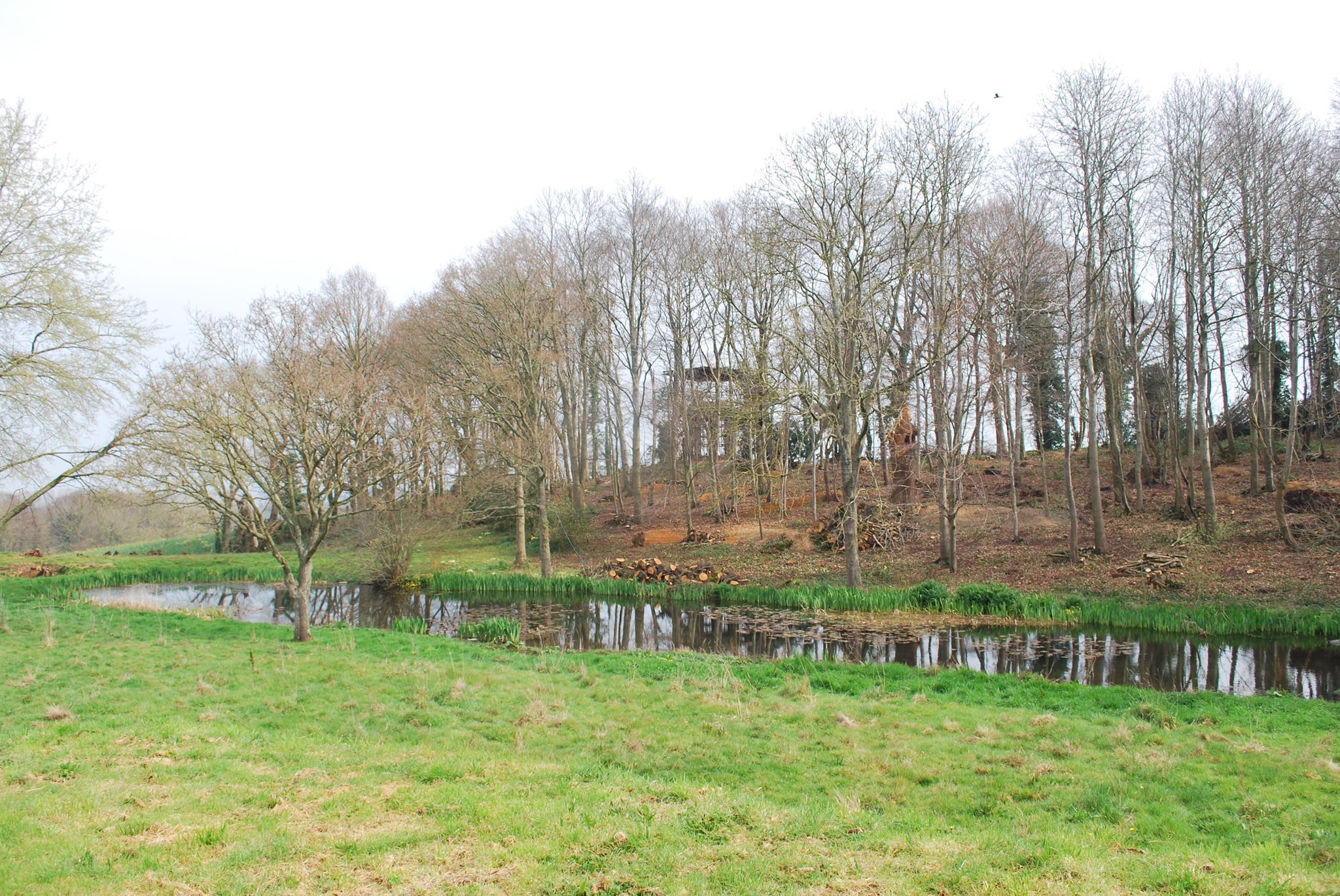
By the mid-twentieth century the rockwork screen bridge was gone and the pond had become more of a puddle, with trees growing within its old banks, banks which by this date had been lost to earth, silt, grass and undergrowth. The Rotunda was in ruinous state, as seen above with a rusted tin roof above its long-gone domed oak and lead roof.
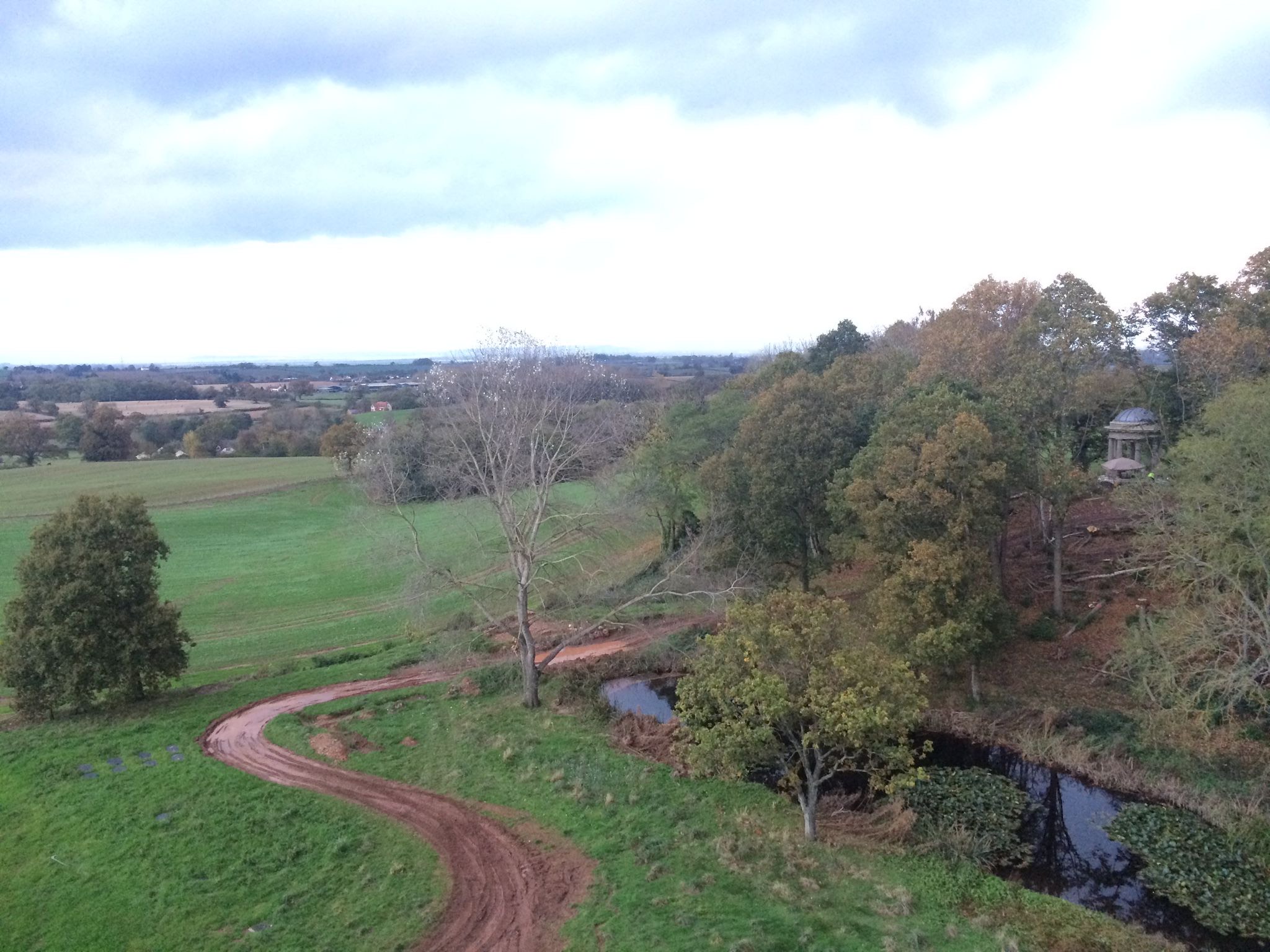
While the rotunda was being restored, its stonework consolidated and its domed and lead-topped roof being remade, the pond was necessarily ignored as a future project. A temporary builder’s road can be seen snaking its way across what was once water.
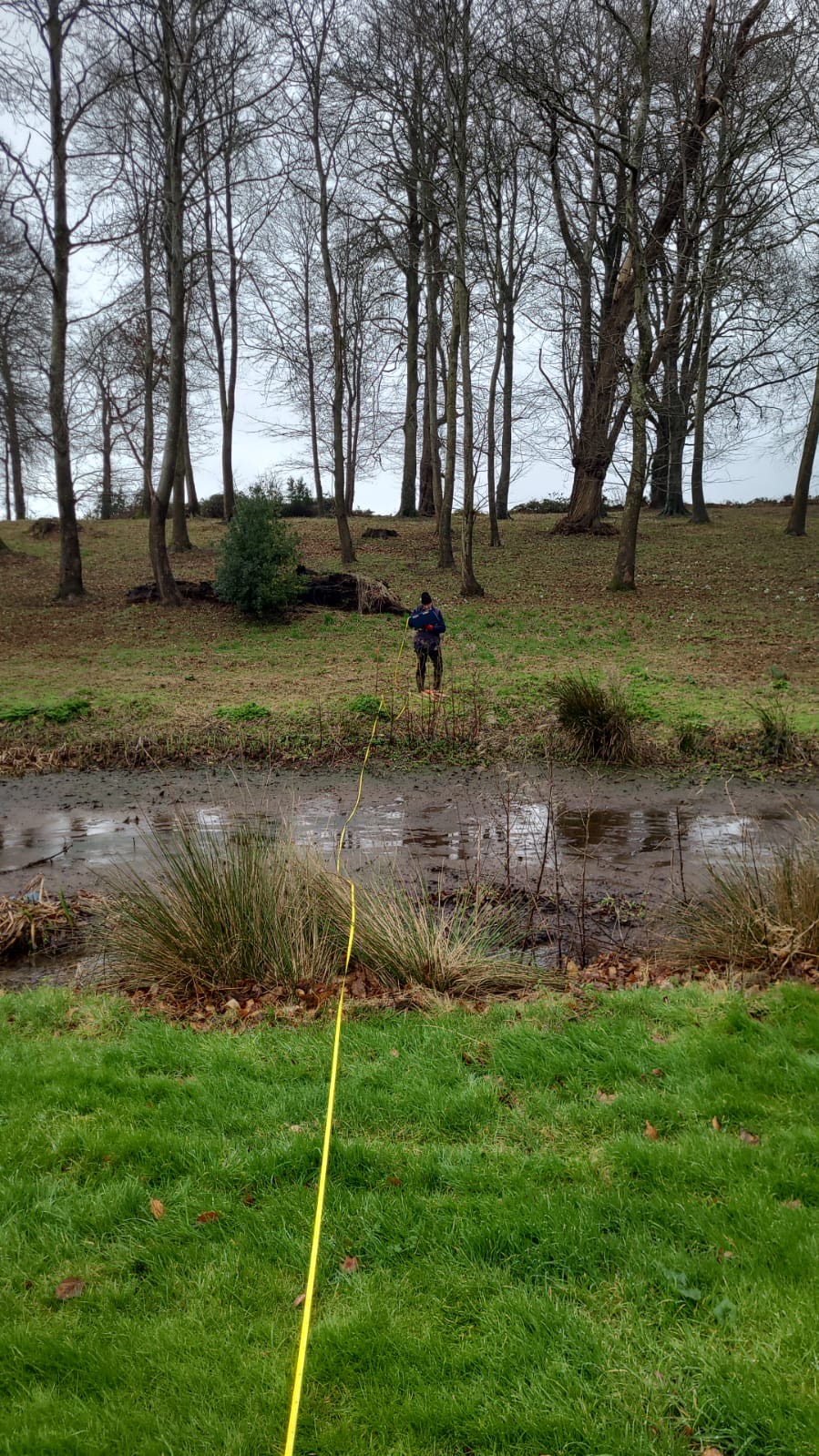
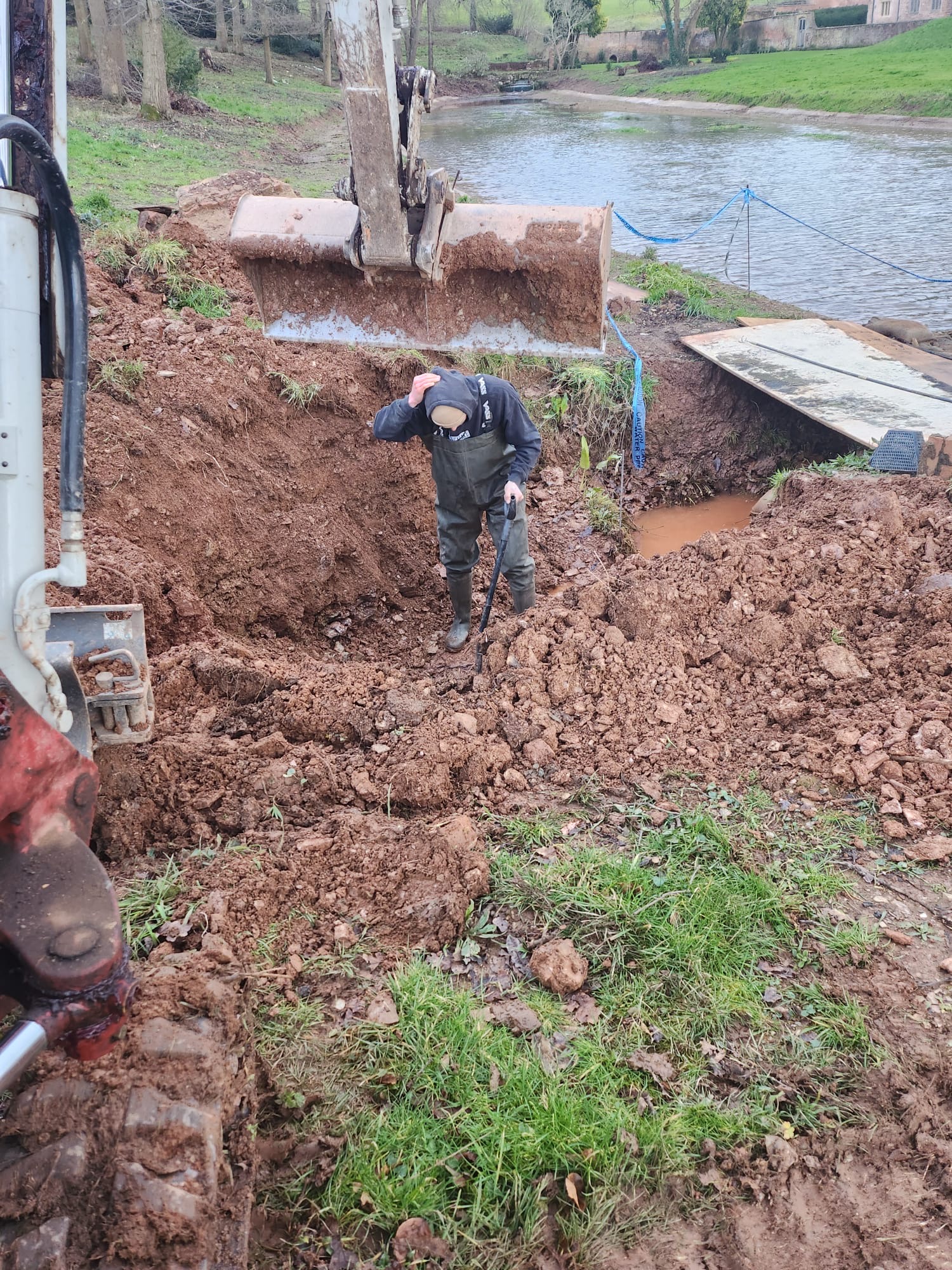
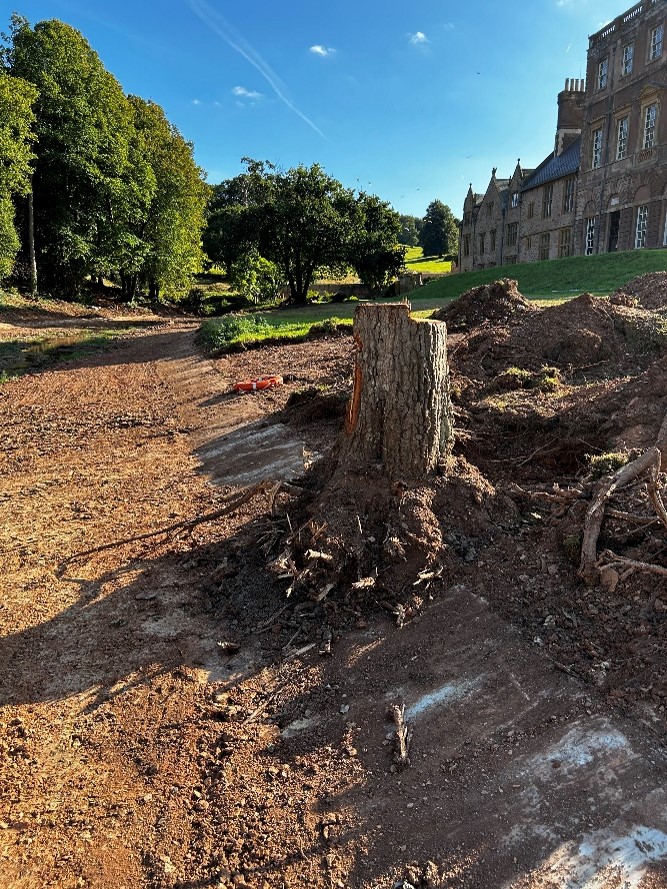
Landscape historian Simon Bonvoison prepared the groundworks by plotting out where he thought the original banks of the pond might be. He based his estimates upon all the old maps and paintings. His conclusions about just how much pond had been lost to the encroaching landscape can be seen here as his yellow measuring tape. It was this work that allowed us to start digging back through the soil to see if we could locate the original banks, which we assumed would be made of puddling clay. Once we had established by the use of DNA testing of the water that there were no Great Crested Newts lurking in the mud we had the all clear to start work. Many heavy diggers later and to our surprise we found not only the eighteenth-century puddling clay lining and banks, but that at a later date, perhaps the late nineteenth century, the pond had a full overhaul and the banks were remade using red brick walls coated in concrete. Once we found this the job of following along the edges became comparatively simple. Simplicity is not a situation we often find ourselves in at Halswell !

The southern head of the pond can be seen here, with its original eighteenth-century water flow coming up from the ground and gently cascading down platforms. Leaks and the ever-encroaching landscape had all but turned the pond into a trickling brook through grassland, dotted with self-seeded trees.
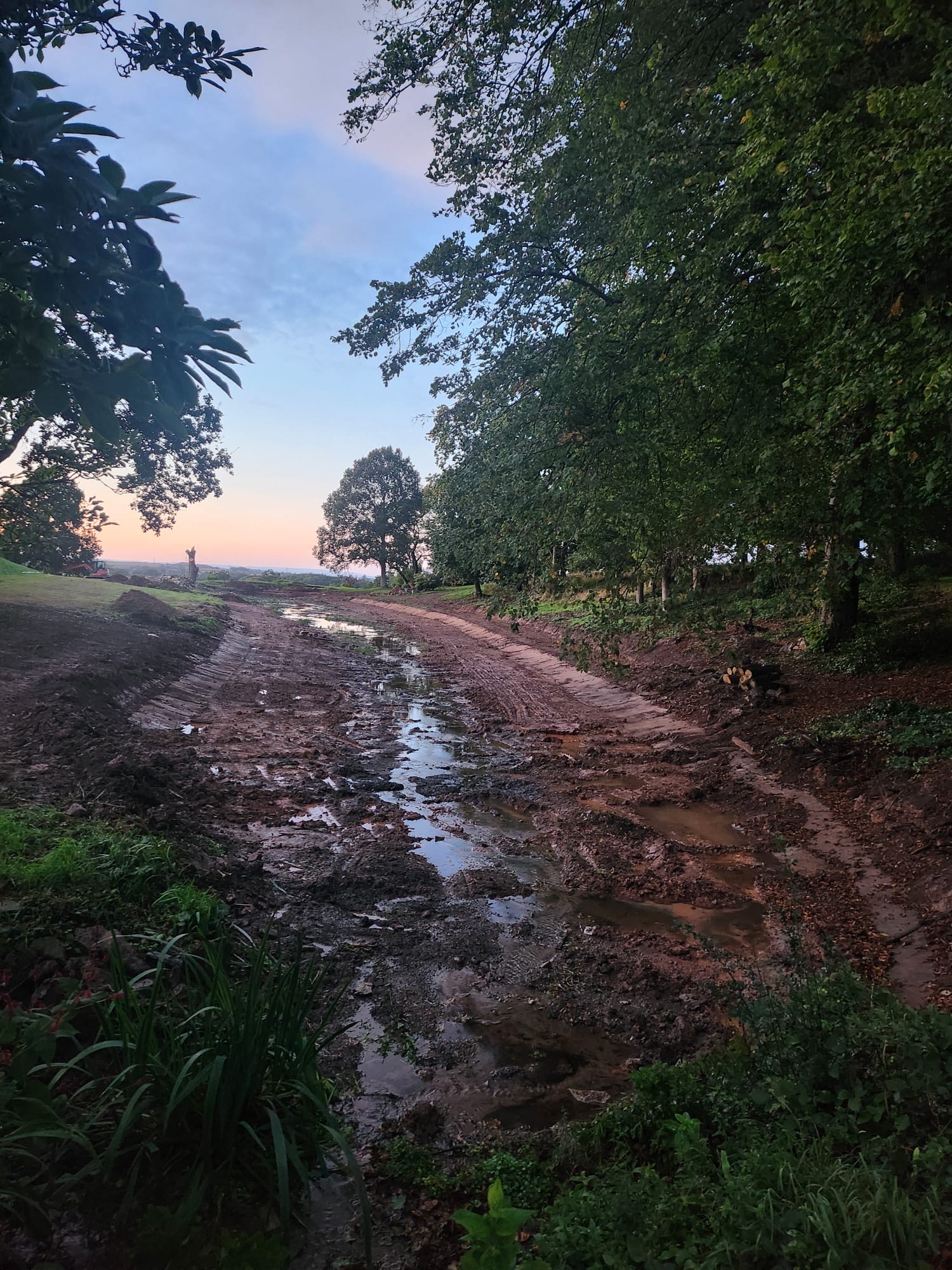
The same view but after the pond had been dug out, the edges exposed, the trees that had rooted within the structure removed, and the edges repaired. With the original banks re-discovered and exposed for the first time in living memory, the broken water outflow area is temporarily dammed up to allow for the pond to naturally re-fill from its spring water source. This process is needed so that any other leaks or distortions in the levels of the banks can be repaired.
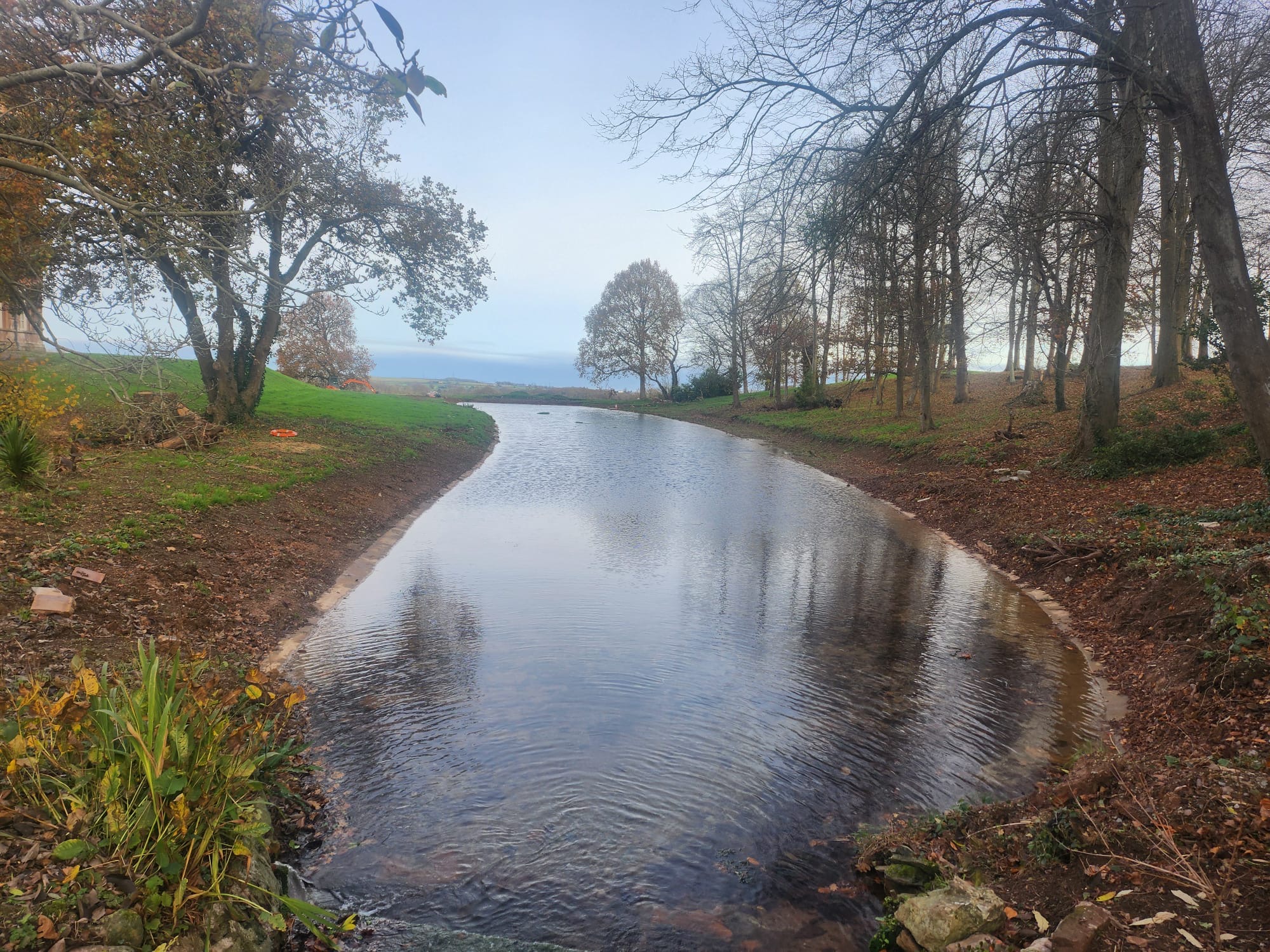
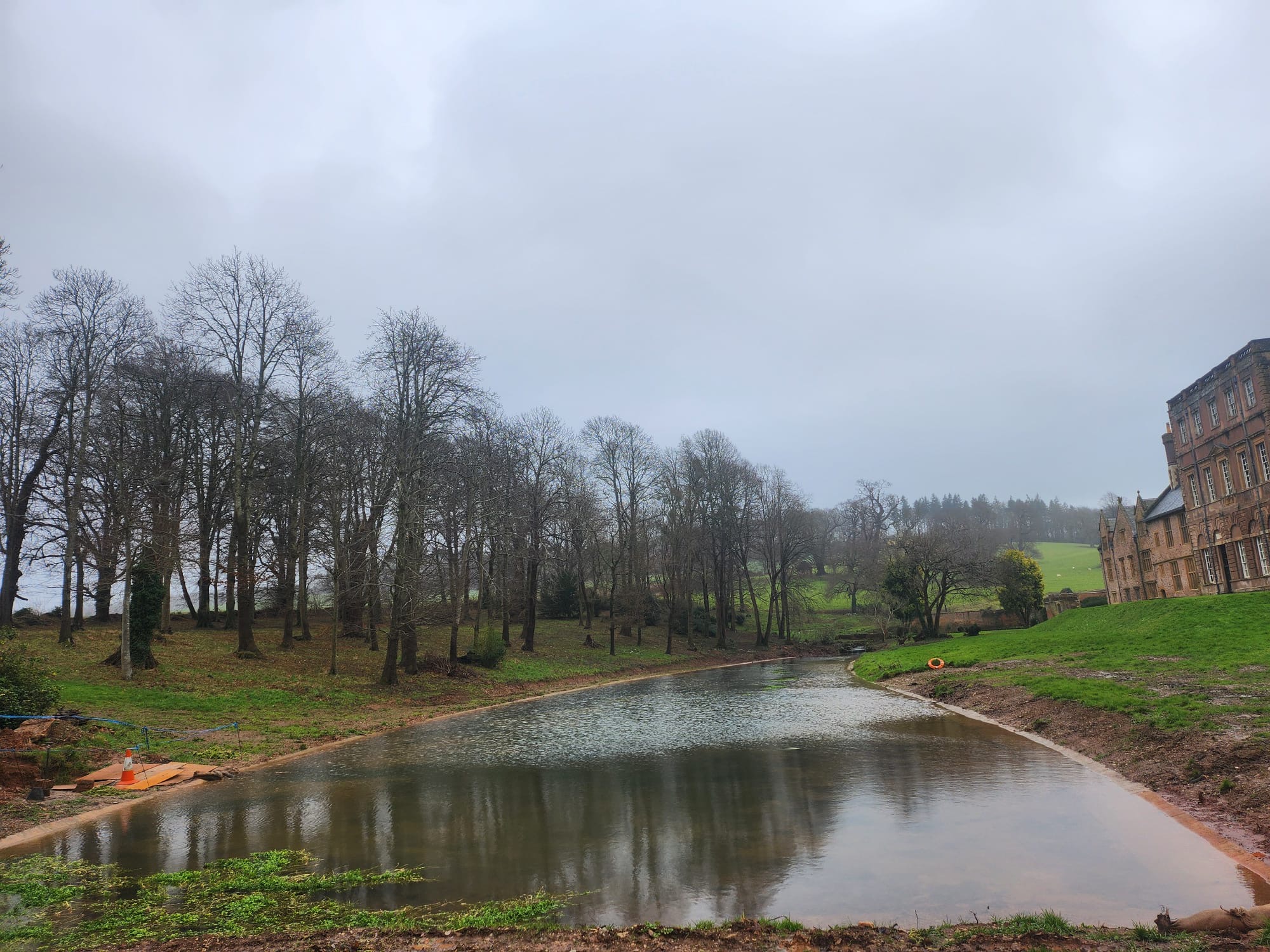
The pond, restored to its former glory. Temporarily at least, while more works are carried out ot create a new overflow channel. The old one had collapsed downstream taking areas of lawn with it.
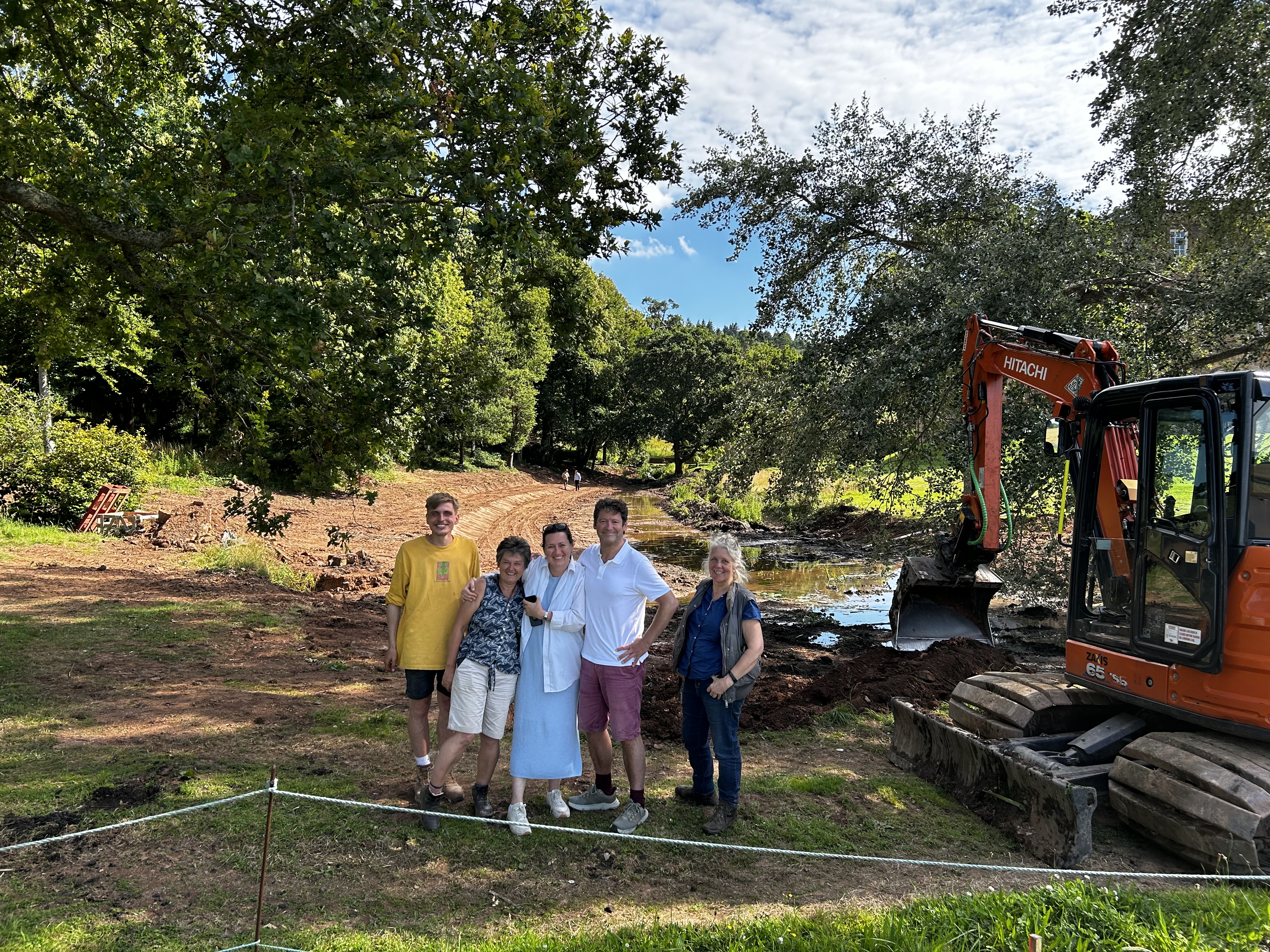
Some of the Halswell team with the owner Edward Strachan. Right to left: Annie, Edward, Oksana, Ann, Emils – photo by the author.
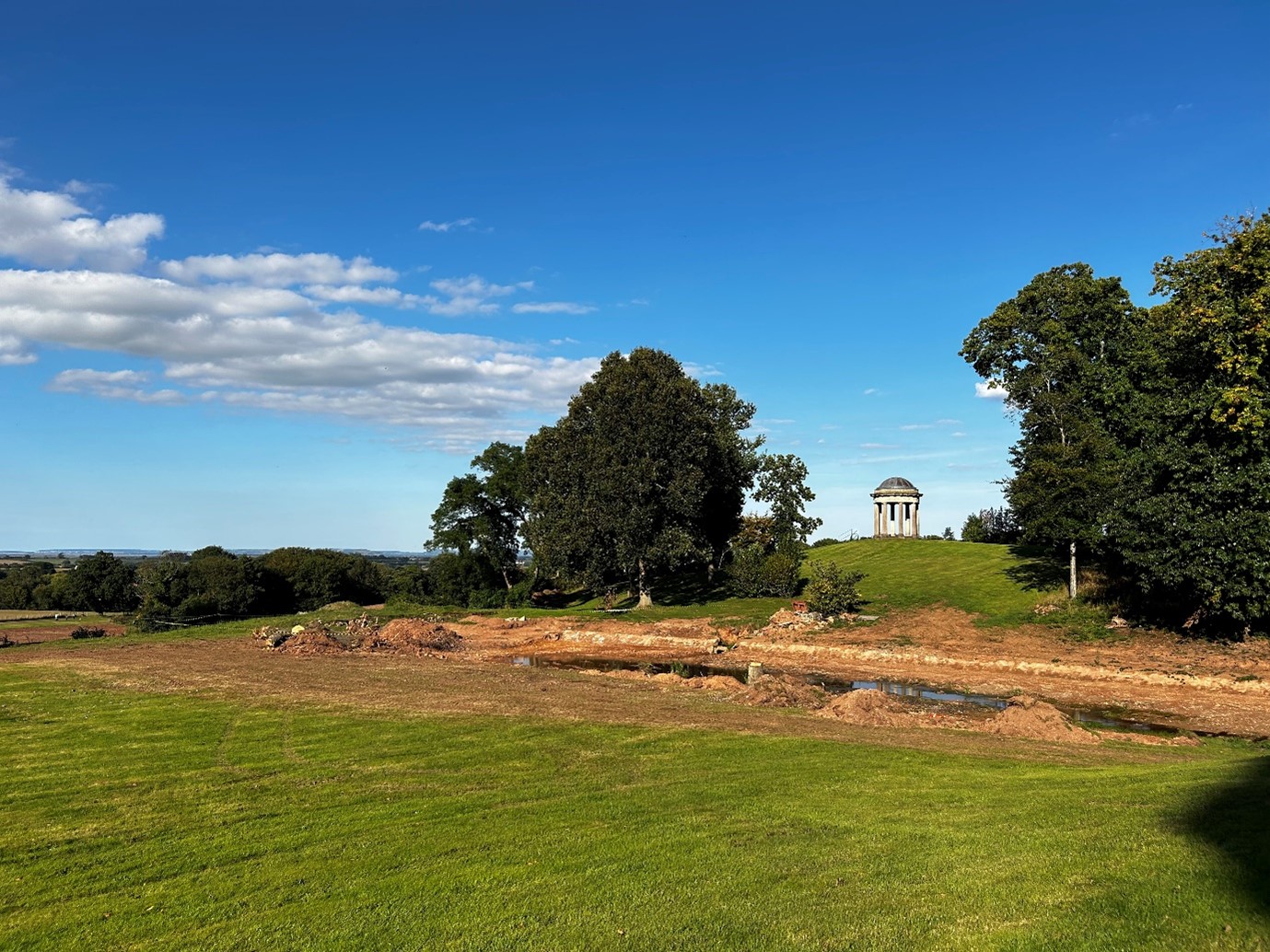
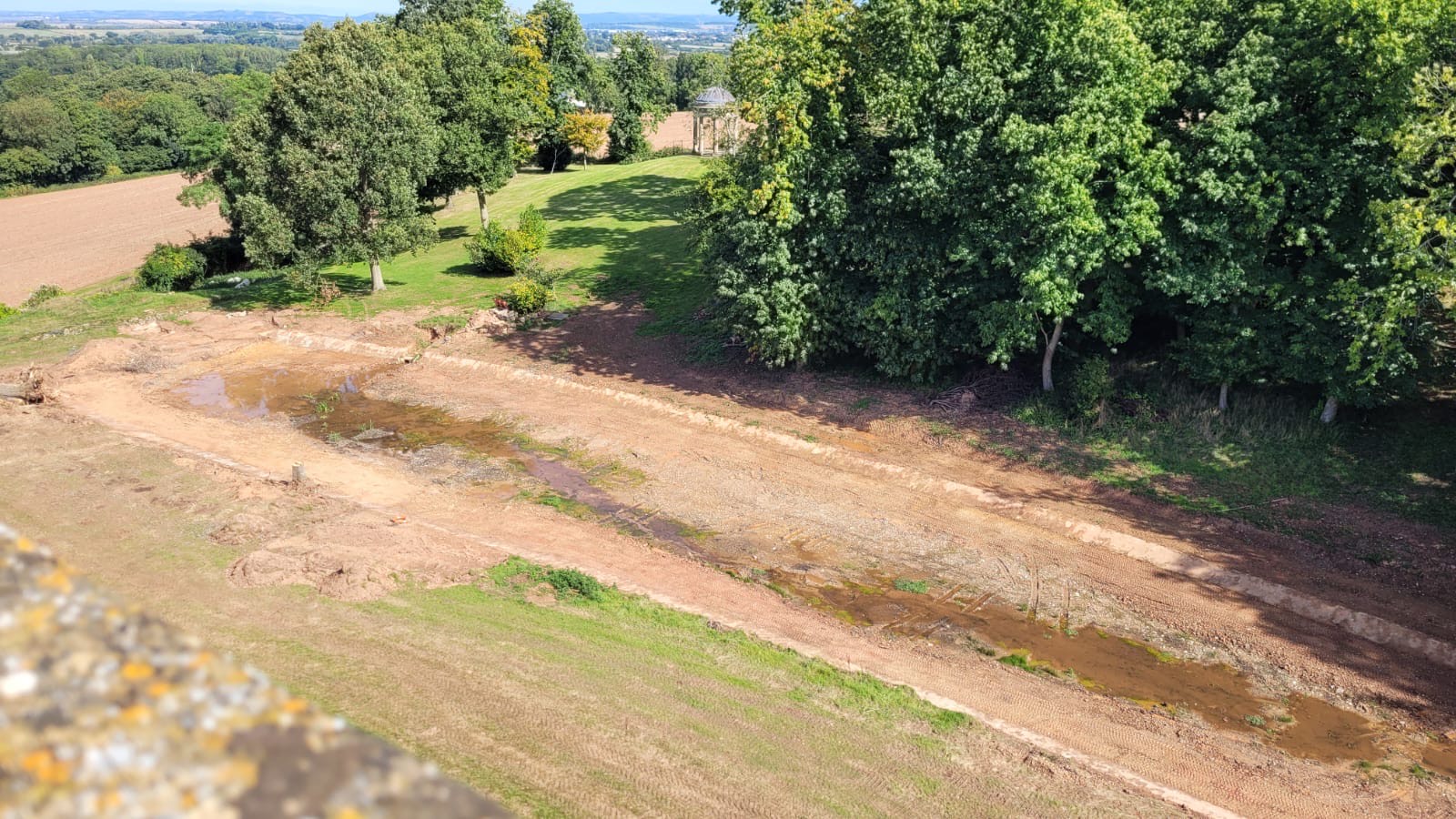
The full expanse of the pond is now uncovered. Trees that grew within its boundaries, or on them, are removed and the newly-exposed banks are repaired.
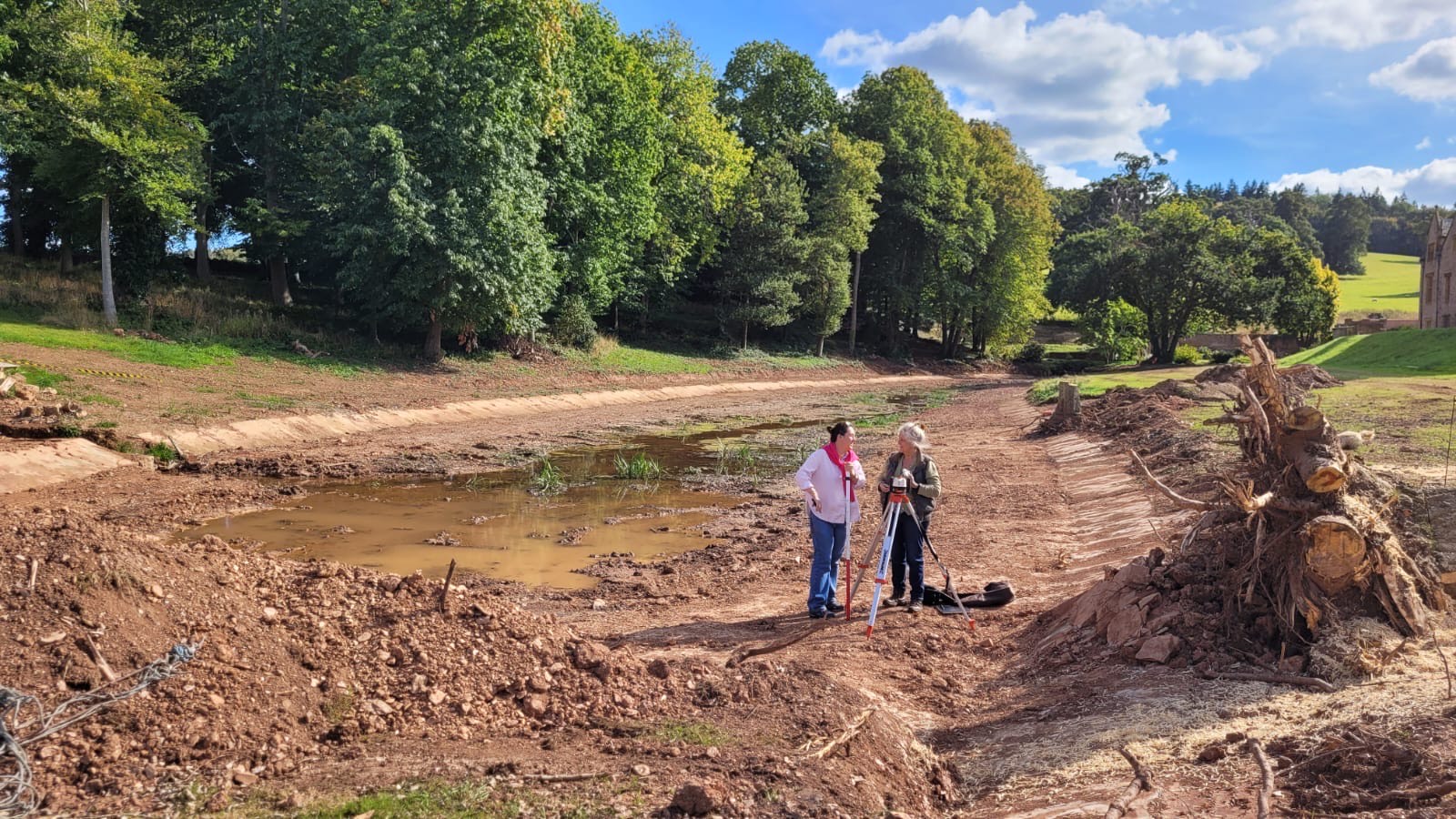
Our own Oksana and architect Annie Evans out surveying the newly re-discovered pond edges and levels.

Like a giant bath plug, an original pond outflow plug was discovered during the archaeology that was carried out. The archaeology focussed on the north end of the pond where brick structures were found near the dam. While we always understood that the dam had existed since at least the 1750’s there had not been much evidence that it could pre-date that time.
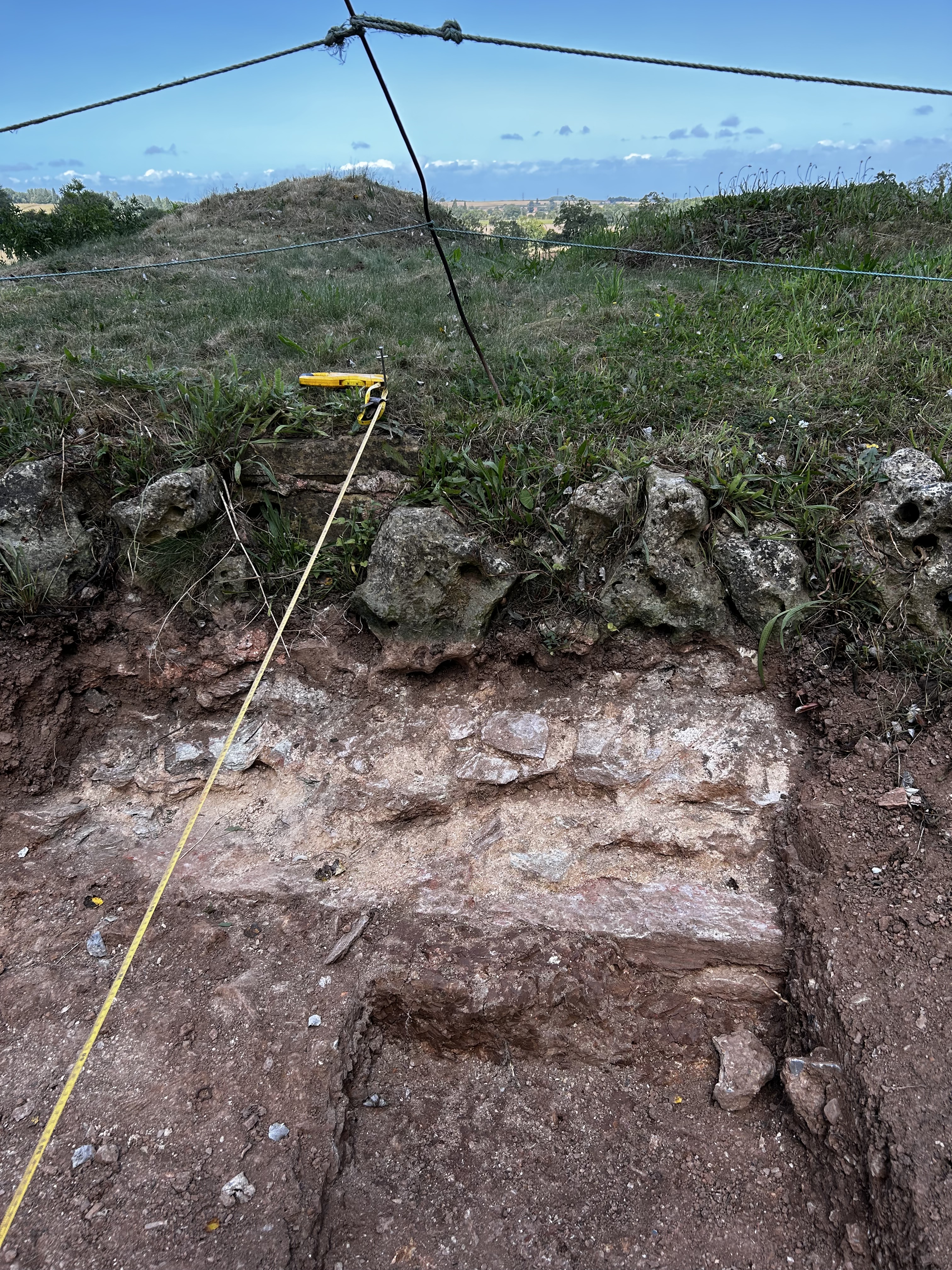
This photo may not seem like much, and from my experience looking at Halswell’s archaeological digs, most of the archaeology pits seem unreadable to anyone other than the archaeologist! But James Brigers tirelessly worked away trying to date and sequence his finds in this area. The photograph shows stonework from the mid-eighteenth century which formed the base of the rockwork screen facing directly into the water, over which the stones once were much higher and formed a sort of hump-backed bridge at the water’s edge. Directly below this, in the light-coloured section in the photo, is the truly exciting find. A new discovery that changes everything we thought about the eighteenth-century dam. James found fragments of thirteenth century pottery in puddling clay that had been laid up against medieval stonework. The working theory now being that the dam is a medieval one, either for a fish lake or for a working mill dam. The eighteenth-century walls and decorative stonework on the opposite side of the dam were added later, up against this much earlier structure.
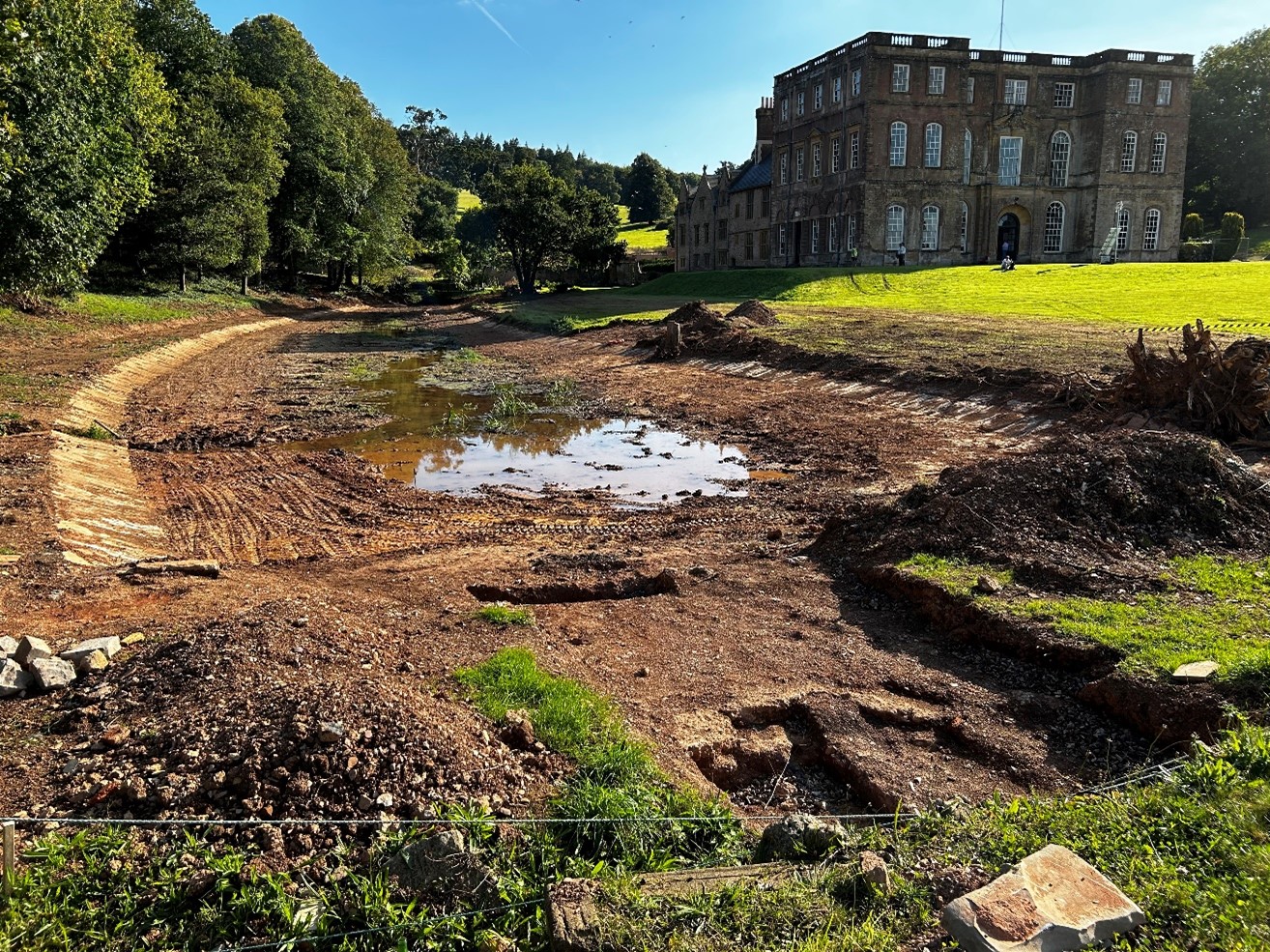
The pond with the dam’s archaeological pit in the foreground.
This medieval phase of our pond was unknown to anyone until this year, and makes its historic significance all the greater for us. It has now been covered back over as it was found, but now with all of its historic evidence understood and incorporated into Halswell history.
But the pond that we can have back is the eighteenth-century one, and this is what we have achieved by doing this restoration phase. Its form has now been restored to its Georgian glory and we will continue to repair its conduits and re-landscape its perimeters ready for the summer. The rockwork screen element to its northern edge is a separate project which will be taken forward in tandem with the Grotto screen on the northern side of the pond’s dam. In the meantime the pond will continue to mature and convert back into the rich and biodiverse waterway that it was intended to be in the eighteenth century.
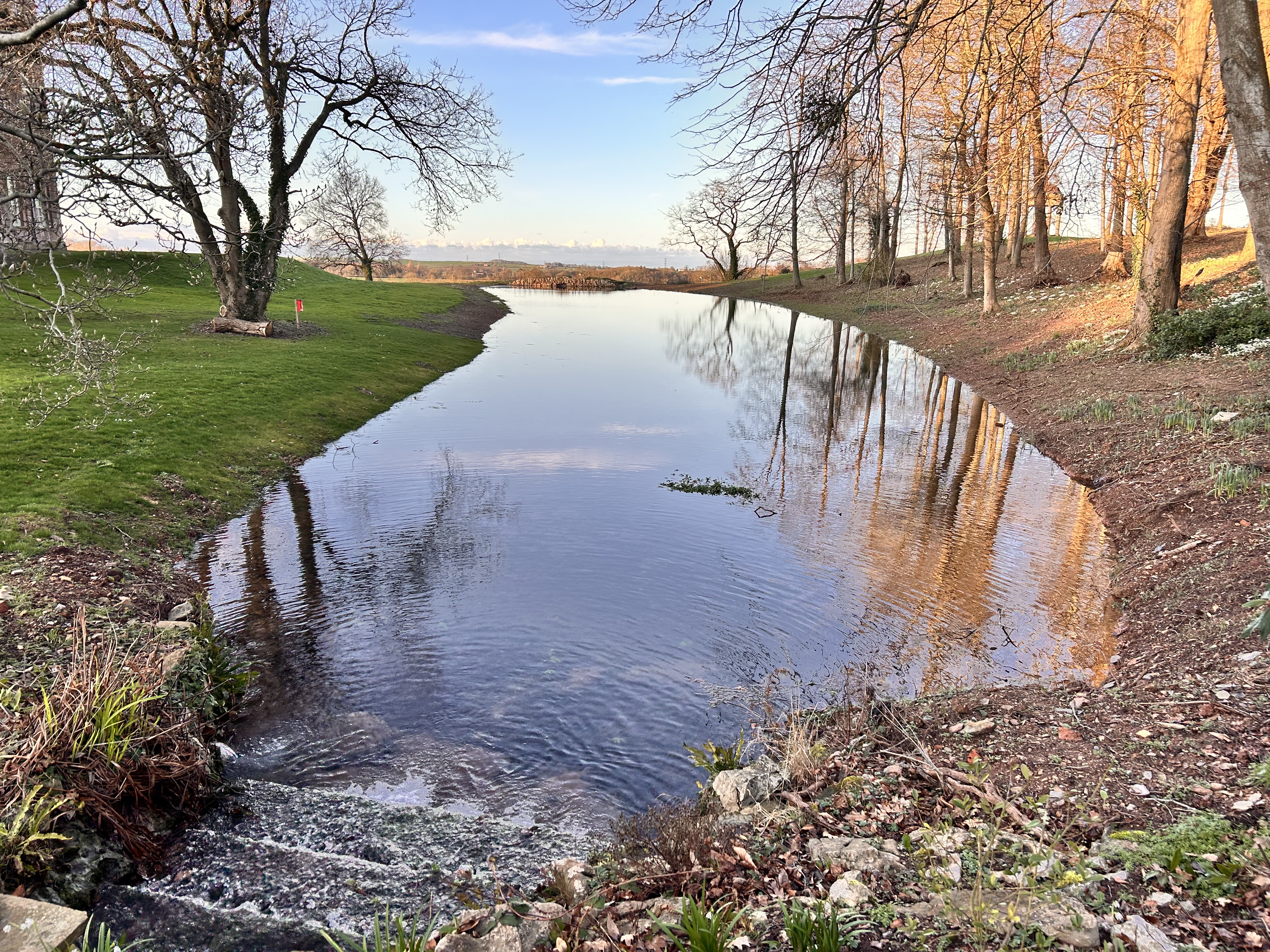
The pond filled, with a cascade of fresh spring water replenishing it constantly.

- RB
 Halswell Park
Wow – this is amazing – long gone are the days when we played on that pond – most specifically the cascade at the end nearest the house – with a home made raft floating on oil drums! I remember some lovely mallows growing in the water there – with huge open yellow flowers. Sarah Dean (nee Ansdell from Park Head)
LikeLike