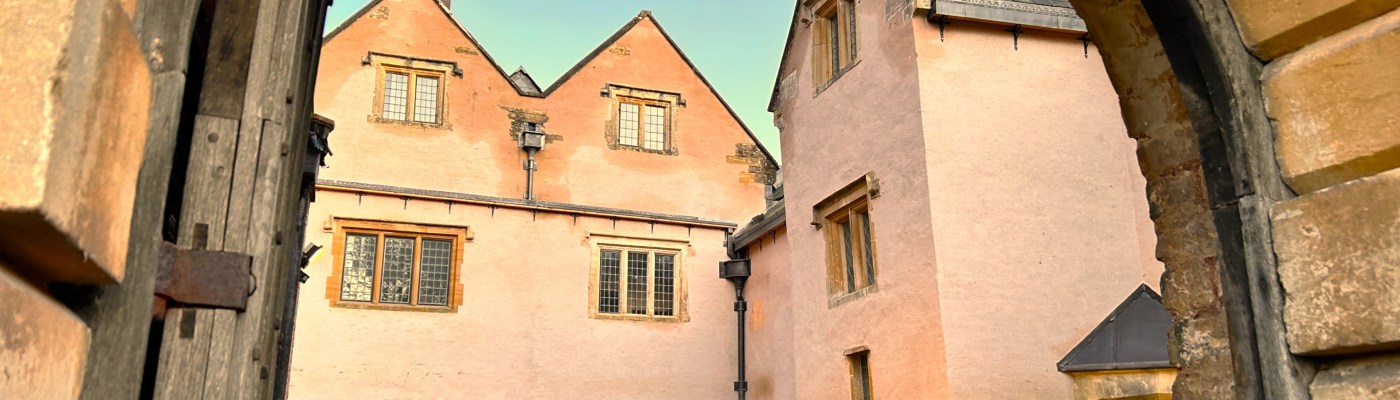
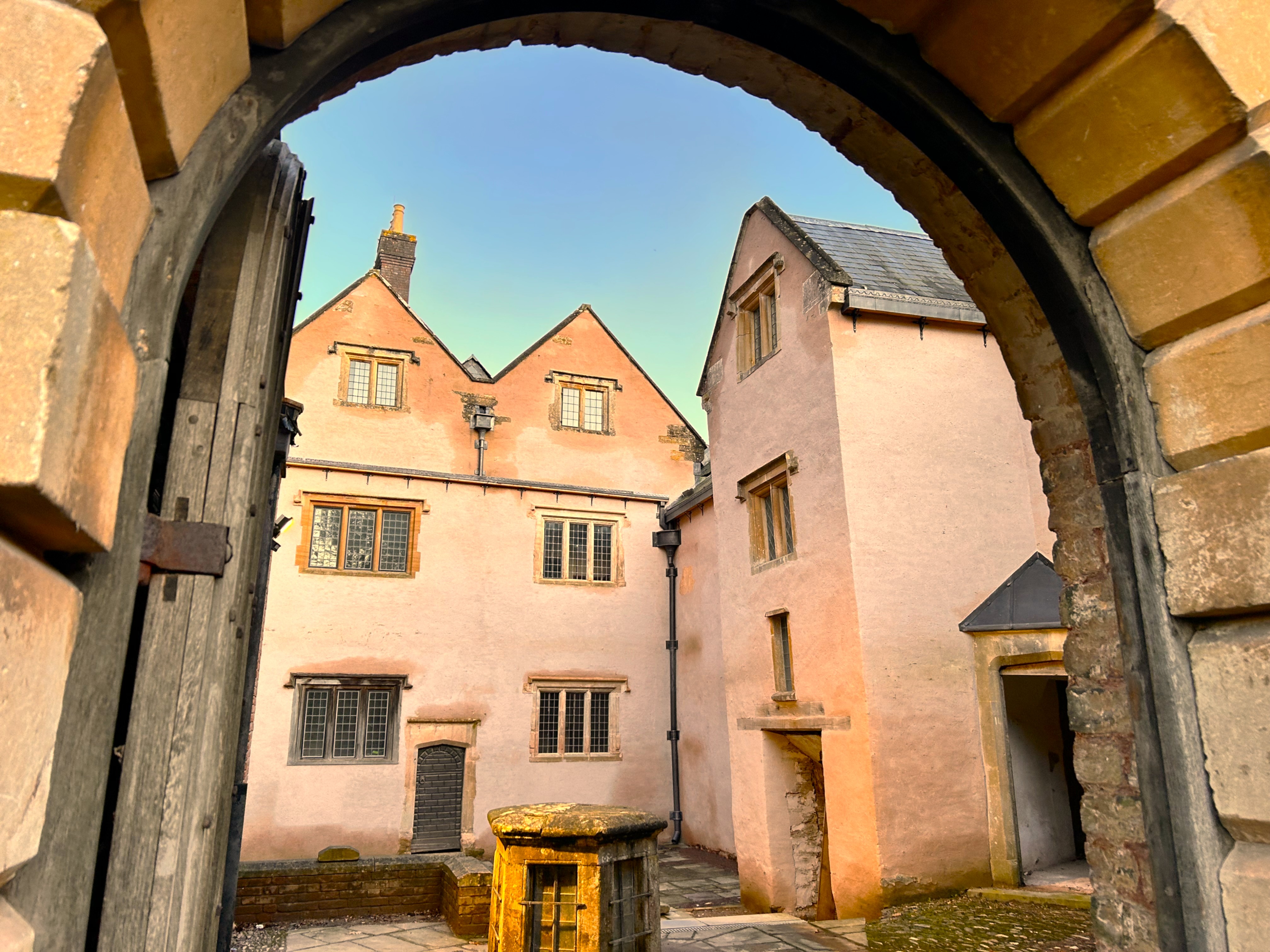
The courtyard of Halswell House is the beating heart of the house and estate. It has changed its shape, its buildings, its uses and its size over the centuries, and is now being brought back to the best of its Elizabethan self. For the last couple of hundred years the historic importance of the courtyard waned and it became more of a useful space to add needed utilities. But by changing its form in that way the beauty and grandeur of the more original space became hidden and impaired.
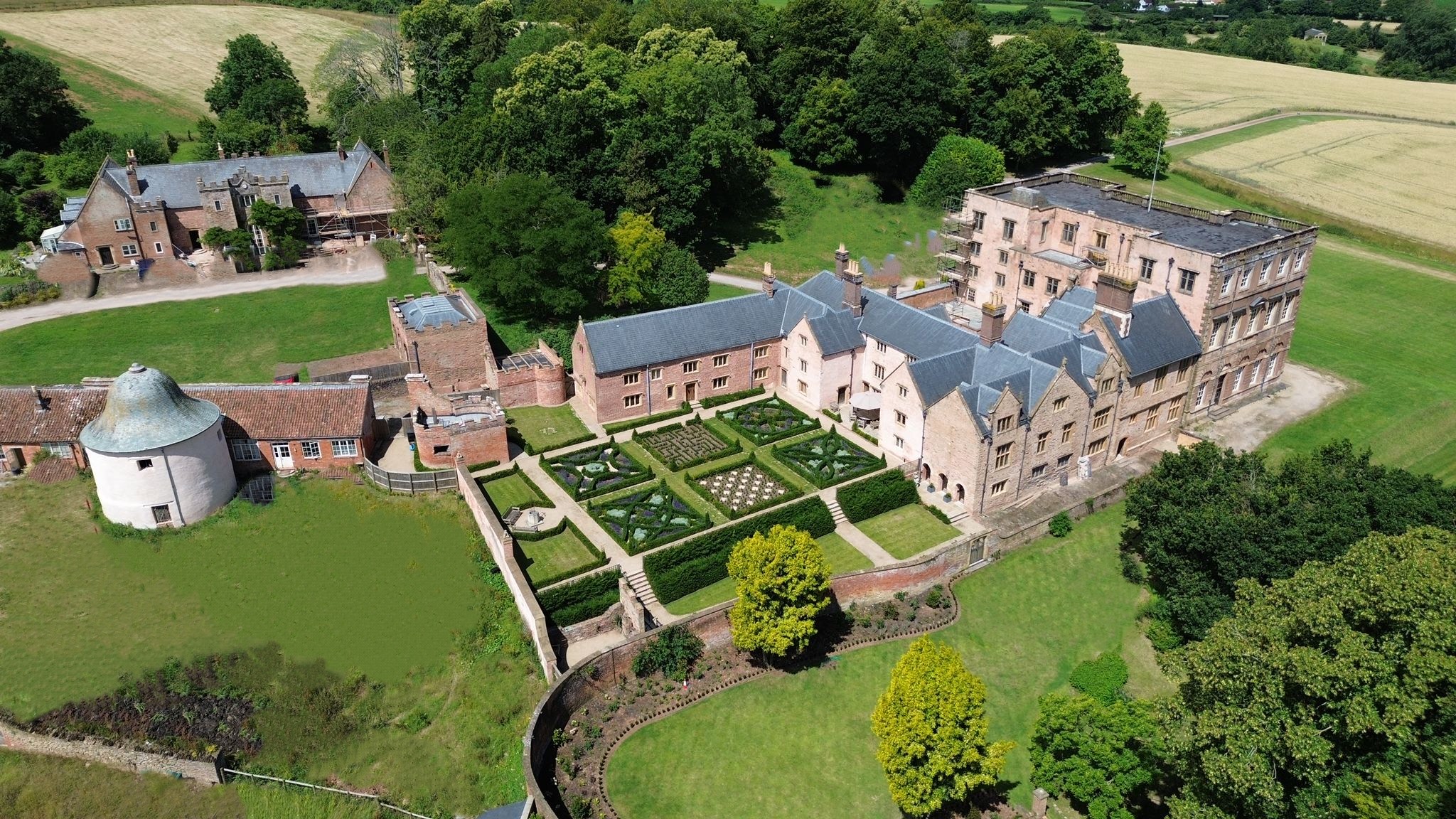
In this image the courtyard can partly be seen between the large Baroque north wing and the more rambling south and east ranges which appear more classically Elizabethan. To the south of this is the Tudor knot garden which served the house in the Elizabethan period. Despite the north wing having some of the country’s earliest wooden sash windows to the east, north and west façades, the south façade of the Mansion House retains its earlier stone mullion windows with small leaded lights, in keeping with the older looking courtyard.
Halswell has its name recorded as Halswell Court in the fifteenth century, this reflects the importance of a manor house being large enough to have a courtyard and can also allude to the function that Halswell had as the centre of regional law leading its own community.
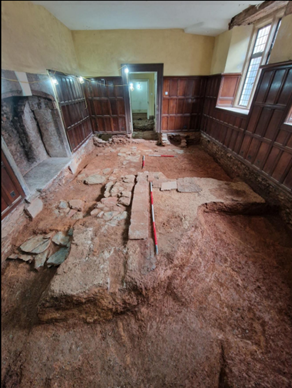
We know that a much earlier Hall house, now no longer visible above ground, existed within the courtyard from where the current ‘Justice Room’ exists at the south of the Mansion House, and this extended into the area that is now the courtyard. Its original north window wall, shown here as a masonry line in the middle of the room, was discovered of this earlier Hall while carrying out archaeology. The current courtyard is on the other side of the mullion windows at the right of this photo.
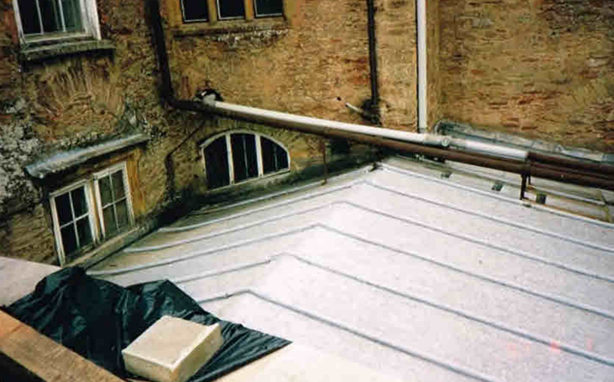
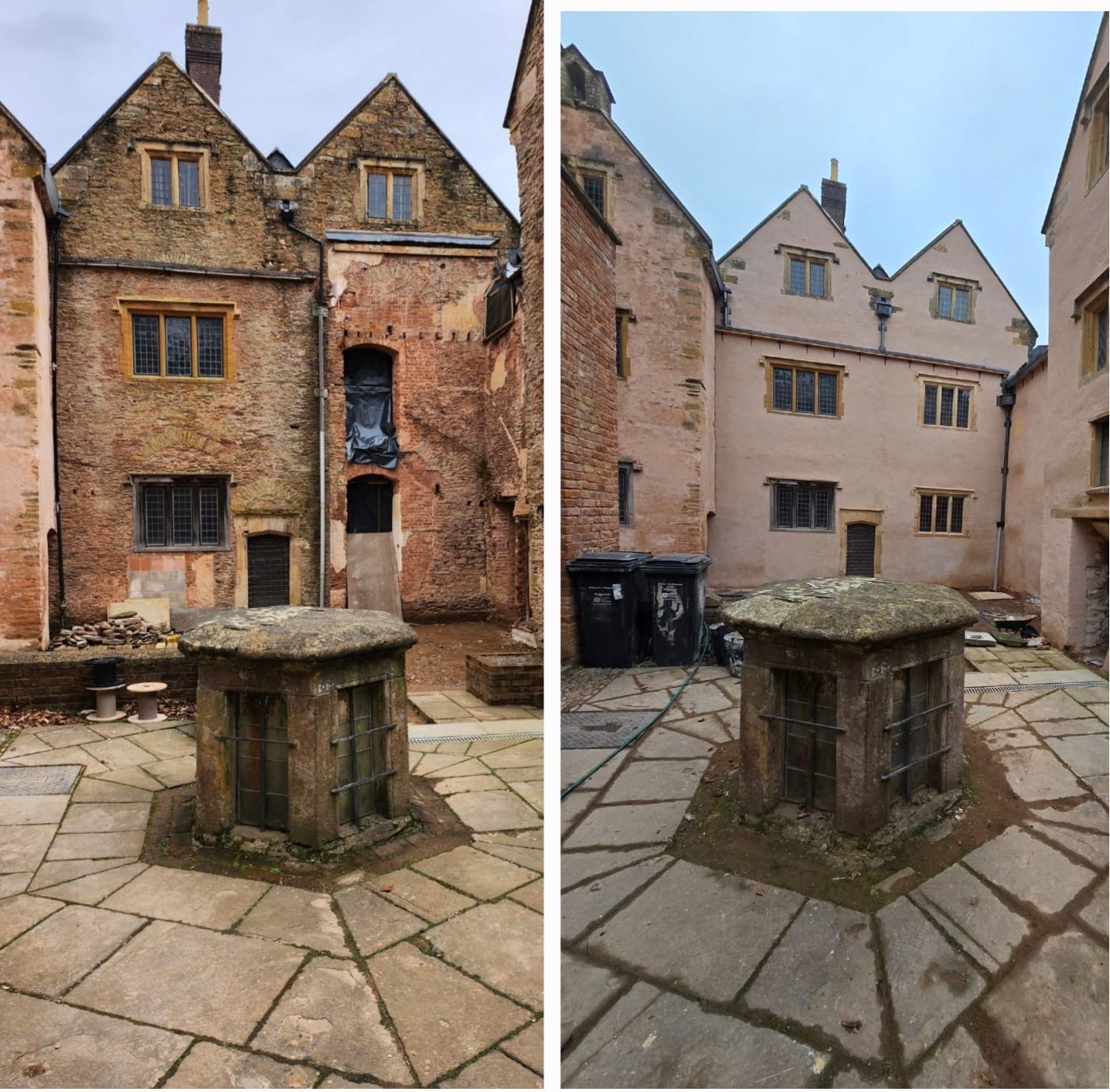
Photos below, from the 1980’s, also show some of the later red brick additions that then existed. The spaces were a combination of servant’s halls, extra runs of stairs for servants, and in the twentieth century rooms for electricity boards and other modern utilities.
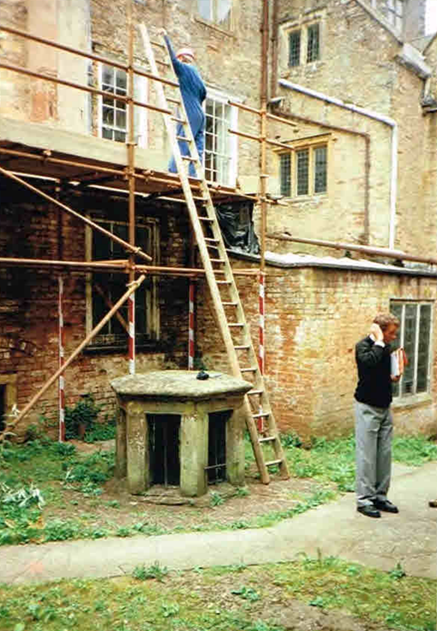
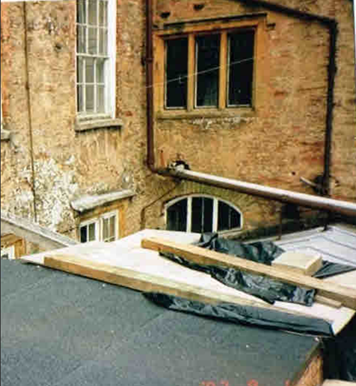
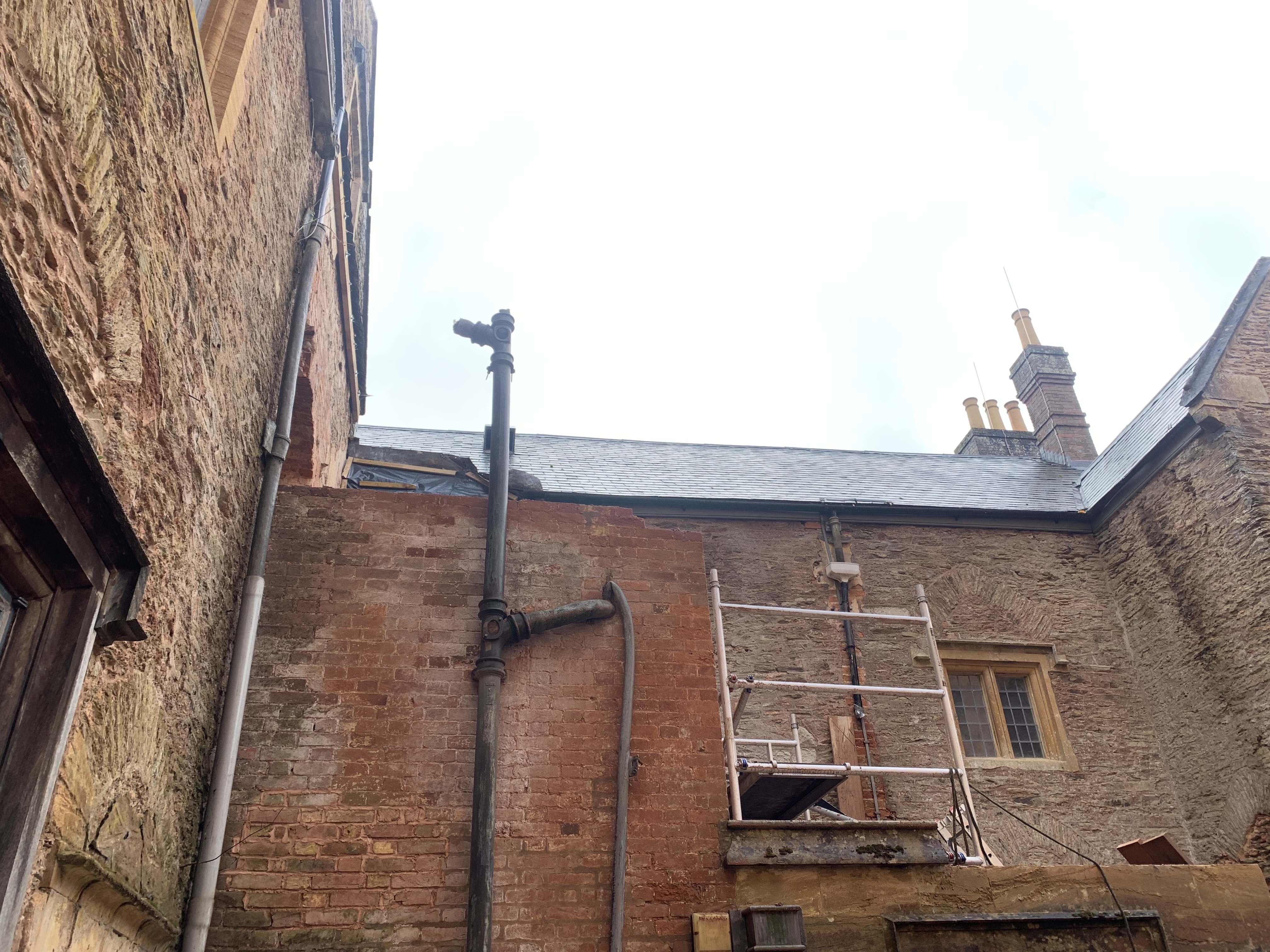
Original windows and doors as well as walls had been removed to create more functional spaces within the courtyard. Pipework and other utilities began to take over the once historic courtyard.
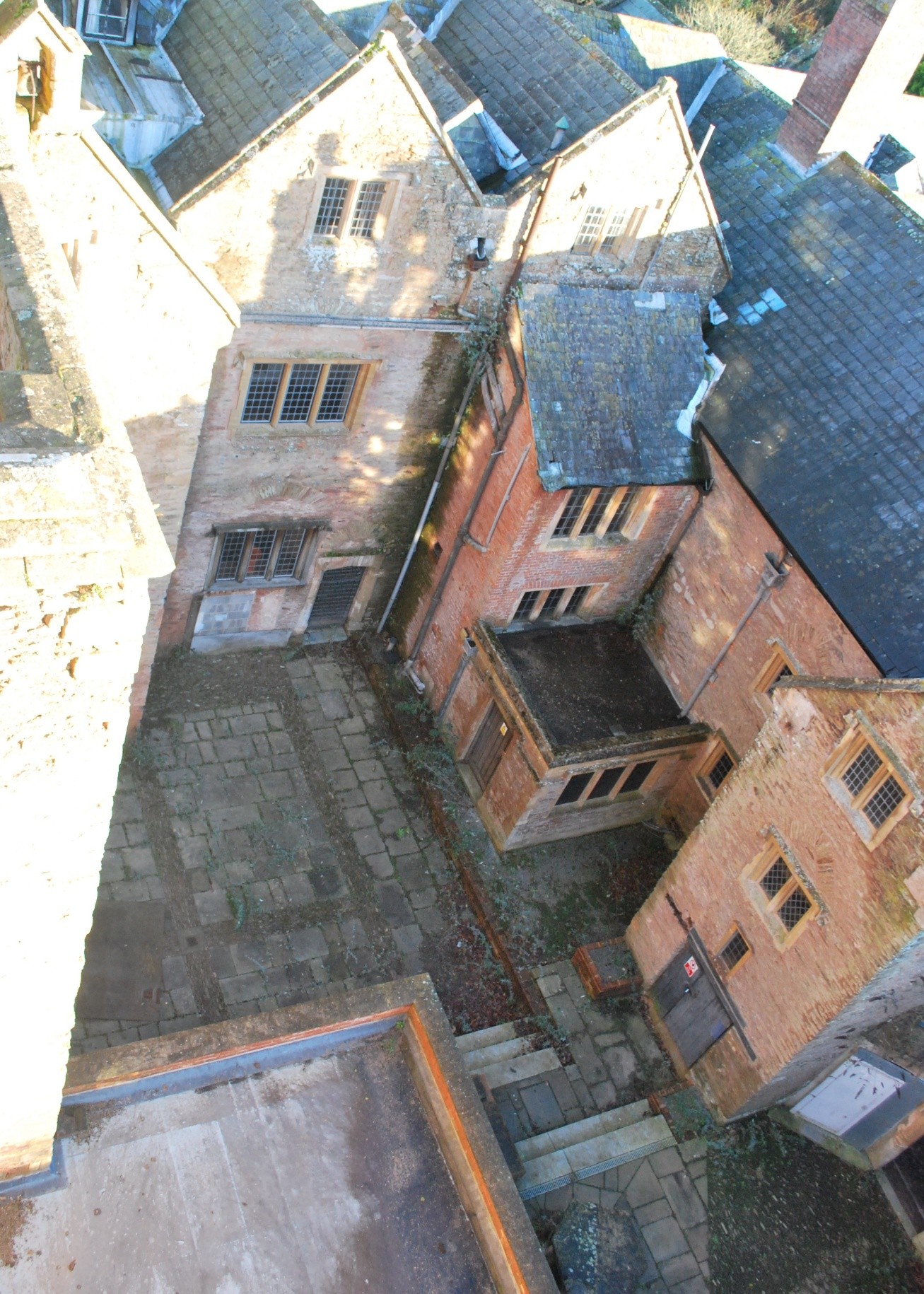
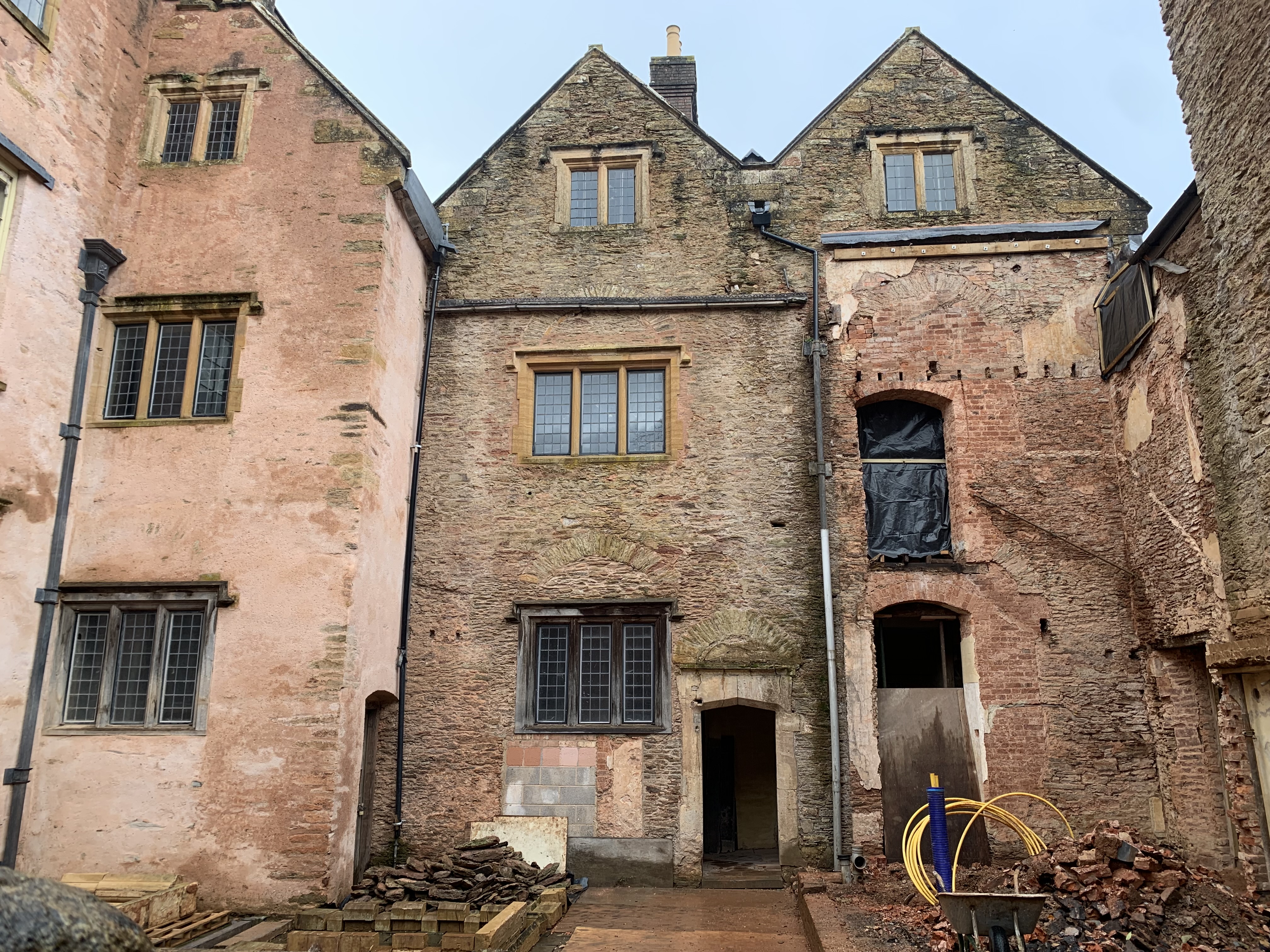
A particular problem was created when a lean-to red brick stair tower was added, breaking through the original wall and removing two large stone windows. The lean-to was not tied into the building, leading to continual leaks and dry rot. This was made worse by the addition of a single story flat-roofed room which made water management from the roofs impossible. While stylistically not completely out of sympathy with the buildings their poor technical designs were badly damaging the original structures and reducing the historic and architectural significance of the heart of Halswell House. The old buildings original oak timbers around this area were almost non-existent by constant water ingress. By removing both of these structures the original buildings fabric could be restored and maintained long-term. The patchwork of soil pipes, water pipes, concrete, flat roofs and other inappropriate materials could finally be rationalised and removed.
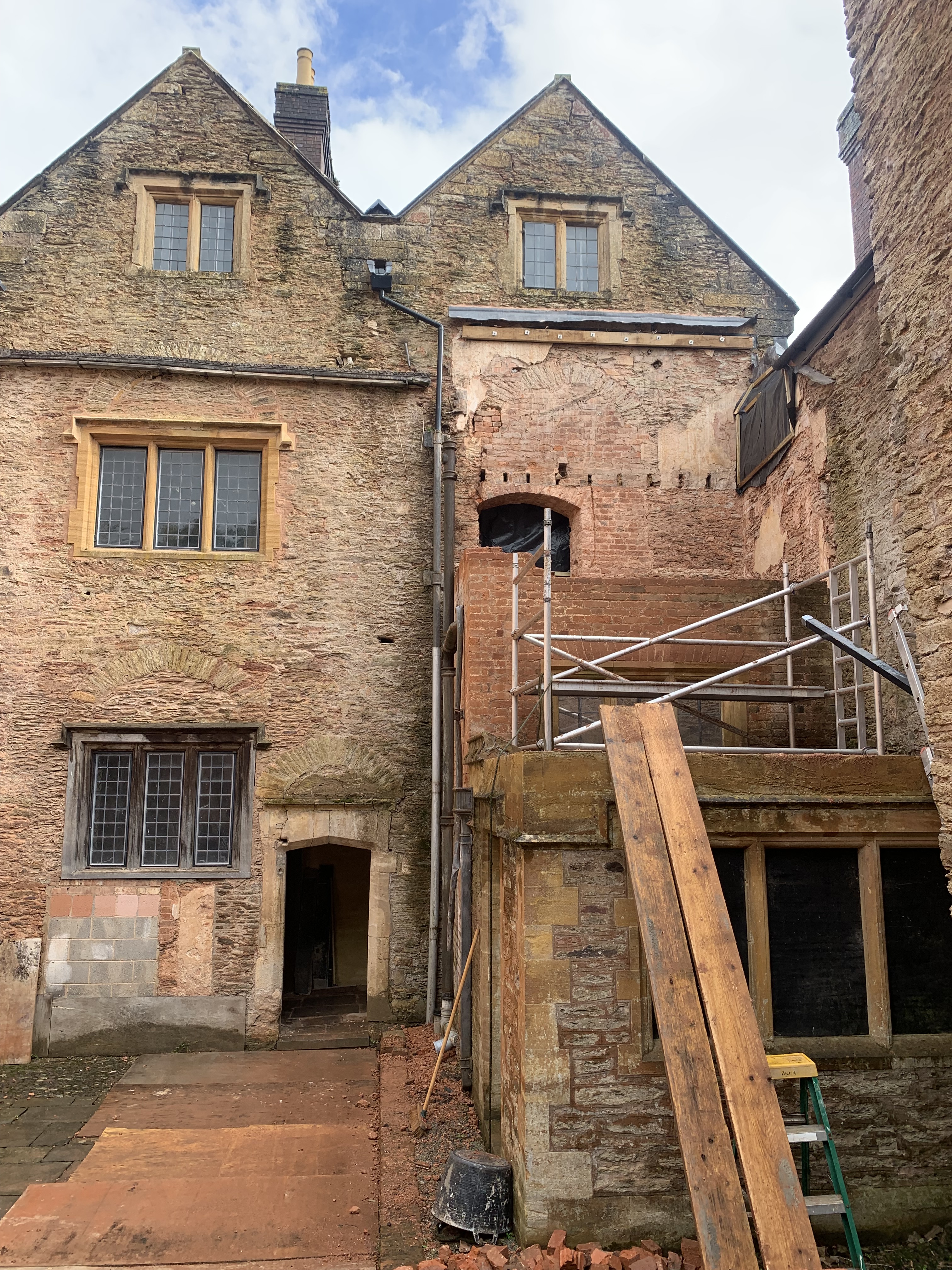
Removing the lean-to and electricity room, while keeping all the building materials for study and potential reuse.
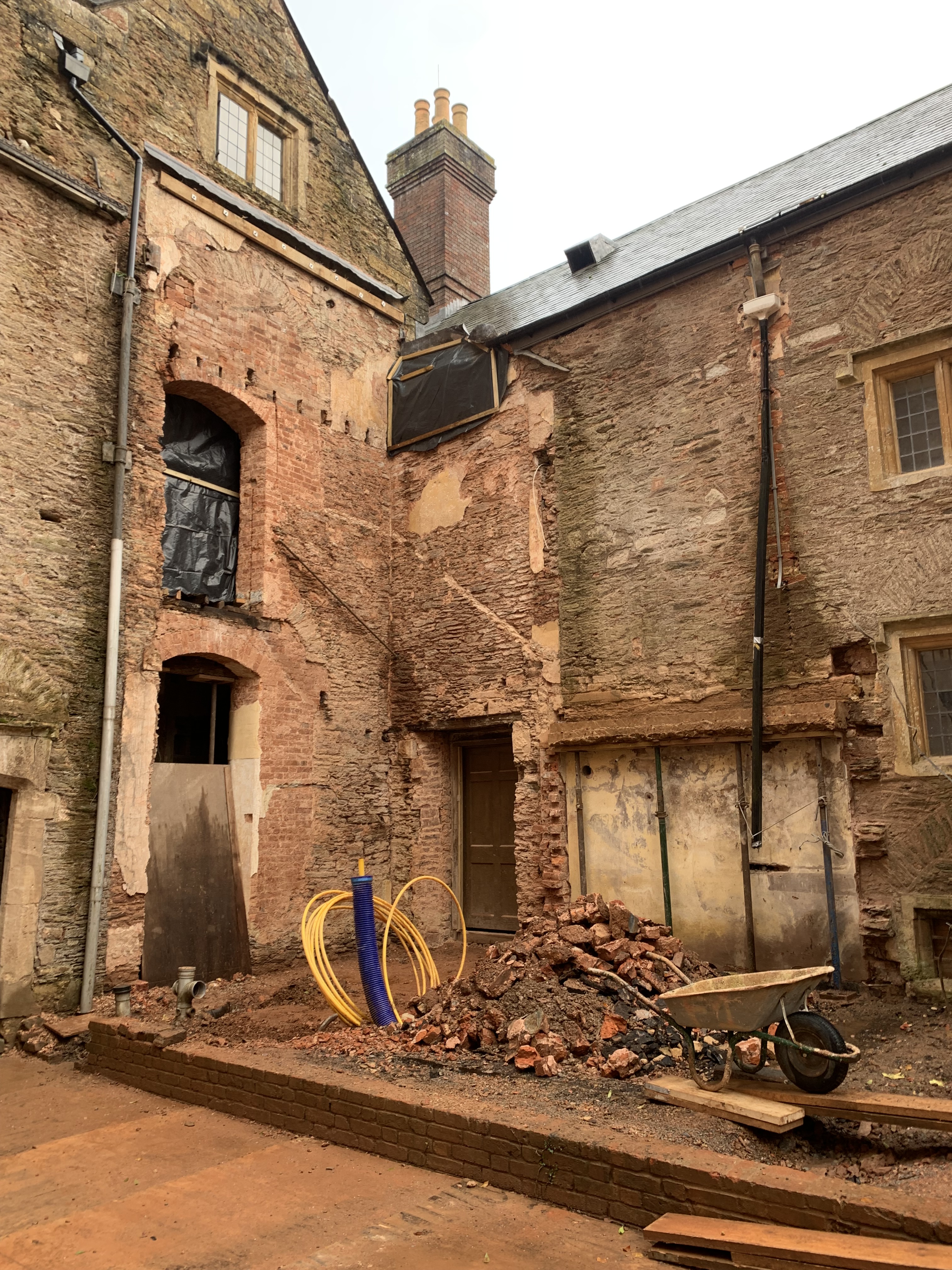
The badly scarred old manor house is now revealed and the careful and very technical procedure of rebuilding correctly begins.
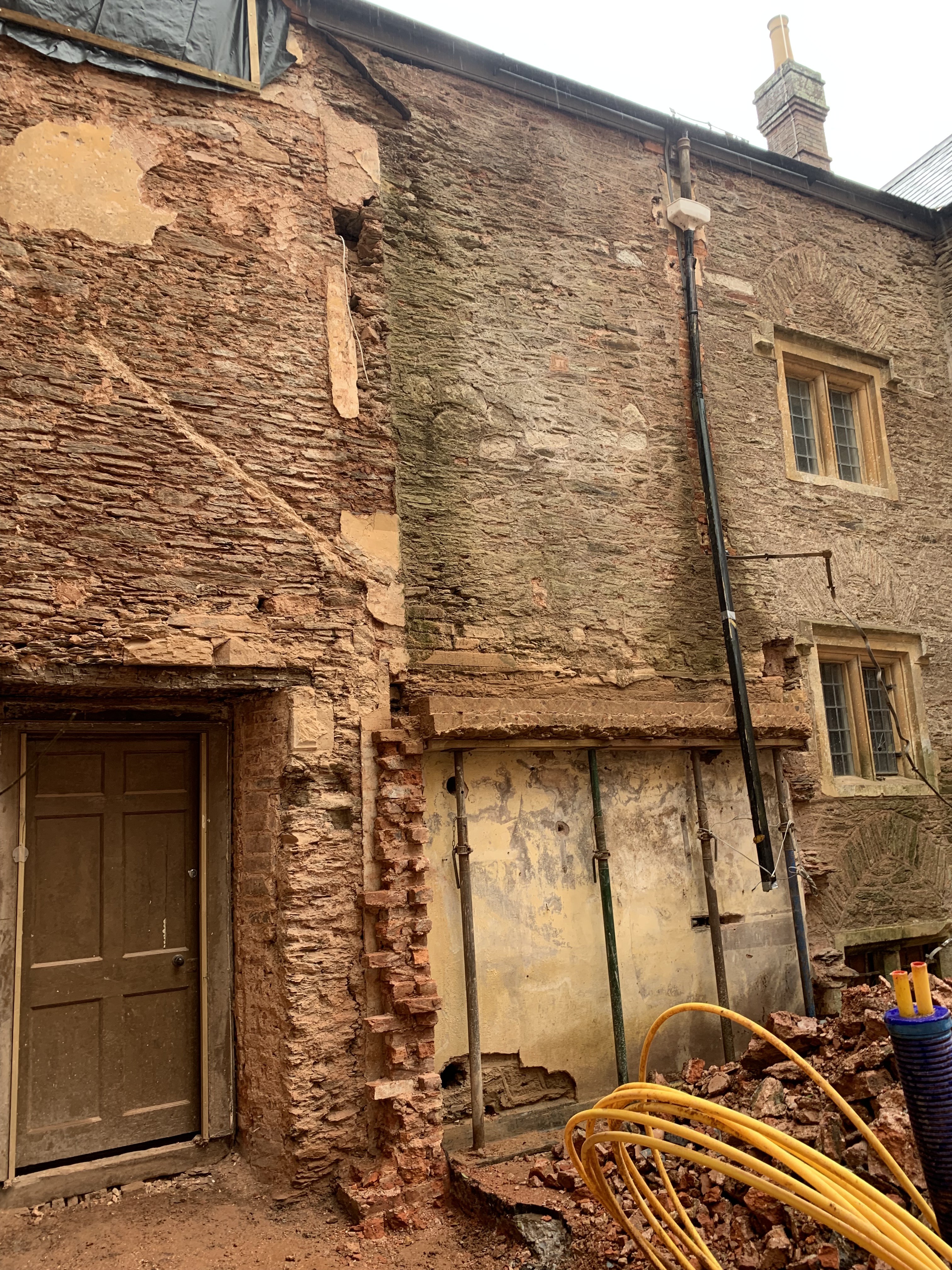
Rotten lintels and nineteenth century doors all need careful pinning, removing, rebuilding and restoring.
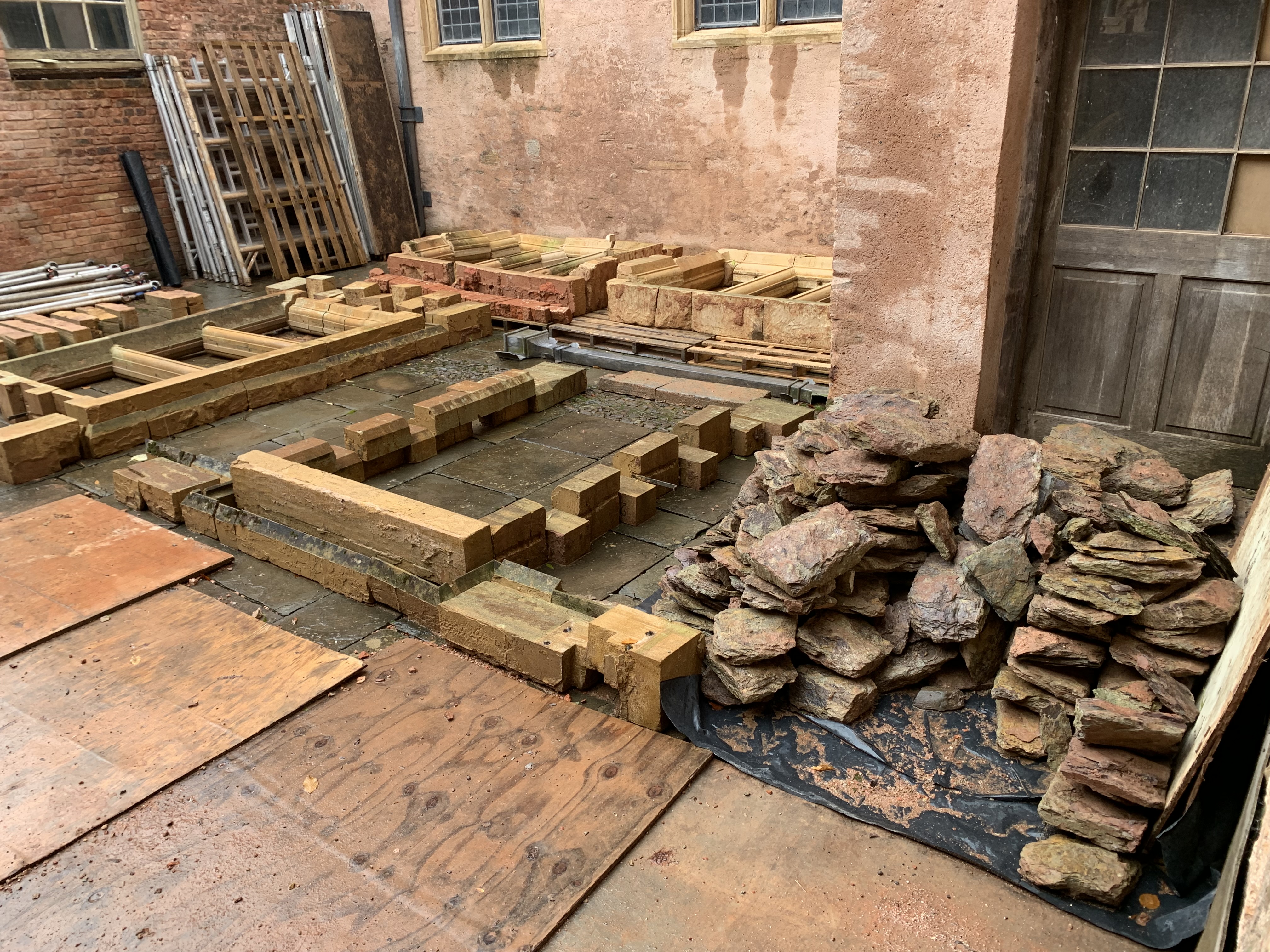
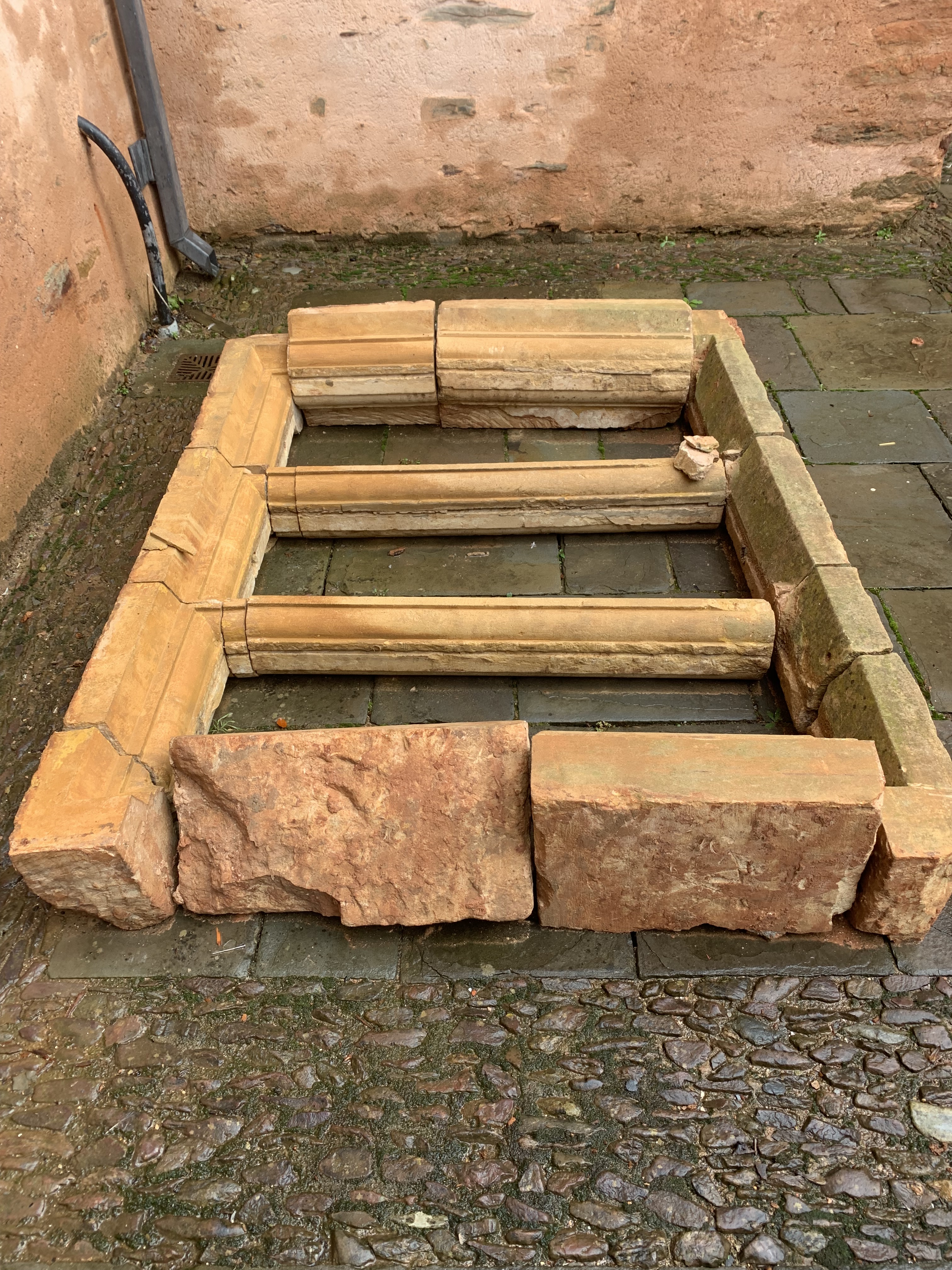
By carefully removing and retaining all the materials that came out of the later additions we were able to ascertain that two of the stone mullion windows that were placed in the later red brick stair tower were in fact the original Elizabethan windows from the morte slate façade. With a combined team of our in-house builders and the specialist stone masons from Devon Stonemasons we rebuilt the original morte slate walls that had been damaged with later red brick inclusions. The old central courtyard door had cracks and structural impairments repaired and the original windows were laid out for later re-insertion into their first home – the courtyard façade wall itself.
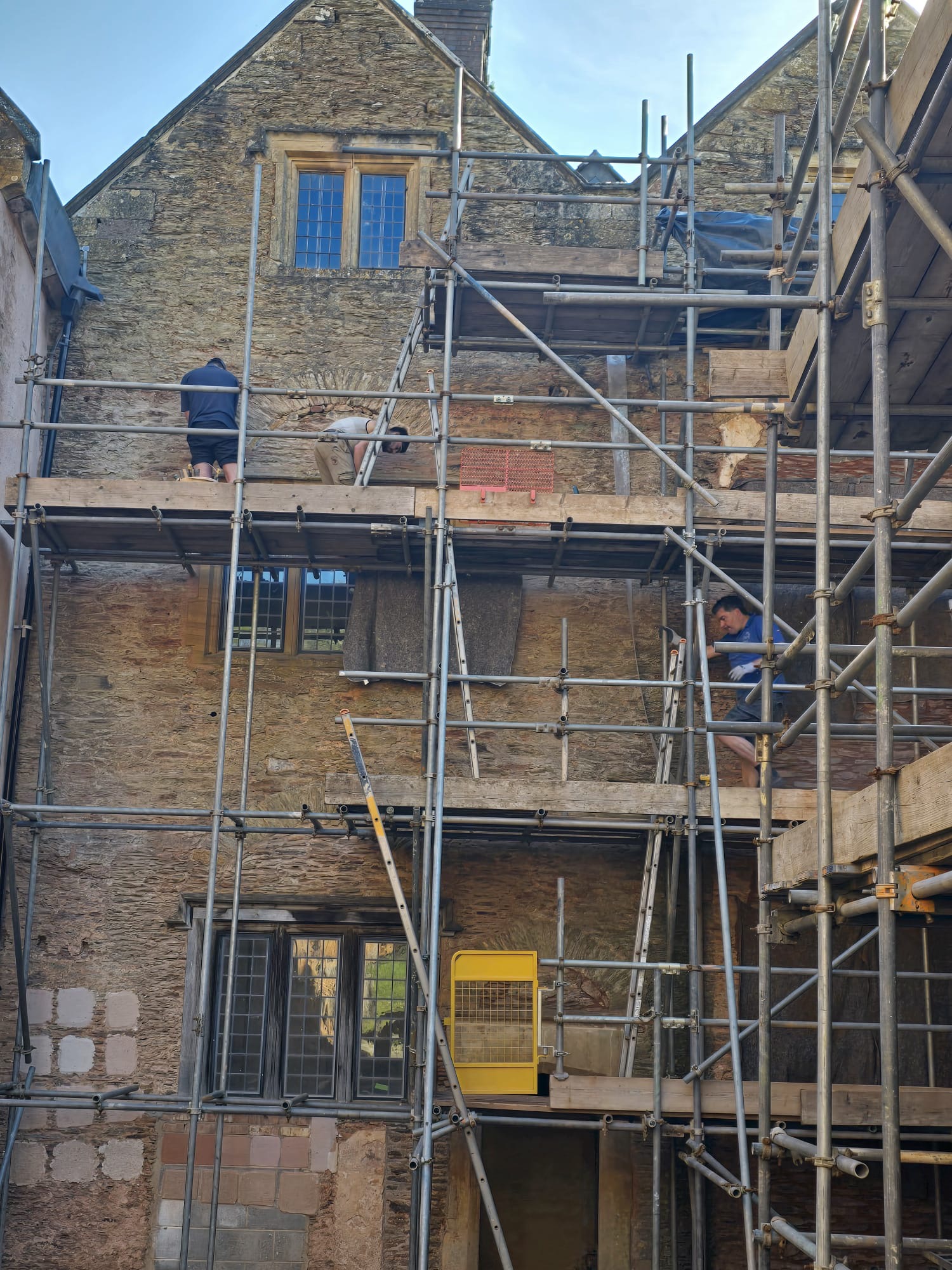
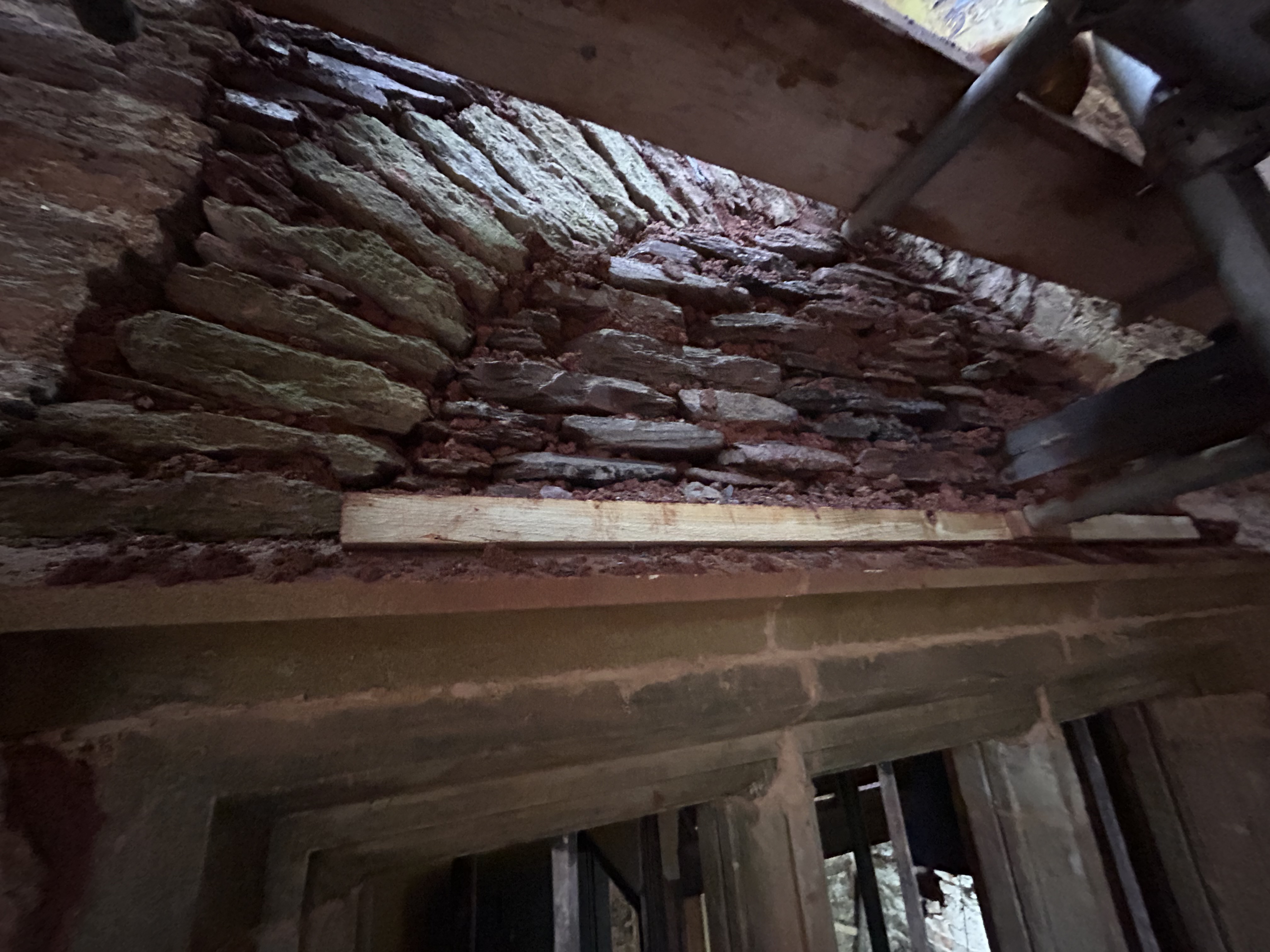
The morte slate relieving arches, which all of the Halswell’s mullion windows have above them, had been removed when the stair tower went in. While not structurally needed above a stone window they are a feature of the building style at Halswell and were remade above the window openings, where the original Elizabethan stone mullions windows were re-inserted.
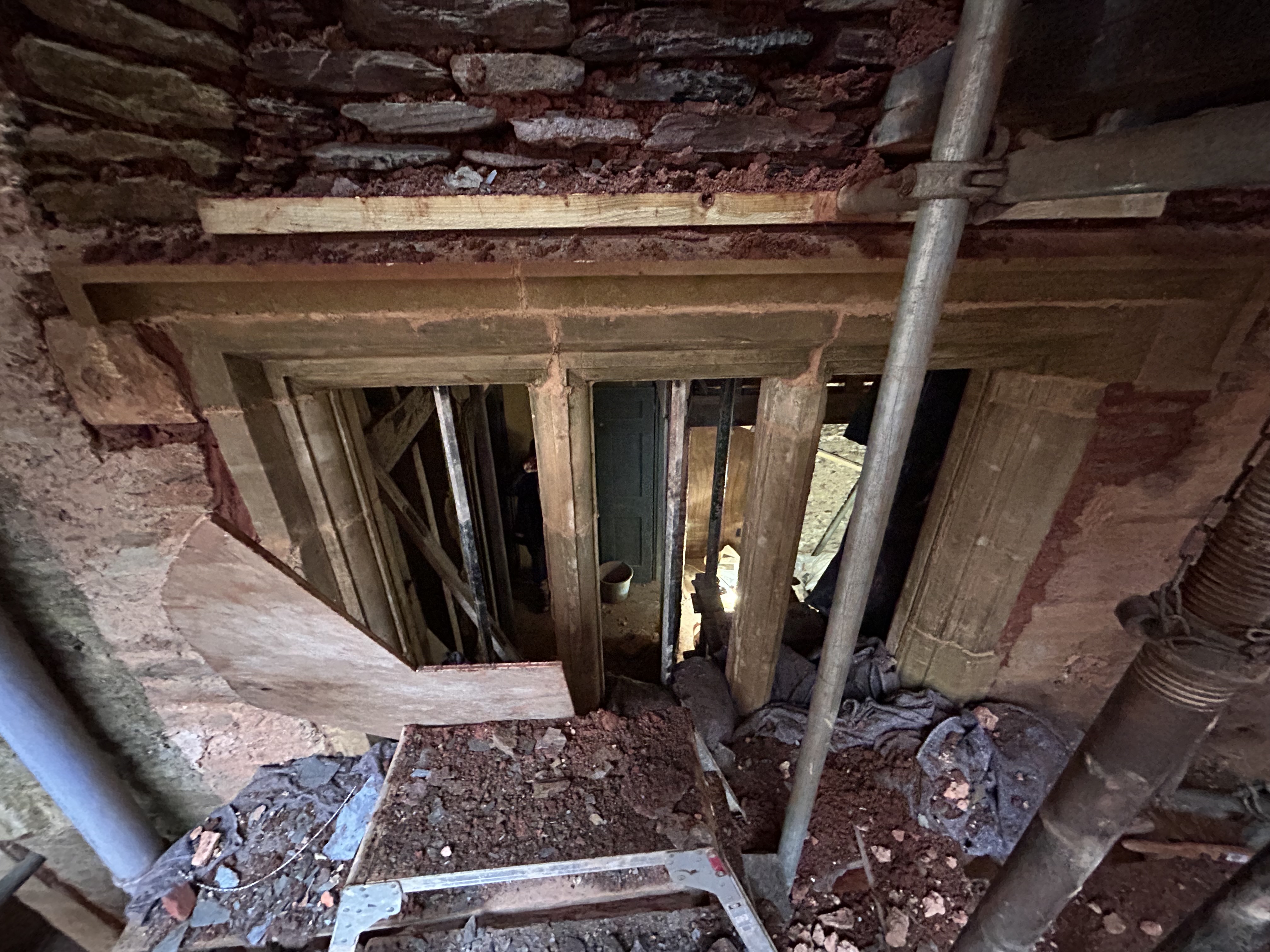
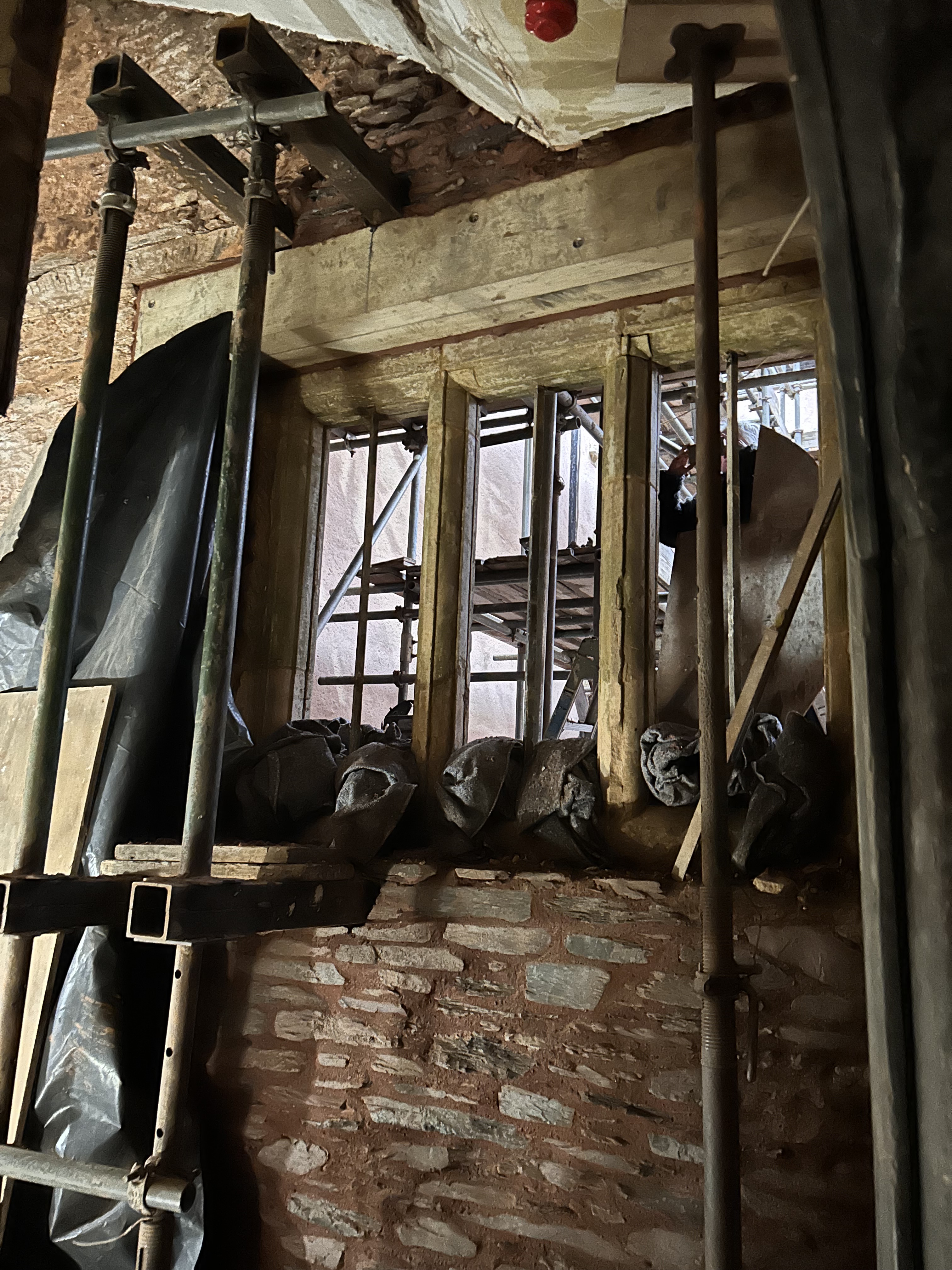
The new oak lintels installed above the mullion window frame.
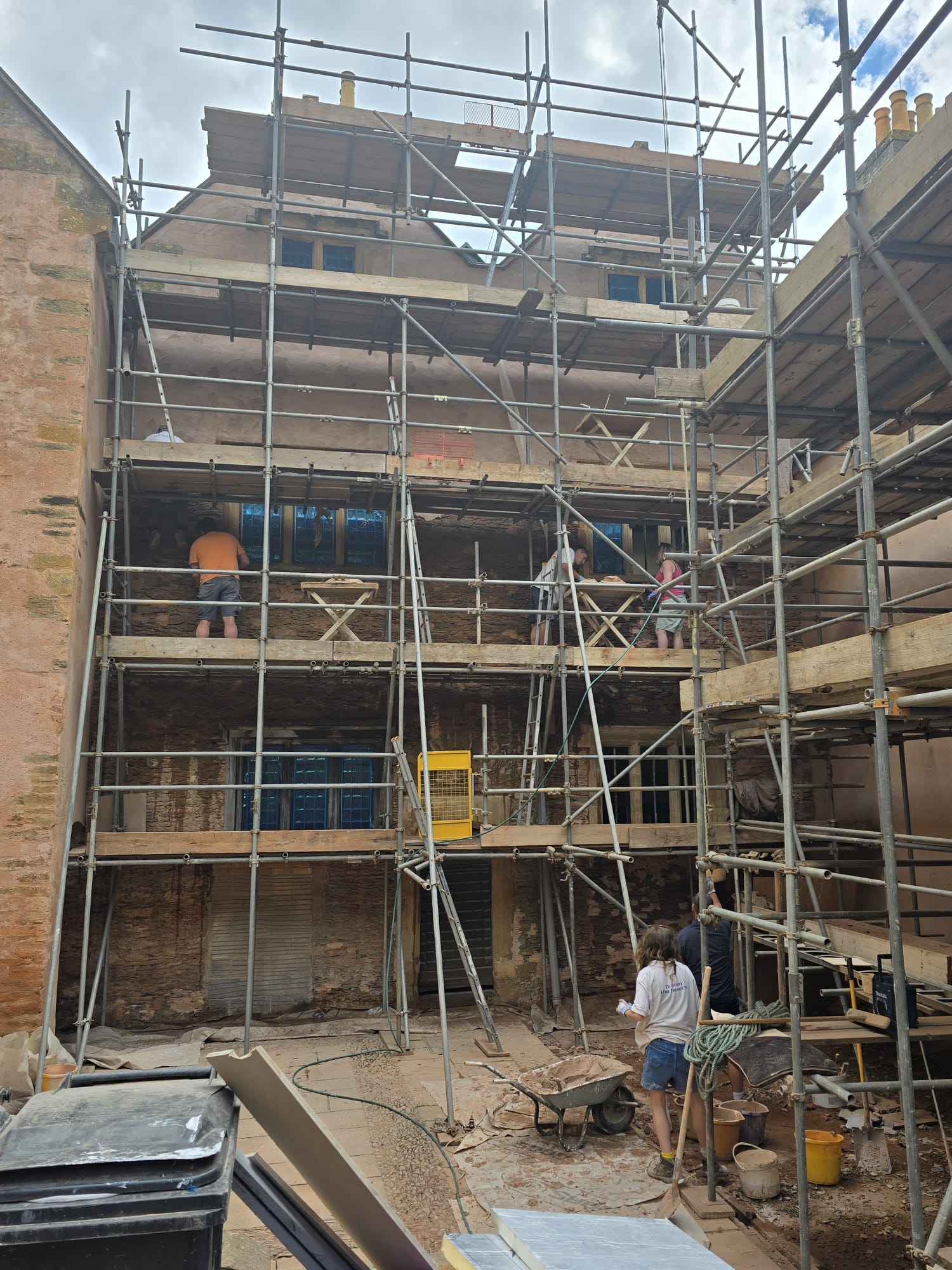
With the old stone windows now back in their original positions and the morte slate walls fully back in place the scaffolding was extended for the next part of the job – re-rendering in traditional lime mortar.
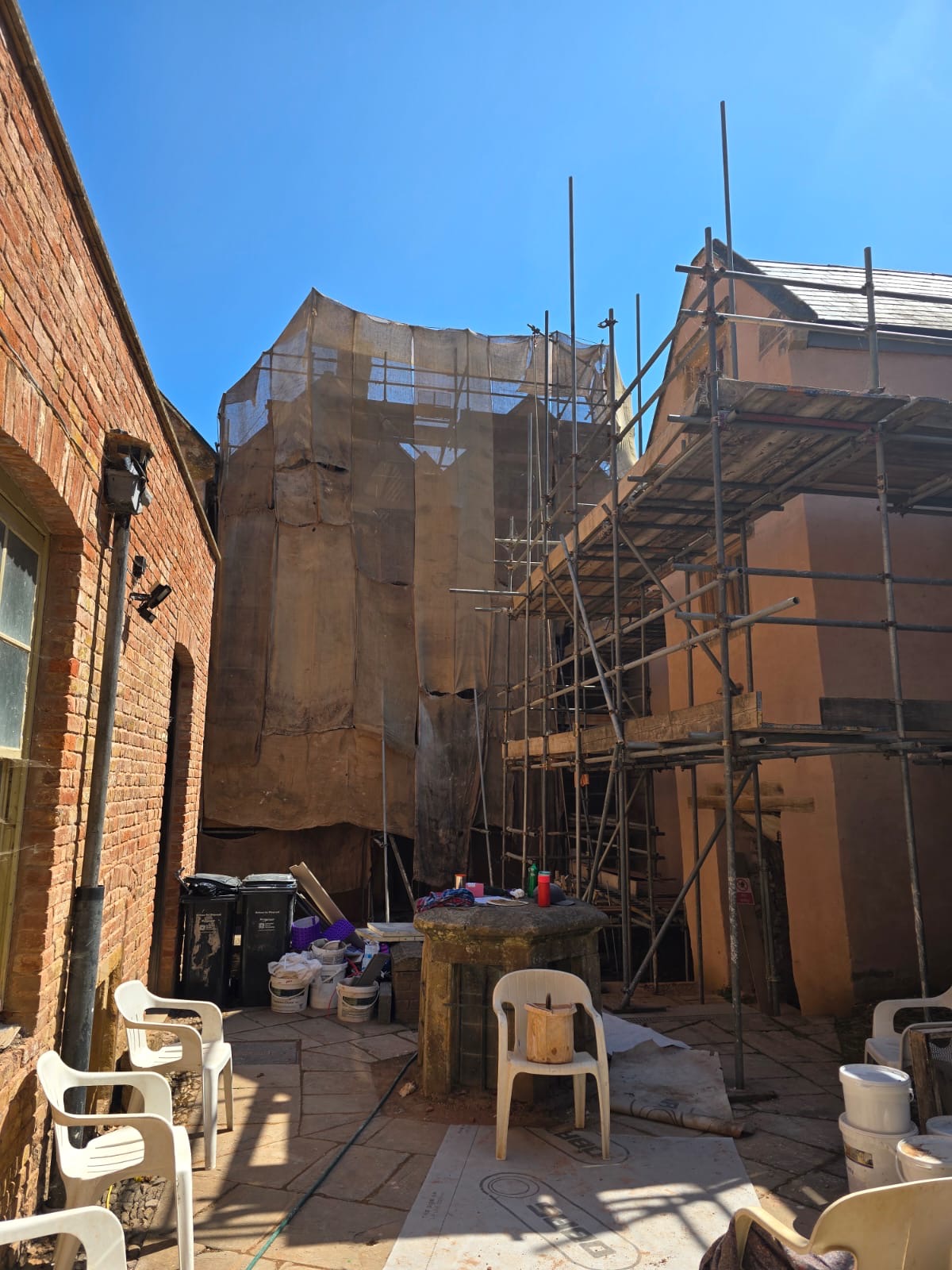
This rendering can only be done in warm months and the large team of lime plasterers from Twyford Lime, as well as the stone masons, and lead work artisans lead by Ben Bruce, meant the courtyard was a hive of activity and break-times in the hot summer months of 2025. With the gauze up to allow the render to dry slowly in the sun, the expectation for the ‘grand reveal’ became all the more intense.
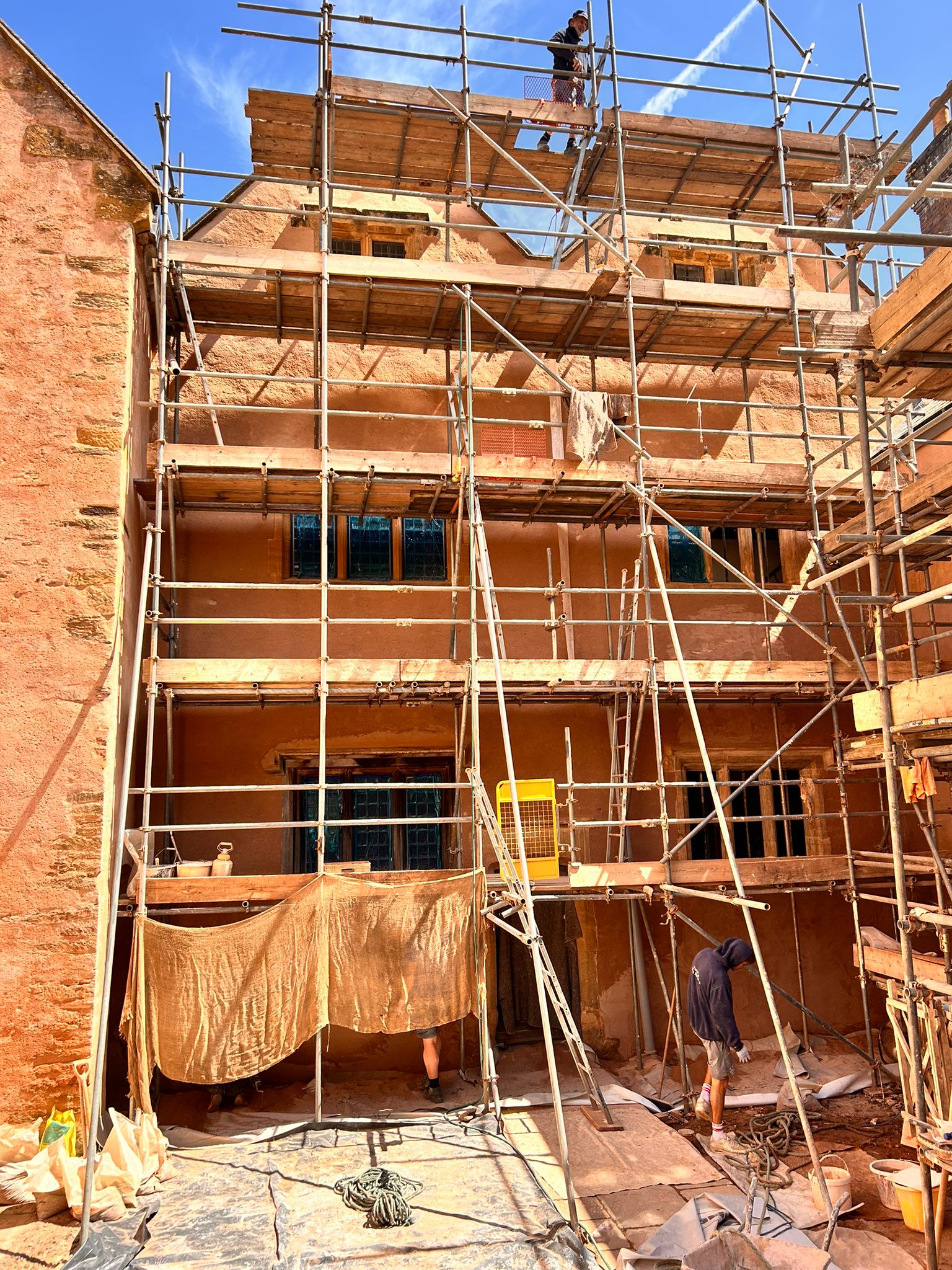
Rendering almost complete, we still had to wait for all the new leadwork to be completed before we could see the restored façades.
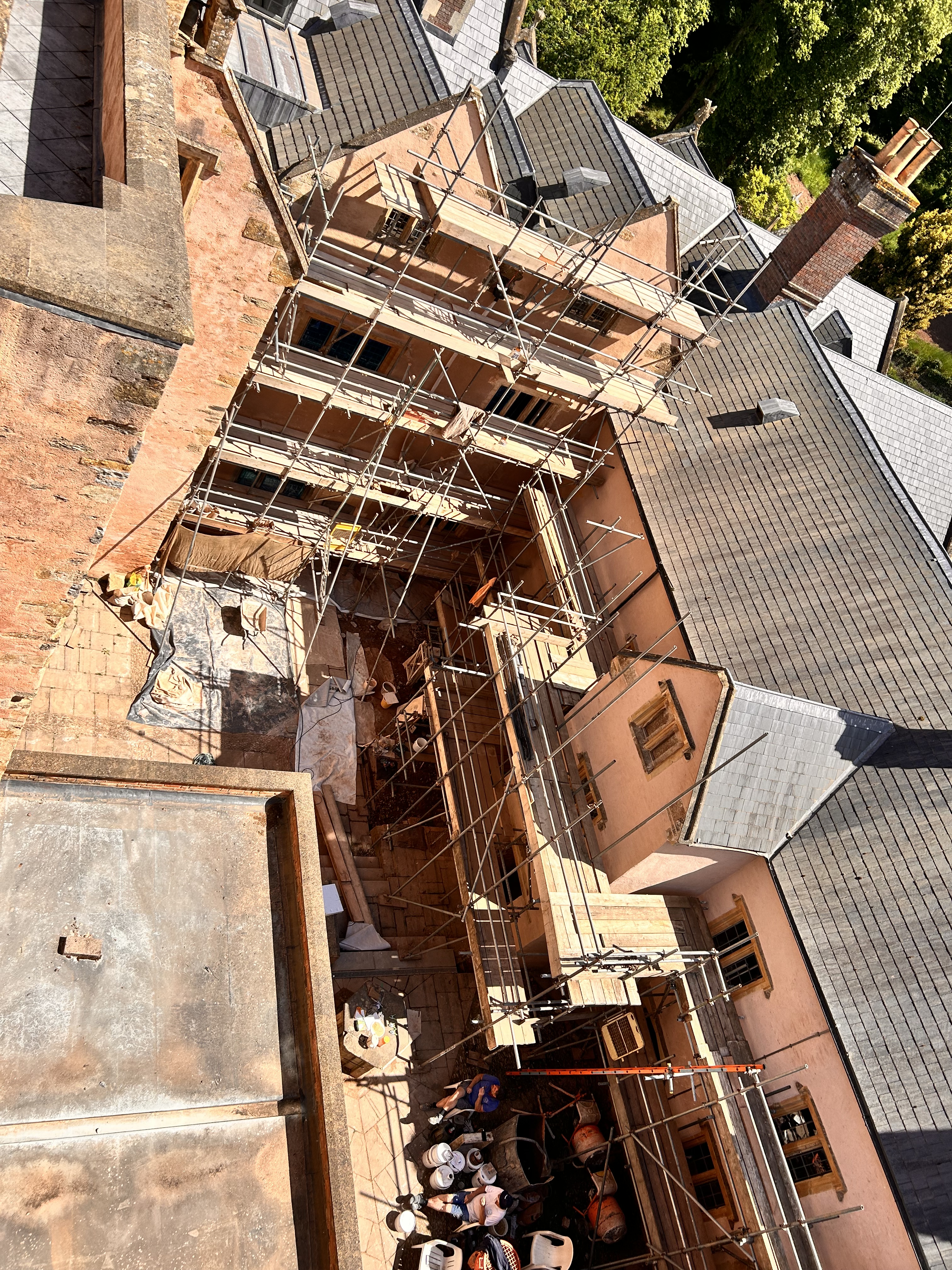
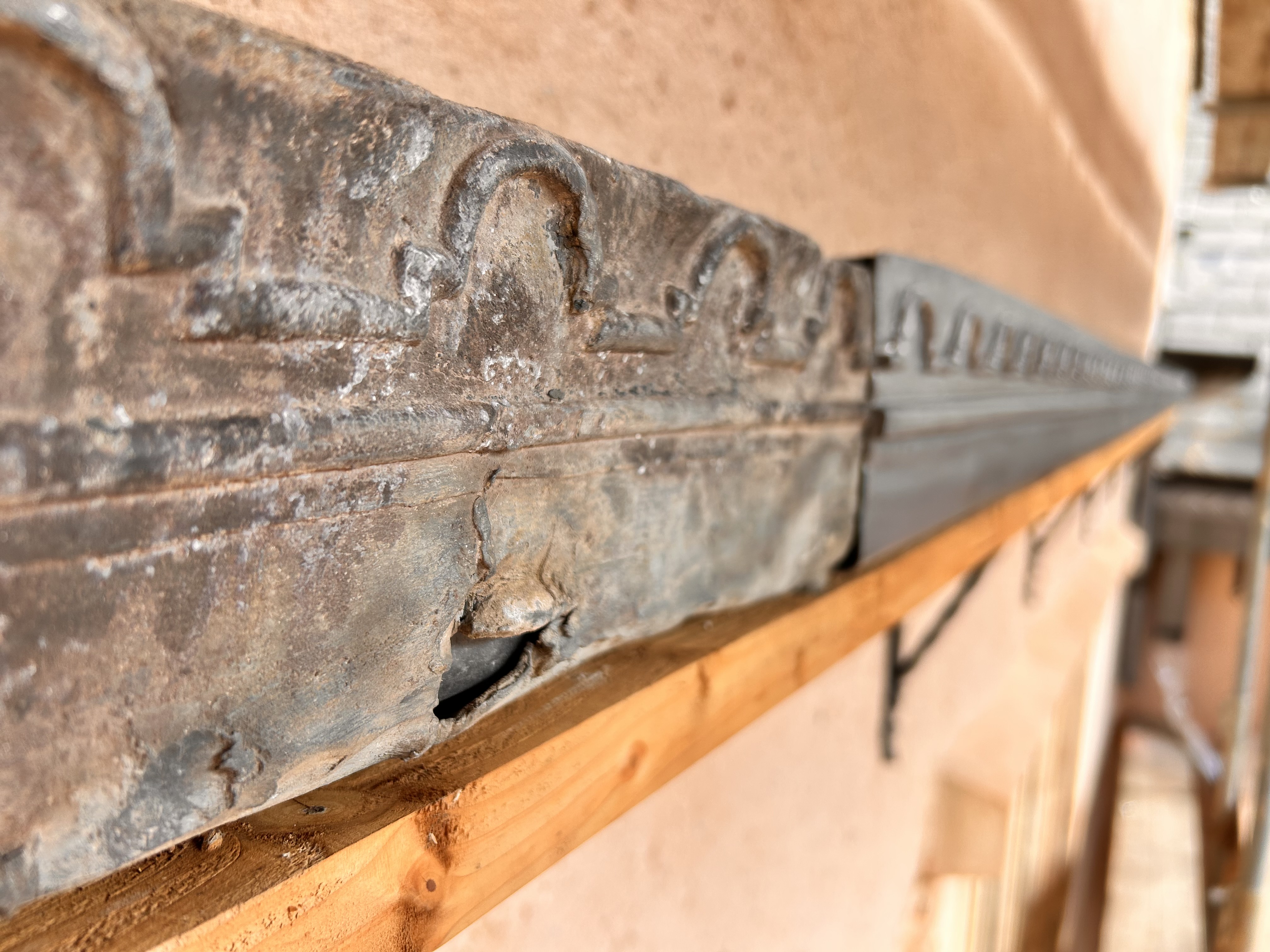
We had one long early piece of decorated leadwork, pictured above. We recreated the courtyard leadwork based on this original piece of guttering, as seen here. It is very important that all new additions to the historic building are clearly of their date.
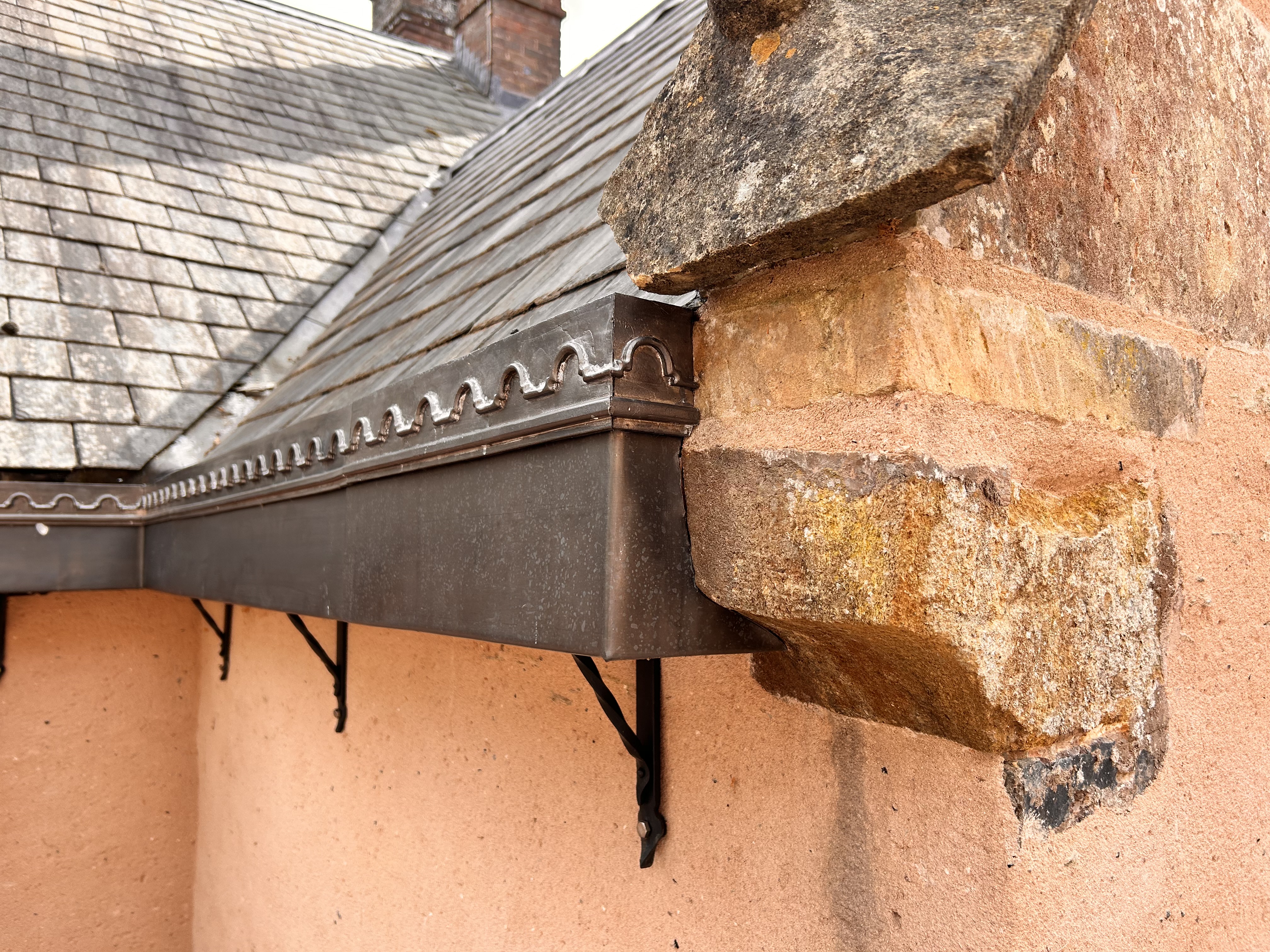
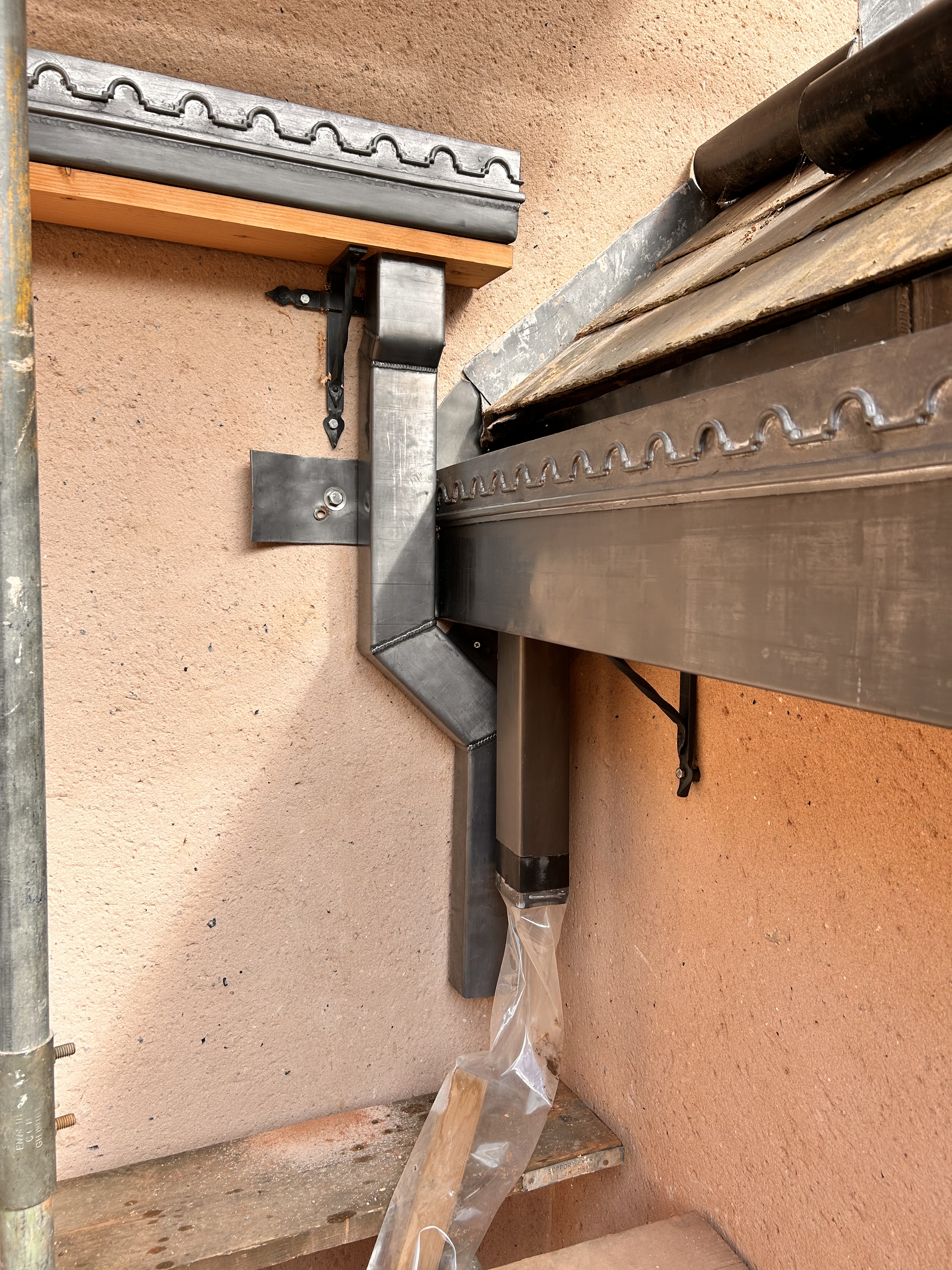
The new leadwork on the stone staircase tower.
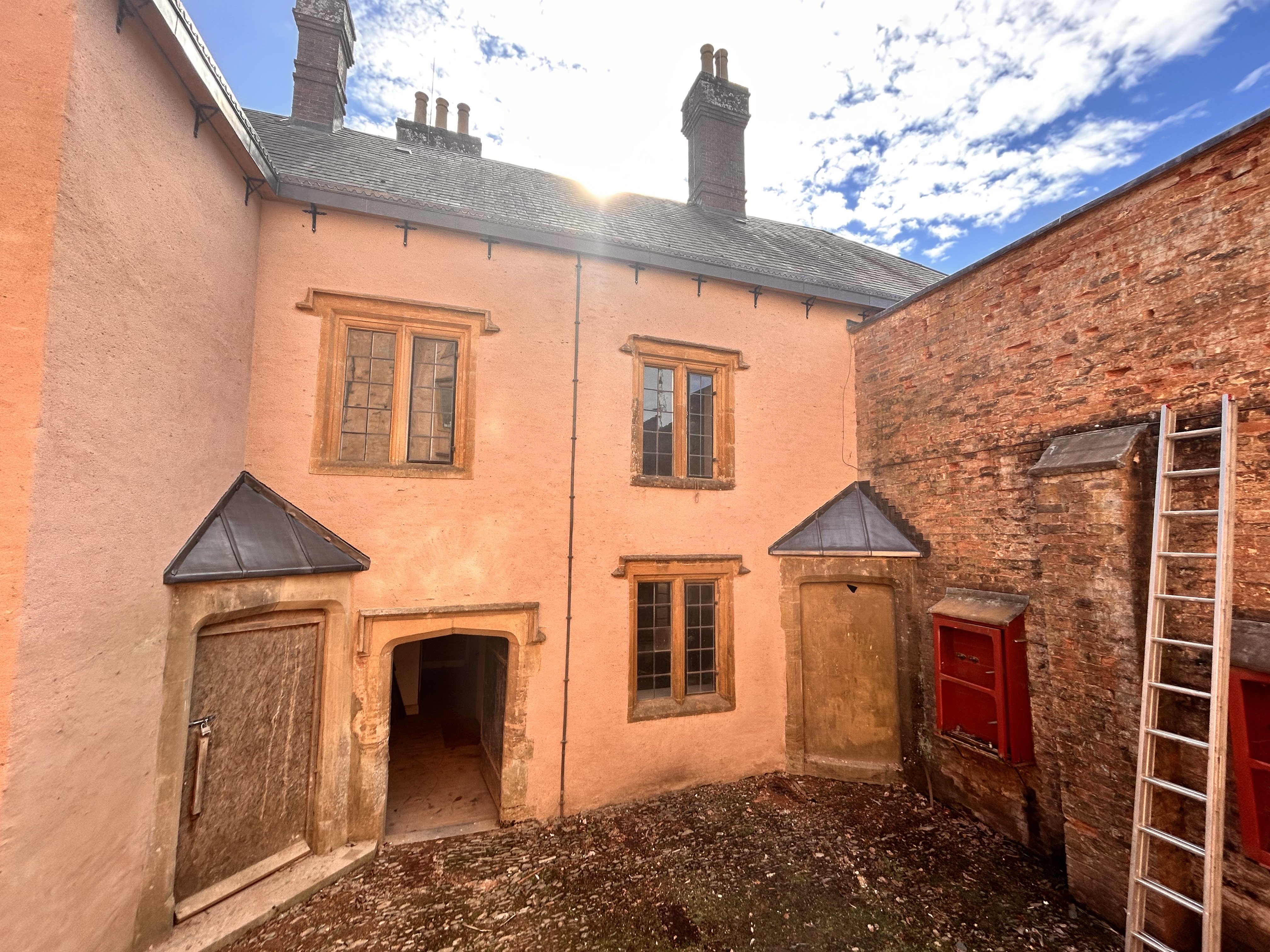
Part of the leadwork was also topping the two stone roofs of the corner doors. They have beautiful cut stone triangular tops but unfortunately that was never water-tight enough and the subsequent damage over hundreds of years meant we needed to upgrade this design and add lead tops to the doors, while retaining the cut stone beneath. The heavy lead gutters above are held up with traditional hand crafted iron brackets from our blacksmith Kevin Chedzoy.
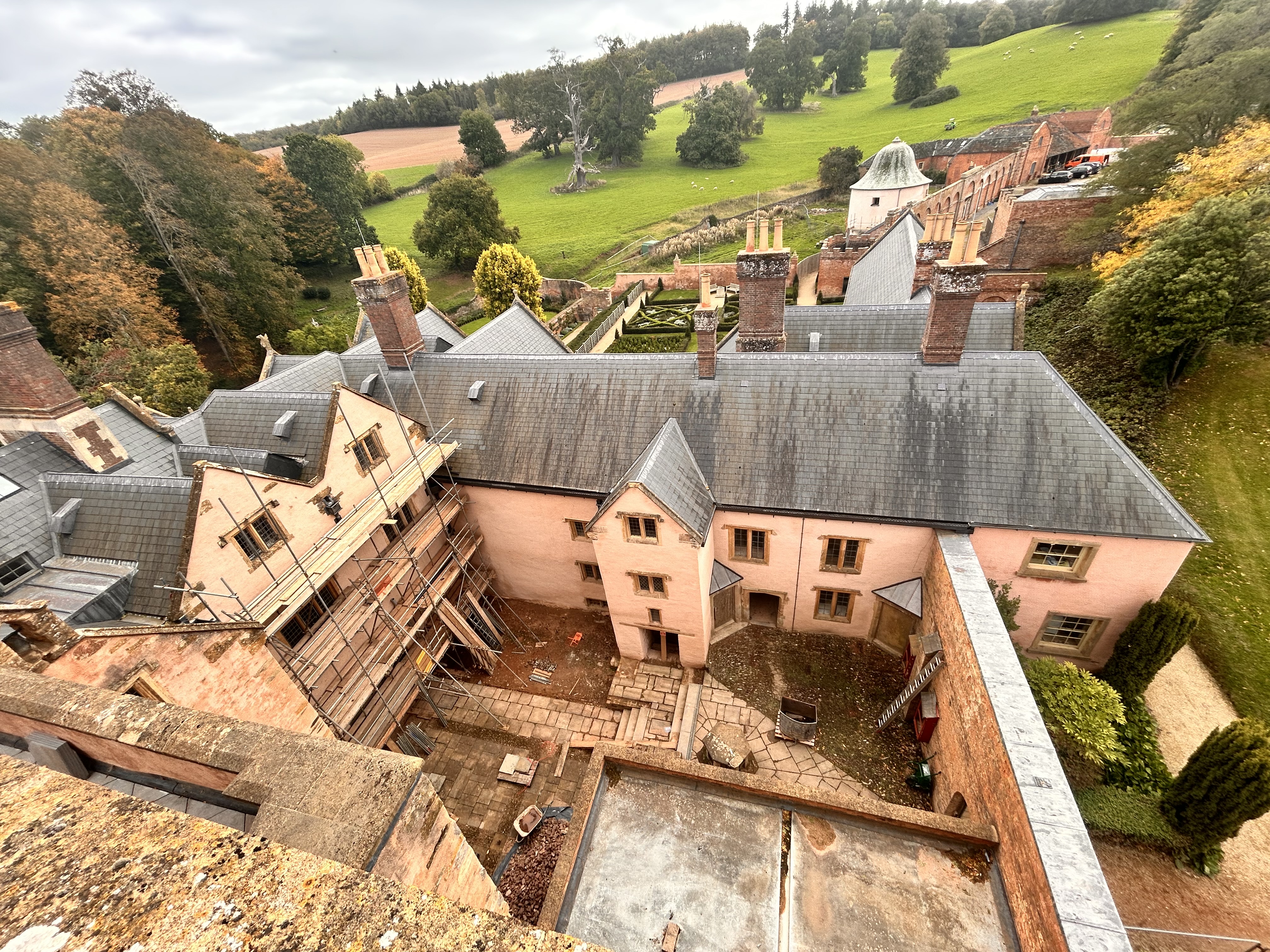
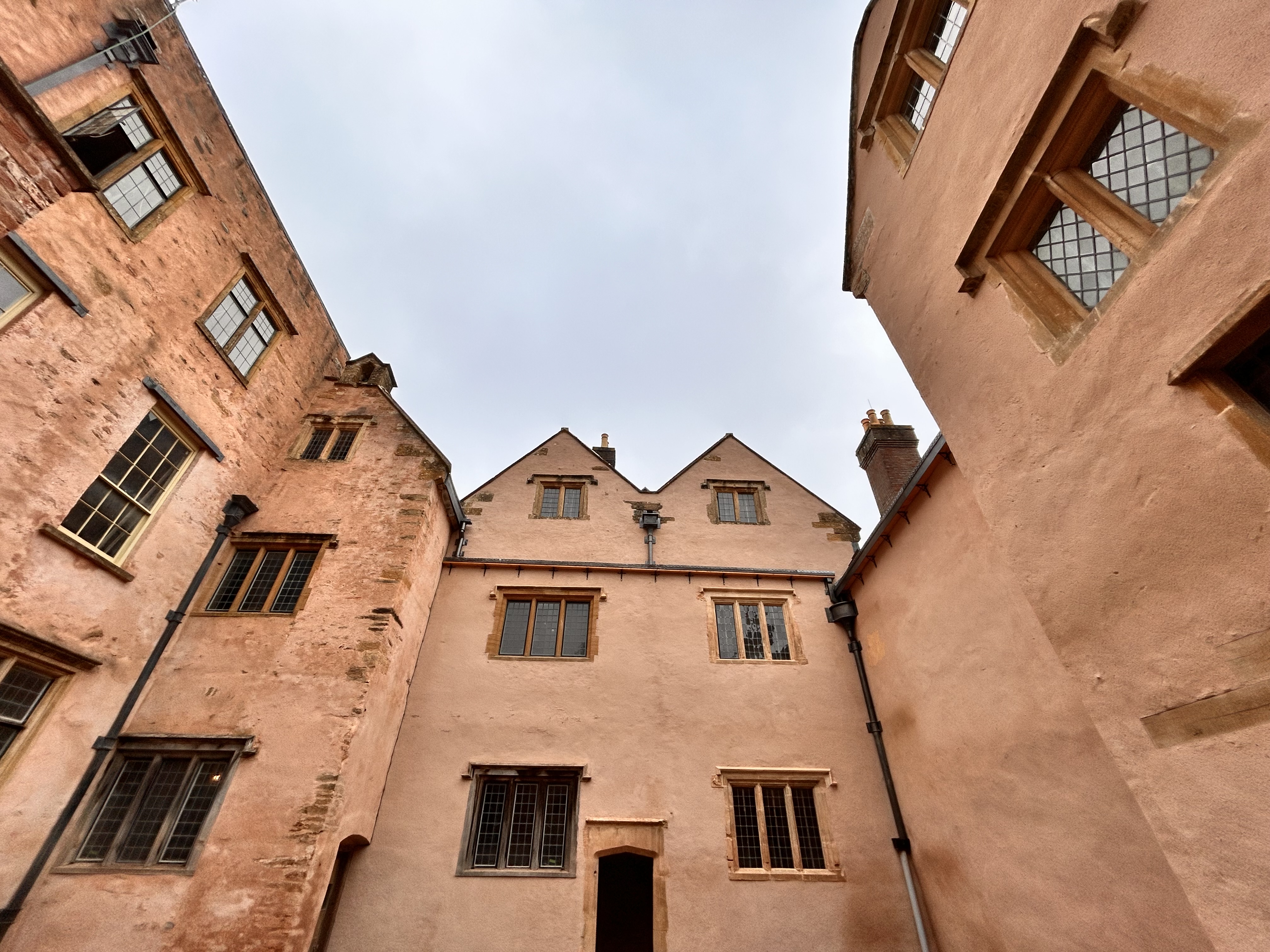
The scaffolding starts to be removed and the newly restored facades exposed.
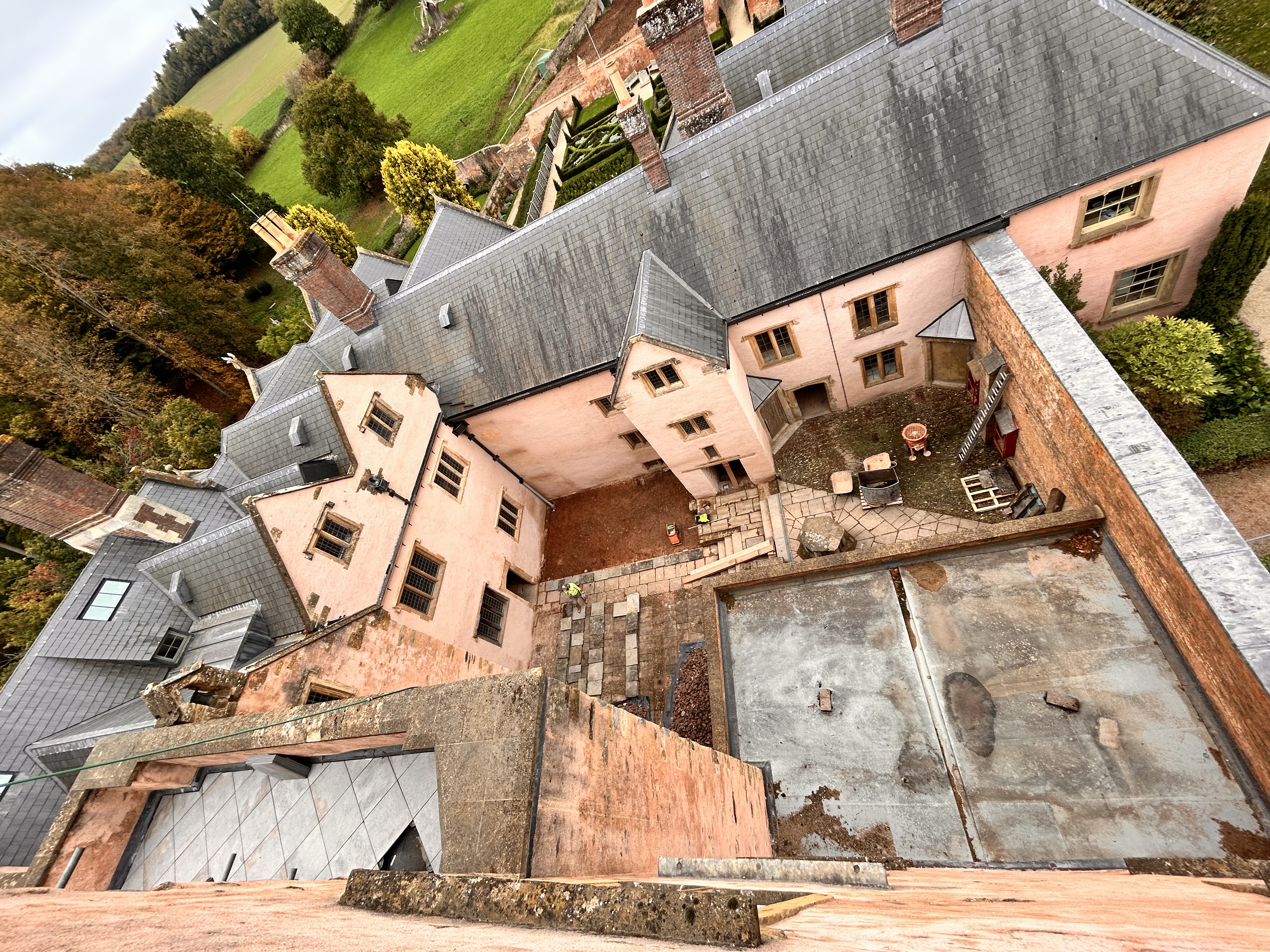
While the courtyard still, for now at least, currently retains one later flat-roofed addition, seen here, the damaging other late additions are no longer causing such dramatic problems with the historic fabric.
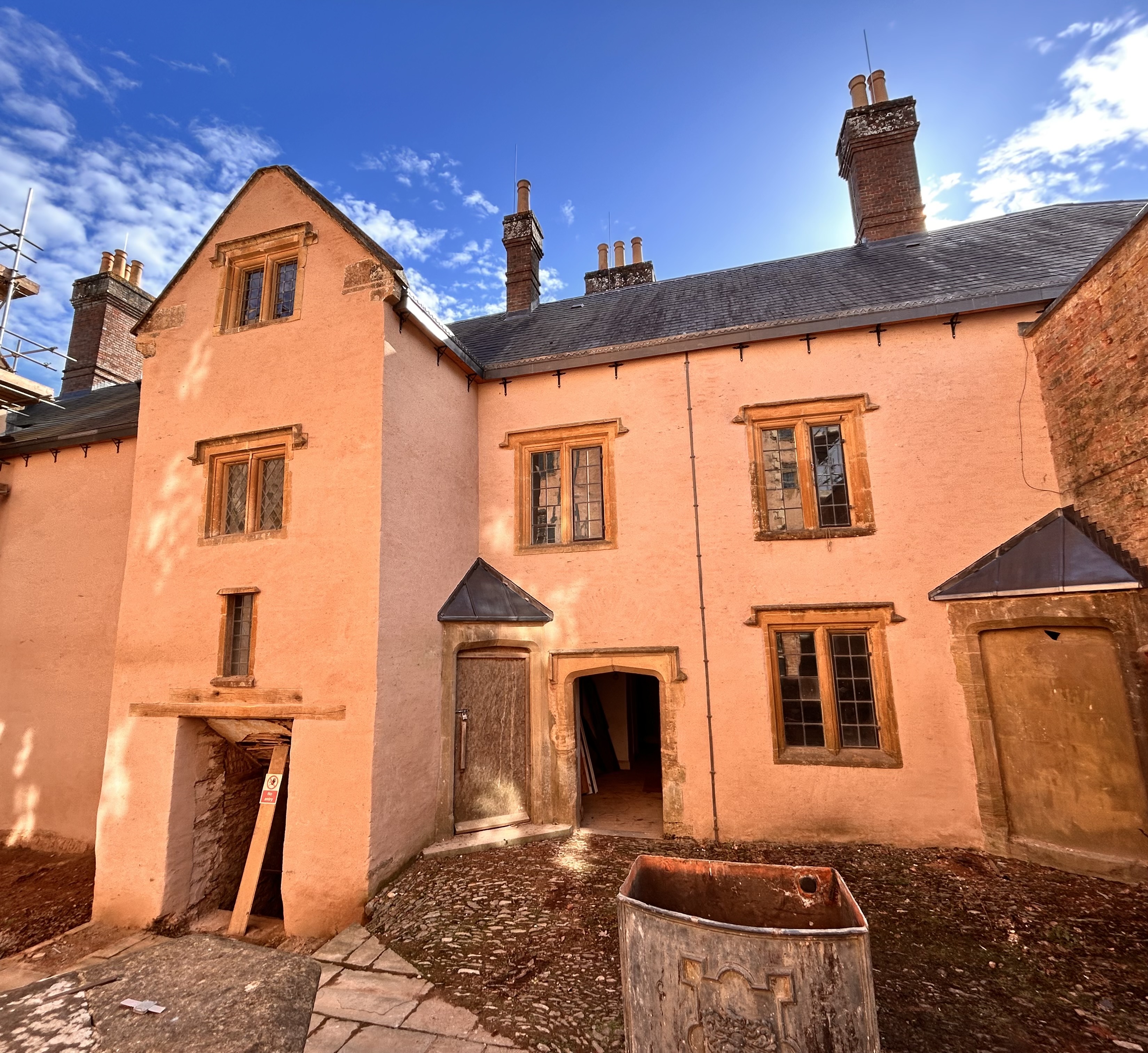
The lead cistern of 1713, in the foreground above, has now also been restored and will be put into place within the courtyard. No longer required for water management, for which is has been redundant for over 100 years, the important Halswell family cistern will be used decoratively within the new courtyard garden design.
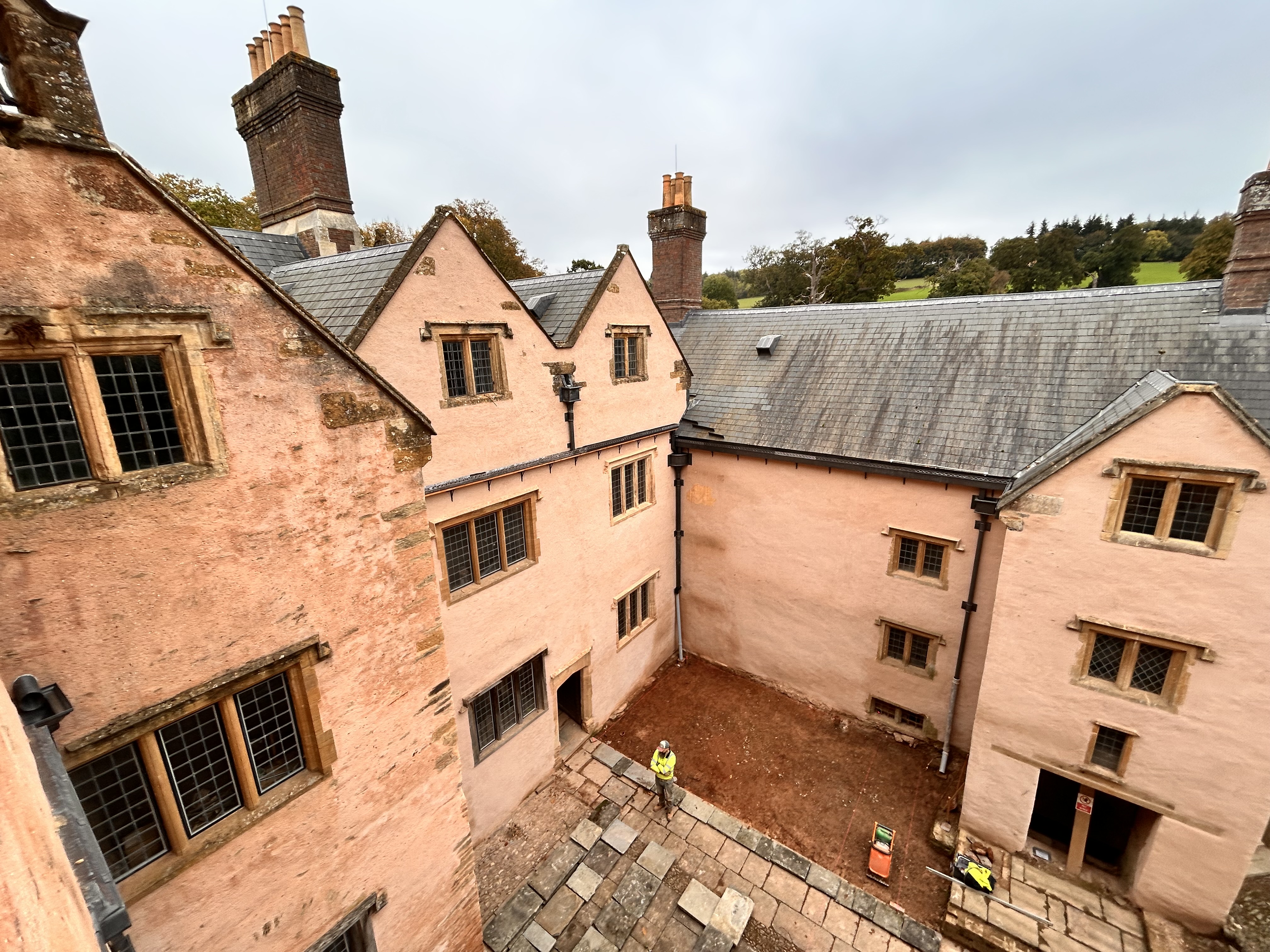
New cobblestone and blue lias flagstones being laid out to complete the flooring of the courtyard.
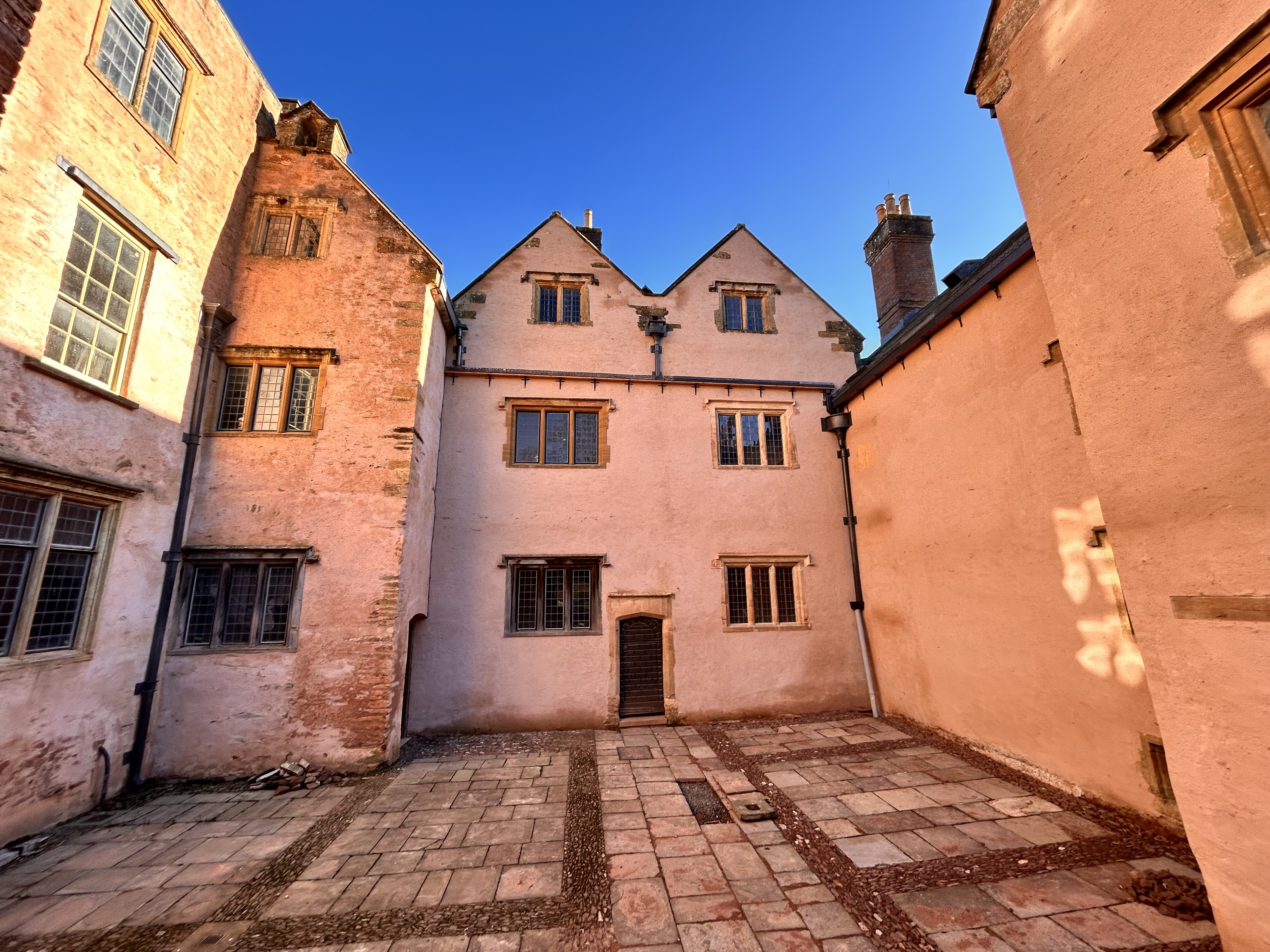
The leadwork is now complete. With historic doorways to the extensive cellars, the Mansion House, the Manor House, the Tudor Knot Garden, Butler’s Cottage, and out toward the west to Mill Wood, the courtyard is ready to return once again to its central position as the heart of Halswell House.
RB
 Halswell Park
This is such an inspiring restoration! Congratulations on investing such care and attention in what is an often overlooked area of large houses, despite, as you say, their central role in their daily life. If only an equal level of historically accurate and sensitive craftsmanship could be replicated at other houses, as this is exemplary. Thank you!
LikeLiked by 1 person